
Beard shampoo should remove sweat, skin oil, and styling-product buildup without leaving your facial hair rough or the skin underneath uncomfortable. Yet choosing a bottle isn’t as simple as picking the strongest cleanser or the nicest fragrance. A short beard on oily skin needs different care from a long beard that tangles easily.
This guide explains how beard shampoo compares with other cleansers, which formulas suit different needs, how to read ingredients, and how to wash your beard properly.
What Makes Beard Shampoo Different?
Beard shampoo is a cleanser marketed for facial hair. Many formulas include conditioning ingredients to help coarse hair feel manageable, but the label alone tells you little about how gentle the product really is. The skin beneath your beard matters just as much as the hair: oil, dead skin, and leftover balm can collect there.
Beard Shampoo vs. Beard Wash vs. Regular Shampoo
Beard shampoo and beard wash usually describe the same kind of product. One brand might call its cleanser a wash because it feels creamy, while another calls a similar formula shampoo. Neither name guarantees better performance.
Regular hair shampoo is designed for scalp hair. Mild versions may work on facial hair, although a powerful clarifying formula might leave your face tight or your beard unusually coarse.
Face wash focuses on facial skin. For stubble or a short beard, a gentle face cleanser may do everything you need, particularly if breakouts are a concern.
The American Academy of Dermatology (AAD) recommends washing your beard and the skin beneath with a gentle cleanser chosen for your skin type. That is more useful advice than assuming every man needs a separate beard product.
How to Choose Beard Shampoo for Your Beard Type
Start with the problem you want to solve, not the packaging. Does your beard feel dry after washing? Is there visible balm residue? Does the skin underneath become shiny or itchy?
- Dry or coarse beard: Choose a mild wash with conditioning ingredients, then consider a separate conditioner.
- Oily or acne-prone skin: Prioritize a lightweight, non-comedogenic facial cleanser rather than a heavy oil-rich formula.
- Sensitive skin: Start with a fragrance-free cleanser, especially if scented products have irritated you before.
- Thick or curly beard: Look for a conditioning wash that leaves hair easier to detangle.
- Short beard or stubble: A simple face wash can be sufficient.
- Long beard with styling buildup: Use a gentle wash routinely and deeper cleansing only when residue is noticeable.
Ingredients Worth Understanding
Glycerin attracts water and is frequently included in moisturizing products. Panthenol is a conditioning ingredient that may improve how hair feels and combs. Sodium cocoyl isethionate is a surfactant, meaning it helps lift oil and dirt so they can rinse away.
Cocamidopropyl betaine is another common cleansing ingredient. Most users tolerate it, but allergic contact dermatitis is possible; DermNet documents reactions to this ingredient and related manufacturing impurities. If a cleanser repeatedly causes a rash, stop using it and ask a dermatologist about identifying the trigger.
Aloe vera and argan oil may appear in conditioning formulas. Neither makes a shampoo automatically better: how the complete formula performs matters more than one ingredient printed prominently on the label.
What About Sulfates, Alcohol, and Fragrance?
There’s no useful blanket rule that every sulfate is bad. Sodium lauryl sulfate can clean strongly and may feel drying in some products, but gentleness depends on the finished formula. Likewise, the words sulfate-free don’t guarantee that a shampoo is mild.
High levels of alcohol denat. or ethanol may feel drying; fatty alcohols such as cetyl alcohol are different ingredients and commonly help condition hair. Added fragrance and some essential oils may irritate sensitive skin. If your skin reacts easily, fragrance-free is a sensible place to start. Natural and organic labels do not guarantee irritation-free formulas.
8 Types of Beard Shampoo and Who Each One Suits
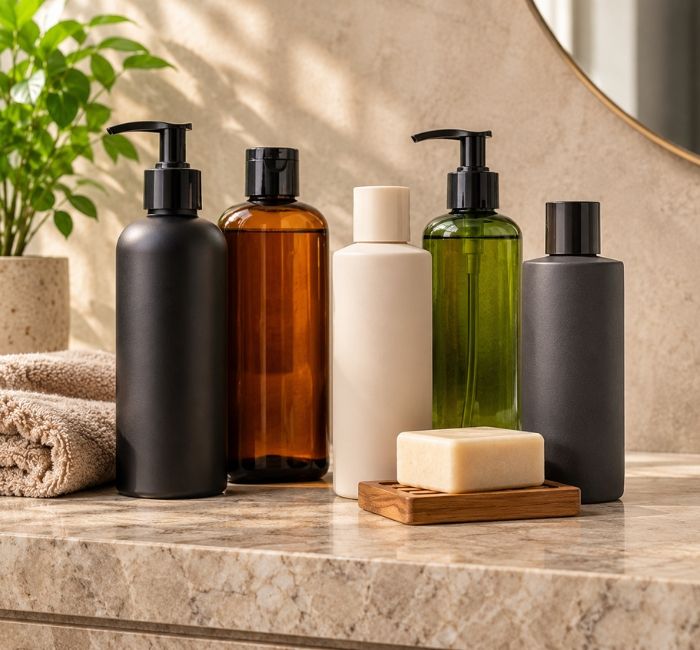
These are formulation categories, not a ranking of products tested by ManGroomHub. Use them to narrow your options before comparing individual bottles.
1. Gentle Everyday Beard Shampoo
A gentle everyday shampoo is intended to remove ordinary sweat, dirt, and oil without especially aggressive cleansing. It can be convenient after workouts or dusty workdays, when a beard needs cleaning but not heavy-duty product removal.
Best for: Normal skin and people who wash frequently.
Watch out for: A “daily” label doesn’t guarantee your skin will tolerate the formula every day.
How to use it: Work the cleanser into wet facial hair using fingertips, then rinse thoroughly with lukewarm water.
Practical tip: If your skin feels tight after every wash, reconsider the cleanser or how often you use dedicated shampoo. Daily gentle skin cleansing doesn’t have to mean daily use of a stronger beard shampoo.
2. Moisturizing Beard Shampoo
Moisturizing formulas combine cleansing agents with ingredients intended to limit the rough, stripped feeling after washing. They’re a reasonable starting point for facial hair that becomes stiff, especially around the chin and ends.
Best for: Long, dry, or coarse beards.
Watch out for: An overly rich formula can leave residue, particularly when layered with balm and oil.
How to use it: Massage gently, rinse fully, and use a conditioner afterward if the hair still feels rough.
Practical tip: Don’t expect a rinse-off cleanser to do all the conditioning. A small amount of suitable leave-on product may help more with daylong manageability.
3. Fragrance-Free Beard Shampoo
This category leaves out added fragrance ingredients, making it worth considering for easily irritated skin. It’s also helpful when you simply dislike fragrance lingering around your nose all day.
Best for: Sensitive skin or known fragrance reactions.
Watch out for: “Unscented” products can contain masking fragrance, while fragrance-free products can still contain other allergens.
How to use it: Introduce the cleanser on its own instead of changing several grooming products simultaneously.
Practical tip: If redness, swelling, or a rash develops, stop using the product. A dermatologist can help assess recurring reactions rather than relying on guesswork about ingredients.
4. Deep-Cleansing Beard Shampoo
Deeper-cleansing products are intended for heavier oil and styling buildup. They may be useful when wax or thick balm makes your beard feel coated even after an ordinary rinse.
Best for: Frequent styling-product users or work environments that leave visible grime.
Watch out for: Strong cleansers can leave hair feeling squeaky, tangled, or excessively dry.
How to use it: Follow the bottle directions and rinse especially carefully around the chin and mustache.
Practical tip: Try it only when buildup calls for it. Using an intensive cleanser out of habit can create a dryness problem you didn’t have before.
5. Conditioning Beard Wash
Conditioning washes aim to reduce friction and make hair easier to separate and comb. This matters most for dense or curly beards, where pulling through knots can be uncomfortable.
Best for: Thick, curly, or easily tangled facial hair.
Watch out for: Rich conditioning ingredients can weigh down fine beards and leave a coated feel.
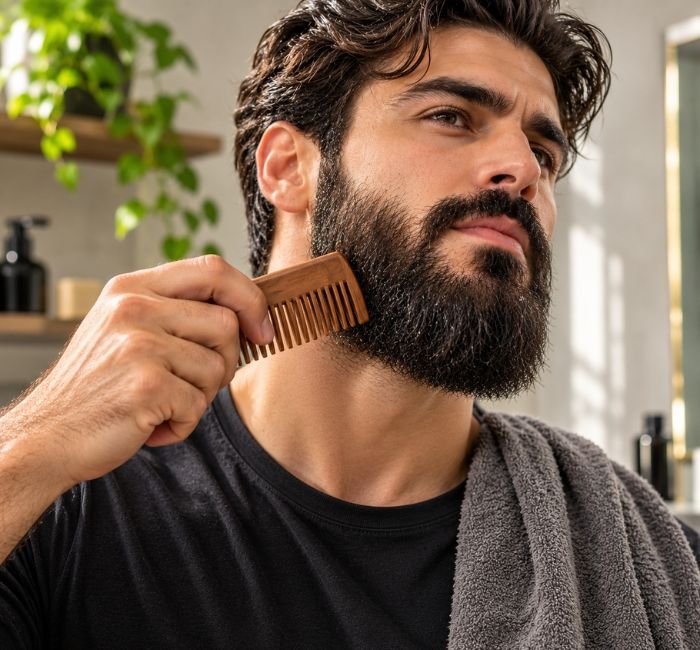
How to use it: Cleanse gently, rinse, then detangle with a wide-tooth comb while hair is still slightly damp.
Practical tip: Start combing near the ends and gradually move upward. Never force a comb through a knot just because the beard is wet.
6. Lightweight Beard-and-Face Cleanser
This option cleans the hair and underlying skin in one step. It may be more practical than a separate beard shampoo when facial hair is short and skin care, rather than conditioning, is the main concern.
Best for: Stubble, short beards, and oily or acne-prone skin.
Watch out for: Strong scrubs and heavy oils can make an already irritated face feel worse.
How to use it: Gently massage into both skin and facial hair, then rinse without using an abrasive washcloth.
Practical tip: If you’re acne-prone, look for non-comedogenic labeling. The AAD also recommends skin-type-appropriate cleansers rather than assuming all beard products suit acne-prone faces.
7. Solid Beard Shampoo Bar
A solid bar takes up little space in a travel bag and avoids carrying a large liquid bottle. Bars can contain mild synthetic detergents or traditional soap, which may feel quite different on facial hair.
Best for: Travel or a compact grooming kit.
Watch out for: Some soap-based bars leave hair rough and skin tight; “natural” isn’t proof of gentleness.
How to use it: Build lather between wet hands, massage the foam into your beard, then rinse fully.
Practical tip: Keep the bar in a draining dish and let it dry between uses. A wet bar stored in a closed tin becomes messy and wastes product.
8. Medicated Cleanser for Beard Dandruff
A medicated cleanser isn’t simply a stronger cosmetic beard wash. It contains an active ingredient intended to manage a particular condition, such as seborrheic dermatitis, which can affect the area under a beard.
Best for: People following product instructions or professional advice for an assessed scalp or beard condition.
Watch out for: Flakes aren’t always caused by the same problem. Dryness, irritation, and seborrheic dermatitis require different approaches.
How to use it: Follow the label and a clinician’s directions; don’t invent your own treatment schedule.
Practical tip: If flaking, redness, or itching continues beyond a couple of weeks despite gentle care, seek medical advice. Get assessed sooner for pain, broken skin, or significant inflammation.
Quick Comparison: Which Type Fits Your Routine?
| Type | Main Need | Starting Approach | Watch For |
| Gentle everyday | Normal skin, sweat | Gentle cleansing as needed | Tightness afterward |
| Moisturizing | Dry, coarse hair | Dedicated shampoo 2–3 times weekly initially | Heavy residue |
| Fragrance-free | Easily irritated skin | Gentle cleansing as needed | Other allergens |
| Deep-cleansing | Wax or balm buildup | Occasional use when needed | Roughness, dryness |
| Conditioning | Curly, tangled beard | Dedicated shampoo 2–3 times weekly initially | Weighed-down hair |
| Beard-and-face cleanser | Short beard, oily skin | Daily if tolerated | Breakouts or irritation |
| Solid bar | Travel | According to skin needs | Soap-related dryness |
| Medicated | Assessed dandruff condition | Product or clinician directions | Incorrect self-treatment |
The numbers are suggested trial routines, not medical rules. Adjust for your skin, the shampoo’s strength, and how much buildup you actually have.
How Often Should You Wash Your Beard?
The distinction between cleaning your beard and using a dedicated beard shampoo matters. The AAD recommends washing facial hair and the skin beneath daily with a gentle cleanser. That does not require a powerful shampoo every morning.
| Situation | Practical Starting Routine |
| Stubble or short beard | Gentle daily face-and-beard cleansing |
| Medium beard | Daily gentle cleansing; dedicated shampoo as needed |
| Long, dry beard | Daily gentle skin cleansing; adjust shampoo to comfort |
| Sweaty workouts | Cleanse after heavy sweating |
| Heavy styling products | Wash away buildup before it accumulates |
Your skin provides useful feedback. Tightness, rough ends, or persistent itching may signal that a cleanser is too strong, washing is too aggressive, or you need better moisturizing. Greasy residue, on the other hand, may mean you’re using too much balm or not rinsing thoroughly.
How to Wash Your Beard Properly
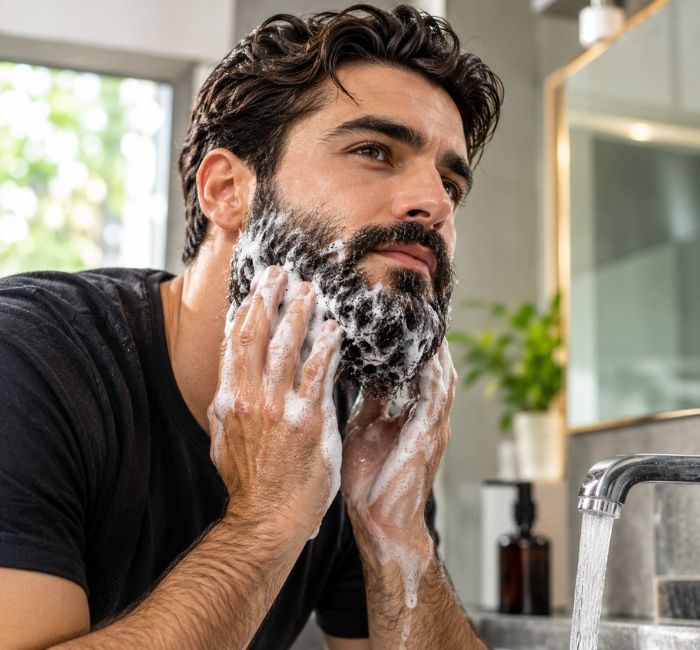
Step 1: Wet With Lukewarm Water
Soak the facial hair and underlying skin. Lukewarm water is more comfortable than very hot water for many people with dry or sensitive skin.
Step 2: Measure a Starting Amount
Try roughly a dime-sized amount of liquid cleanser for a short beard or a quarter-sized amount for a long, dense one. These are practical estimates, not tested dosages; concentrated formulas may need less.
Step 3: Massage the Skin, Not Just the Hair
Move your fingertips gently through the beard, especially beneath the chin and around the jaw. Avoid scratching with nails or using a rough scrubber.
Step 4: Rinse Completely
Let water reach the roots by gently separating thick sections with your fingers. Leftover product can make skin uncomfortable and hair feel coated.
Step 5: Pat Dry
Use a clean, soft towel and press rather than rub. Leave the beard slightly damp if you’re applying moisturizer or conditioner next.
Step 6: Condition Only as Needed
A conditioner can help coarse hair, while a non-comedogenic beard conditioner may be preferable to heavy oil for acne-prone skin. Use modest amounts, then comb gently rather than pulling at tangles.
What to Check Before Buying Beard Shampoo
Check the problem first. Buy for dryness, oiliness, sensitivity, or buildup rather than a vague promise of “better beard health.” A product that solves someone else’s problem may create yours.
Read the full ingredients. Botanical extracts and premium oils sound appealing, but they’re not substitutes for a mild overall formula. If fragrance has bothered you before, check the label carefully.
Compare cost per wash. As an illustration, a 200 mL bottle costing $12 provides about 100 washes at 2 mL per wash, or $0.12 each. At 4 mL per wash, the same bottle provides 50 washes and costs $0.24 each. These are hypothetical prices and quantities, not measurements of a tested product.
Ignore dramatic growth promises. Shampoo can clean existing hair and improve its feel; it cannot create new follicles or reliably fill naturally sparse areas.
Know when to ask for help. A barber can suggest detangling and trimming techniques. Ongoing rash, painful bumps, hair loss, or stubborn flakes are better discussed with a dermatologist.
Beard Dandruff vs. Beard Itch vs. Growth Claims
Dandruff: Visible flakes can come from simple dryness, but greasy scaling with redness may be associated with seborrheic dermatitis. A cosmetic shampoo might remove loose flakes without treating the cause. The AAD discusses medicated options for beard dandruff; don’t assume every flake needs antifungal treatment.
Itch: Itching can accompany dryness, irritation from fragrances, or an underlying skin condition. Try a gentle cleanser and appropriate moisturizer, and avoid scratching. Seek advice if symptoms persist beyond a couple of weeks or become severe.
Growth: Shampoo doesn’t make dormant follicles start producing hair. Genetics, age, and hormones play much larger roles in beard-growth patterns. A clean, conditioned beard may look fuller because existing hairs lie more neatly, but that’s not new growth.
Common Beard Shampoo Mistakes to Avoid
Scrubbing Harder to Feel Cleaner
Aggressive rubbing can irritate facial skin. Use fingertips and let the cleanser do its job.
Choosing the Strongest Fragrance
A pleasant scent isn’t evidence of effective cleaning. For reactive skin, fragrance-free may be a safer starting point.
Assuming More Foam Means More Cleaning
Lather depends on the formula. A low-foam cleanser can still remove routine oil and dirt.
Using Too Much Oil Afterward
Heavy application may leave buildup and doesn’t necessarily improve conditioning. Start sparingly, especially if your skin is oily.
Treating Every Flake as Dryness
Persistent flakes, greasy patches, or rash may require a different approach from ordinary moisturizing. Don’t indefinitely switch shampoos instead of seeking advice.
Frequently Asked Questions
Can I use regular shampoo on my beard?
Yes, if it’s gentle and your skin tolerates it. Strong clarifying shampoos may feel drying, while a mild facial cleanser can be adequate for short facial hair.
Should beard shampoo be used every day?
Daily gentle beard-and-skin cleansing is recommended, but daily use of a dedicated shampoo isn’t necessary for everyone. Adjust according to activity, skin response, and buildup.
Does beard shampoo make facial hair grow faster?
No convincing evidence shows that ordinary cleansing shampoo speeds up beard growth. Its purpose is cleaning, not creating new hair follicles.
What helps beard itch after washing?
Try lukewarm water, gentler cleansing, and a suitable moisturizer. If itching continues, worsens, or comes with a rash, get professional advice.
Is sulfate-free beard shampoo always better?
No. Some sulfate-free formulas are mild, but the complete ingredient mix and your personal tolerance matter more than a single claim on the label.
Do I need beard oil after shampoo?
Not always. Dry beards may benefit from conditioning, but people with acne-prone skin may prefer a suitable non-comedogenic beard conditioner or moisturizer.
Conclusion
The right beard shampoo removes buildup without making your skin uncomfortable or your facial hair harder to manage. Start with a gentle cleanser that suits your skin type, then choose extra moisturizing, conditioning, or deeper cleansing only if your beard actually needs it. Wash carefully, rinse well, and adjust your routine when your beard feels dry or coated.
The practical takeaway: Comfortable skin and clean, manageable facial hair matter more than fragrance, fashionable ingredients, or an expensive bottle.


Leave a Reply