
Growing a beard can be frustrating. Your cheeks might look patchy, your chin may grow faster than everything else, and the itching can make shaving tempting. Genetics largely determines how full your beard becomes, but good grooming can make the process more comfortable. You don’t need expensive oils, supplements, or complicated treatments to get started.
Here’s what affects beard growth, what you can expect over the first several weeks, how to handle common problems, and which methods are worth considering.
What Actually Determines Beard Growth?
Genetics, age, hormones, and the way your hair follicles respond to hormonal signals all influence beard development. Testosterone and dihydrotestosterone (DHT) play important roles, but sparse facial hair doesn’t automatically mean your testosterone levels are low.
Age matters, too. According to Cleveland Clinic, beard thickness and coarseness may continue developing between ages 18 and 30. A patchy beard at 19, then, may look different a few years later.
Beard hair grows roughly 0.3–0.5 millimeters per day, although individual rates vary. A paper published in Military Medicine reports this range, citing earlier research on facial hair growth.
Keep in mind that growing longer facial hair and developing greater beard density aren’t the same thing. Extra length can make existing coverage more noticeable, but grooming products cannot reliably create new follicles.
Hormone safety: Don’t take testosterone or DHT boosters simply to grow a beard. These aren’t appropriate cosmetic shortcuts and may carry health risks. Speak with a doctor about any hormone-related concerns.
Beard Growth Timeline: What to Expect Week by Week
It helps to know what the first several weeks might look like before deciding your beard isn’t growing well. This timeline is a practical grooming guide, not a guarantee that your facial hair will develop on schedule.
Week 1: Early Stubble and Possible Itching
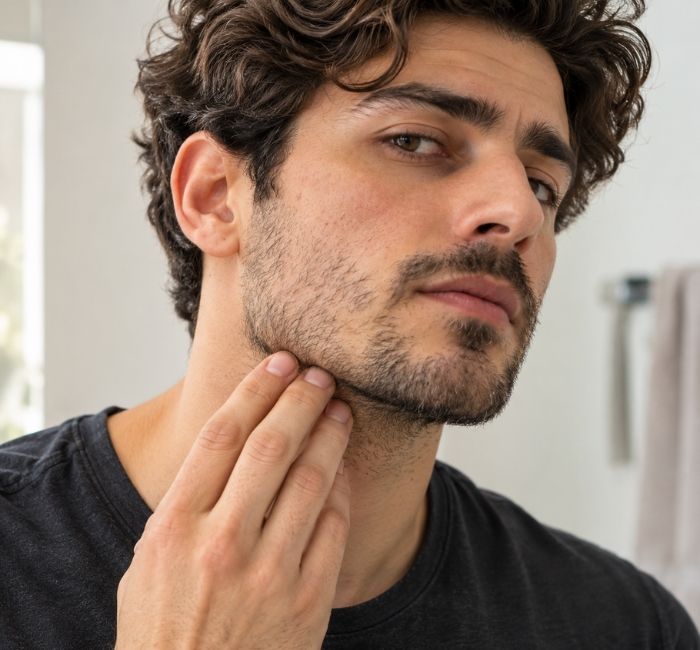
During the first week, short facial hairs become more visible. Your chin and mustache may appear darker than your cheeks, while some hairs feel rough or prickly against the skin.
Mild itching can happen as short facial hair grows, particularly if your skin is dry or irritated. If it’s occasional, improves with gentle cleansing and moisturizing, and isn’t accompanied by a rash or painful bumps, basic skin care may be enough.
However, persistent or worsening itching, significant redness, greasy flakes, painful bumps, swelling, or broken skin shouldn’t be dismissed as normal beard growth. These symptoms may indicate irritation, ingrown hairs, beard dandruff, or another skin condition.
The American Academy of Dermatology’s guidance on common beard problems explains how dryness, dandruff, and ingrown hairs can affect the skin beneath facial hair.
Weeks 2–4: The Awkward Growth Stage
Your beard may look untidy during these weeks. The mustache and chin might grow faster than the cheeks, and individual hairs can stick out in different directions.
Resist the urge to shave the thinner areas repeatedly. Light neckline maintenance is fine, but give the rest of your facial hair room to grow.
Weeks 4–6: Your Natural Coverage Becomes Clearer
By this point, longer hairs may make some areas appear fuller. You’ll have a better idea of where your beard grows strongly and where your natural coverage is limited.
If you need one, a beard comb or brush can help manage the growing length. You can also start considering whether a full beard, short boxed beard, goatee, or stubble would suit your face.
Weeks 6–8 and Beyond: Choose Your Beard Style
After several weeks, you may have enough length to judge your beard’s general shape more confidently.
You can continue growing it or maintain a shorter style that works with your coverage. A longer beard may take several additional months, depending on your desired length.
Eight weeks of waiting won’t necessarily make naturally sparse areas any denser.
6 Practical Tips for Growing and Maintaining Your Beard
1. Let Your Facial Hair Grow Without Constant Trimming
Give your beard time before judging its potential. If you shave whenever the cheeks look uneven, you won’t get to see what your existing facial hair looks like with more length.
Try allowing four to eight weeks before choosing a final style. This isn’t a scientifically established growth milestone, but it’s a useful starting period for evaluating coverage.
Meanwhile, keep your neckline reasonably tidy and avoid constantly adjusting your cheeks or jawline.
Practical tip: Take one photograph every week under similar lighting. Comparing pictures can reveal gradual changes that aren’t obvious during daily mirror checks.
2. Clean Your Beard and the Skin Underneath
A clean beard is easier to maintain, especially while you’re getting used to the extra facial hair.
Sweat, dirt, oil, and dead skin cells can collect around facial hair. When they’re not removed, they may contribute to clogged pores and skin irritation.
The American Academy of Dermatology recommends washing your face and beard regularly with a gentle cleanser suited to your skin type.
Massage the cleanser gently through your beard, rinse thoroughly with lukewarm water, and pat dry using a clean towel. Avoid aggressive scrubbing or harsh soaps that leave your skin feeling tight.
A clean beard doesn’t necessarily grow faster, but keeping the skin underneath comfortable makes maintaining facial hair much easier.
3. Moisturize to Reduce Itching and Dryness
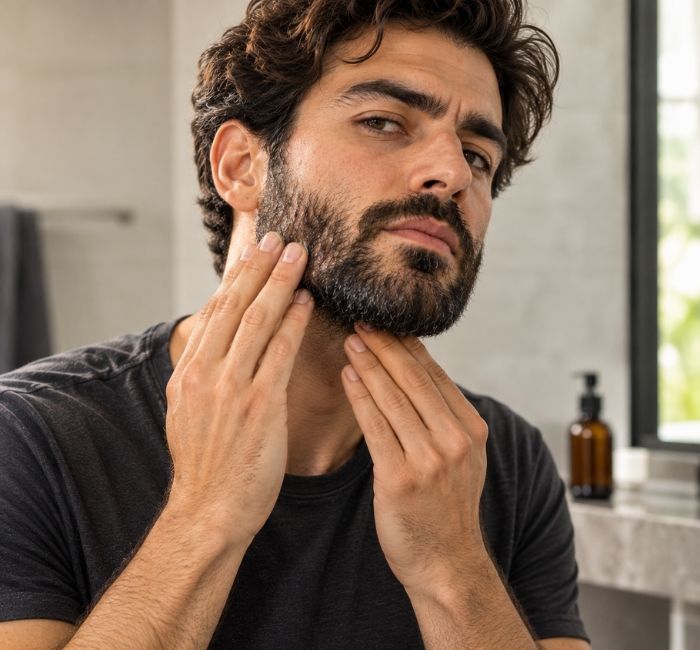
Itching is a common reason people struggle with the early growing stage. Dry skin is one possible cause. A gentle moisturizer can help reduce discomfort and keep the skin beneath your beard hydrated. If your facial hair feels rough, a small amount of beard conditioner or oil may help soften it.
For sensitive skin, fragrance-free moisturizer is often a sensible starting point. If you’re acne-prone, choose non-comedogenic products rather than heavy oils that may worsen breakouts.
The AAD’s healthy beard guide recommends adjusting your grooming products according to your skin type.
A simple routine is usually enough:
- Wash your beard gently with lukewarm water.
- Pat your skin dry without vigorous rubbing.
- Apply moisturizer to the skin beneath your facial hair.
- Use a small amount of conditioning product if necessary.
Don’t assume that applying more oil will improve growth. Beard oil conditions existing hair, but it hasn’t been shown to create new follicles or reliably increase beard density.
4. Prevent Ingrown Hairs While Growing Your Beard
Ingrown hairs can make beard growth uncomfortable, especially when your facial hair is curly or coarse.
An ingrown hair develops when hair curves back into the skin instead of growing outward. This may cause small, itchy, or painful bumps, particularly around the neckline.
According to the AAD’s advice on beard problems, ingrown hairs can occur during the stubble stage or after trimming.
If you need to shape your neckline, soften the hairs with warm water and shave in the direction they naturally grow. Avoid stretching the skin tightly or repeatedly shaving over the same area.
A trimmer that leaves a small amount of stubble may be more comfortable than shaving extremely close to the skin.
Don’t squeeze, scratch, or dig into ingrown hairs with sharp tools. If bumps become increasingly painful, swollen, or persist despite changes to your grooming routine, seek medical advice.
5. Brush, Condition, and Manage Your Existing Beard
Once your beard gets longer, a little grooming can make a noticeable difference to its appearance. A beard brush or comb helps separate tangled hairs, distribute conditioning products, and guide your beard into a more consistent shape.
Choose your tools according to your hair type. For coarse beards, conditioner or a small amount of oil may reduce roughness. Curly beards often benefit from gentle detangling with a wide-tooth comb, while fine facial hair usually needs lighter products.
Start near the ends of longer beard hairs and work through tangles carefully. Aggressive brushing may pull on the hair and irritate the skin.
A small amount of beard balm can help control stray hairs if necessary, but using too much may leave your beard looking greasy.
Brushing won’t stimulate new follicles. Its value comes from improving the manageability and appearance of the facial hair you already have.
6. Choose a Beard Style That Suits Your Natural Coverage
Not every beard grows evenly across the cheeks, chin, and jawline. Some people have strong chin growth but sparse cheeks, while others develop fuller sideburns or a more prominent mustache.
Rather than using extra length to cover every gap, work with the areas where your beard grows best.
A goatee may work well when the chin and mustache are strongest. Short boxed beards can suit relatively even jawline coverage, while maintained stubble may look more balanced when facial hair is fine or patchy.
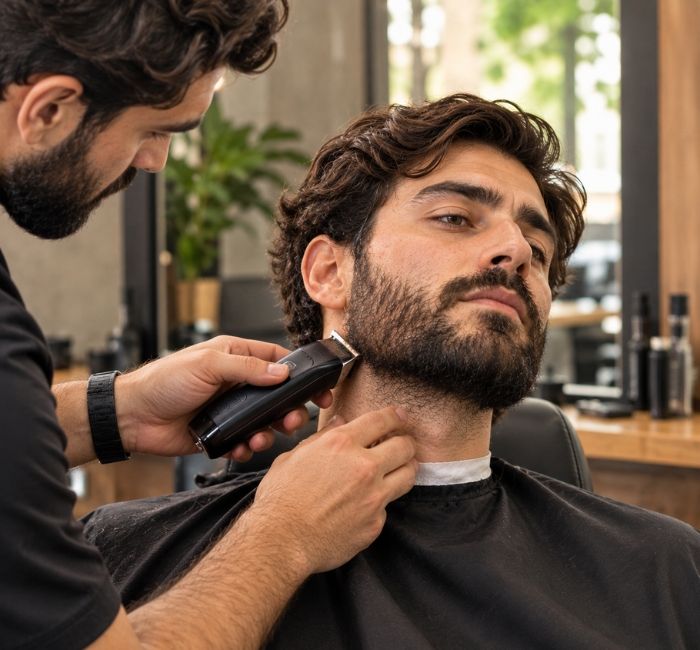
When visiting a barber, explain your goal before trimming begins. A useful request is: “I’m growing my beard longer, so please clean up the neckline and stray hairs without removing unnecessary length.”
Remember that trimming and shaving don’t stimulate thicker growth. The Mayo Clinic confirms that shaving doesn’t change hair thickness, color, or growth rate.
The goal of shaping is to make your existing beard look tidy, not to change how your follicles function.
Can Diet, Sleep, and Exercise Help Beard Growth?
A balanced diet, adequate sleep, and regular exercise support overall health, but they shouldn’t be presented as guaranteed ways to increase beard density.
Hair production requires sufficient nutrition, including protein. Foods such as eggs, chicken, fish, beans, lentils, nuts, and vegetables can help support your normal dietary needs. However, taking additional vitamins or minerals without a deficiency won’t necessarily make your beard thicker.
The National Institutes of Health recommends seven to nine hours of sleep for adults. The CDC recommends at least 150 minutes of moderate-intensity physical activity weekly, along with muscle-strengthening activities on two days.
Those habits support overall health; they aren’t established treatments for making a beard denser. If you suspect a nutritional or hormonal deficiency, ask a doctor whether testing is appropriate rather than relying on supplements marketed for facial hair growth.
Beard Growth Methods: What’s Worth Trying?
| Method | Primary purpose | Beard-growth evidence | Worth considering? |
| Allowing beard to grow | Reveals natural coverage | Doesn’t create follicles | Yes, first step |
| Moisturizer or beard oil | Reduces dryness | No convincing density benefit | Yes, when needed |
| Brushing and trimming | Improves shape | No increase in hair growth | Yes, for grooming |
| Topical minoxidil | Potential facial hair enhancement | Small trials show some benefit; results vary | Only with medical advice |
| Derma roller | Marketed to stimulate follicles | Insufficient beard-specific evidence | Not recommended as a DIY growth treatment |
| Frequent shaving | Removes visible facial hair | No thickening benefit | No, not for growth |
For most people, basic grooming is a more sensible starting point than medical or experimental treatments.
Medical and Experimental Beard Growth Options
If your facial hair remains sparse, you may come across treatments that promise more growth. Unlike routine grooming, these options can involve medical risks and deserve closer scrutiny.
Does Minoxidil Actually Work for Beard Growth?
Minoxidil is a medication commonly used for certain types of scalp hair loss. In the United States, topical minoxidil products are labeled for scalp use rather than cosmetic beard enhancement, so applying them to facial hair is an off-label use.
A 2016 randomized, placebo-controlled study published in The Journal of Dermatology investigated topical 3% minoxidil for beard enhancement. A later research paper reports that the study involved 48 cisgender men and found improvements in measures including facial hair count and photographic assessments.
A separate 2026 randomized controlled trial enrolled 69 transgender men receiving stable gender-affirming hormone therapy. After 12 weeks, participants using topical 3% minoxidil showed greater improvements in facial hair density and diameter than those receiving placebo.
The population matters: The 2026 findings apply directly to the specific group studied and shouldn’t be treated as proof that minoxidil will work equally well for everyone.
Together, these studies suggest possible benefits, but the research is still limited, particularly regarding long-term outcomes and different populations. Minoxidil is not guaranteed to produce a fuller beard.
Safety matters as well. The DailyMed labeling for topical minoxidil 5% foam warns about symptoms including rapid heartbeat, dizziness, chest pain, and faintness, and lists unwanted facial hair growth and skin irritation among reasons to stop use and ask a doctor.
These are warnings associated with a scalp-use product, not instructions or assurances of safety for facial application.
Do not start minoxidil for beard growth without consulting a doctor or dermatologist. A healthcare professional can help assess whether it is appropriate and explain its limitations and risks.
Do Derma Rollers Help Grow a Beard?
Derma rollers are microneedling tools that use small needles to puncture or stimulate the skin. They’re frequently promoted online as a way to encourage beard growth, sometimes in combination with minoxidil.
However, convincing clinical evidence specifically supporting home derma rolling for beard enhancement is lacking. Results from studies involving scalp hair loss cannot automatically be applied to facial hair.
The US Food and Drug Administration warns that microneedling can cause bleeding, irritation, pigmentation changes, and infection. It also states that no microneedling devices have been cleared by the FDA for treating hair loss.
Facial skin may already be irritated by shaving, acne, or ingrown hairs. Adding a needle device can introduce further risks, so derma rollers shouldn’t be treated as a proven or risk-free shortcut to a thicker beard.
Common Beard Growth Mistakes to Avoid
Shaving Repeatedly to Make Hair Thicker
Freshly shaved hair may feel rougher because the tips are blunt, but this doesn’t mean the follicles have started producing thicker hair. Shaving frequently simply removes visible length without increasing density.
Using Too Many Grooming Products
A gentle cleanser, suitable moisturizer, and basic grooming tool may be enough for a short beard. Combining multiple growth serums, oils, and exfoliators can cause irritation without delivering additional benefits.
Trimming Too Much During the Awkward Stage
Early facial hair growth often looks uneven. Constantly trimming thinner sections may prevent you from seeing your natural beard pattern at a longer length. Focus on minimal shaping until you understand your coverage.
Ignoring Persistent Skin Problems
Occasional mild itching is different from ongoing redness, painful bumps, severe flaking, or sudden hair loss.
The AAD’s guide to alopecia areata explains that this condition can cause smooth patches of hair loss, including on the beard.
If you develop unexplained bald patches or persistent skin symptoms, seek medical evaluation instead of assuming it’s ordinary beard growth.
Frequently Asked Questions
How long does it take to grow a full beard?
Four to eight weeks can provide a useful first look at your natural coverage. Growing a longer beard may take several months, depending on your starting length, individual growth rate, and preferred style.
How can I grow a beard faster naturally?
There is no reliable natural shortcut that dramatically increases genetically determined beard growth. Allow enough time for growth, maintain your skin, and avoid unnecessary trimming while addressing any genuine nutritional or medical concerns.
Can a patchy beard become thicker over time?
Yes, facial hair density may continue developing into adulthood, particularly through the twenties. However, genetics strongly influences the eventual pattern, and some areas may remain sparse.
How do I stop my beard from itching while growing it?
Use a gentle cleanser and moisturizer, avoid scratching, and reduce irritating grooming products. Seek medical advice if itching persists or is accompanied by significant redness, painful bumps, or flaking.
Does shaving every day make beard hair grow faster?
No. Shaving removes the visible portion of hair without changing its natural growth rate or thickness.
Can beard oil or a derma roller fill patchy areas?
Beard oil conditions existing facial hair but doesn’t create new follicles. Derma rollers lack convincing beard-specific evidence and can cause skin injury, so they shouldn’t be relied upon as a home growth treatment.
Conclusion
Growing a beard takes patience, but it doesn’t require a complicated routine. Give your facial hair time to show its natural coverage, care for the skin underneath, and use grooming products to address specific problems such as dryness, itching, or rough hair.
Oils, frequent shaving, and supplements won’t override genetics. If your beard stays patchy, choosing a style that works with your coverage may be more useful than constantly trying to increase its density.
Medical treatments such as minoxidil deserve a separate, informed discussion with a qualified professional rather than experimentation based on online before-and-after photographs.
Your beard doesn’t have to be especially long or thick to look well maintained. Aim for a style that suits your face, feels comfortable, and fits your routine.


Leave a Reply