
A haircut can look great in a photo and still be frustrating to wear every day. Your texture, growth pattern, and morning routine matter as much as the shape itself. The best men’s haircuts work with your natural hair rather than fighting it. This guide compares 12 styles, who they suit, and what to ask your barber.
My advice: pick a cut you can recreate at home, not one that only looks right immediately after a professional blow-dry.
What Makes the Best Men’s Haircuts Different?
A useful haircut suits your features, grows out reasonably well, and fits your routine. A crisp fade may need frequent edge cleanups, while longer layers can last between trims but require more attention after washing.
Thickness and density aren’t identical: thick strands don’t necessarily mean lots of hair. A barber can redistribute weight and volume, but a haircut can’t increase density.
My take: a realistic reference photo beats a dramatic transformation shot. Look for someone with a hairline, texture, and length similar to yours, then ask what would need to change to make the style practical.
How to Choose the Right Haircut for Your Hair Type
Check your clean, dry hair without styling product. Notice its natural part, curls, and growth around the crown.
- Straight: Try a side part, Ivy League, slick back, or two block. Fine strands may need less layering.
- Wavy: Curtains, bro flow, shag, and wolf cuts use your natural bends.
- Curly: A curly top fade preserves texture; plan the shape around dry curls.
- Coily: A curly top fade keeps definition. Discuss shrinkage and top volume first.
- Fine or thinning: Consider a French crop, Ivy League, or restrained textured crop; a fade won’t necessarily conceal scalp.
- Very thick: A textured crop or layered shag can reduce bulk, but over-thinning creates problems.
Face shape can guide proportions, but how the front and sides behave and how often you’ll get a trim matters more.
1. Low Taper Fade
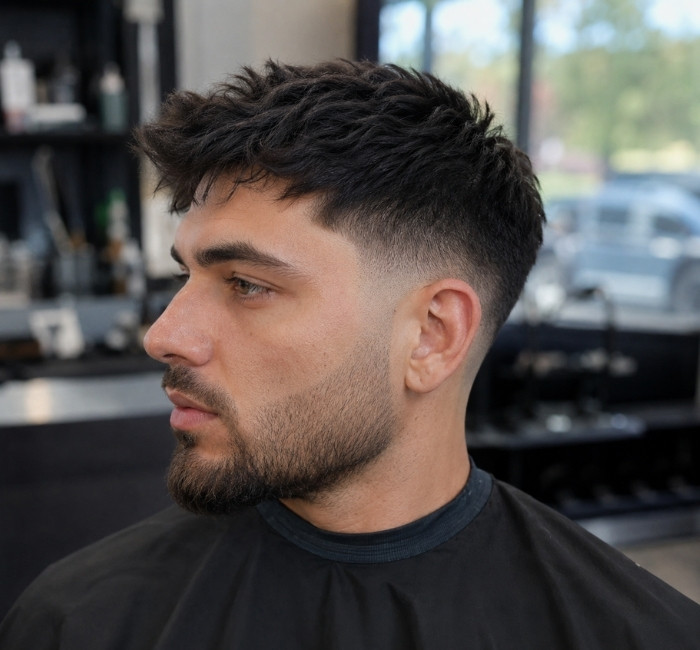
A low taper fade gradually shortens hair near the sideburns and neckline while keeping more coverage above the ears. Unlike a high fade, the shortest area stays close to the edges. You can pair the taper with curls, a side part, or a textured top.
It suits men who want tidy edges without very short sides. Watch that the taper doesn’t creep too high, or the silhouette changes.
Ask for a low taper following your natural hairline with a soft transition above it.
Practical tip: take a photo of the side and back after a good cut; those views make future appointments easier.
2. Textured Crop
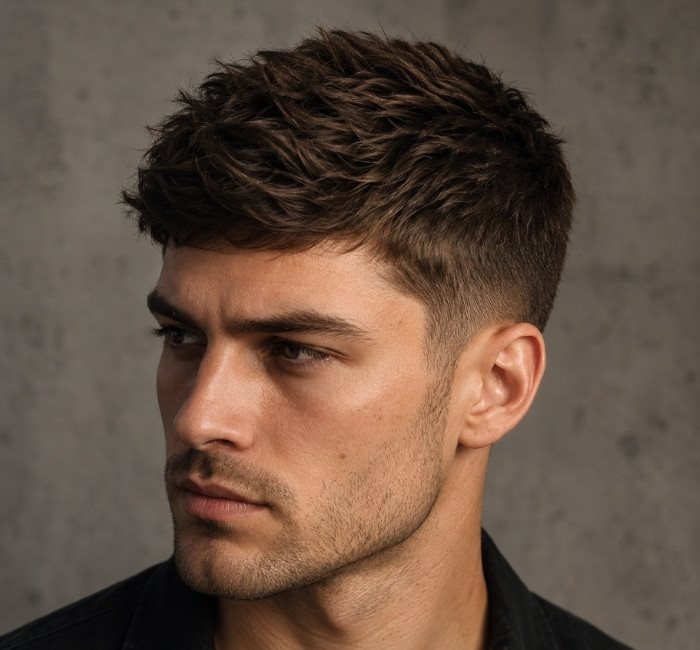
The textured crop keeps the top fairly short, with separated strands that create movement. A loose fringe and shorter sides make it look relaxed rather than carefully combed.
Straight and wavy hair often suit it, particularly if you dislike complicated styling. Deep thinning can leave fine hair looking sparse, so ask your barber to preserve enough weight.
Request roughly 1.5–3 inches on top, adjusted to your density, and a natural, uneven-looking finish. Work a small amount of matte paste through dry hair.
My take: this offers a noticeable change without demanding much time in the mirror.
3. Curtains Hairstyle

Curtains have a middle or slightly off-center part, with longer front sections falling to either side of the face. They can be softly styled or left to follow natural waves.
The style works particularly well on straight or wavy hair, but needs enough front length to separate. A cowlick can make one side sit higher; perfect symmetry isn’t always realistic.
Ask for a soft center part, front length that reaches toward your cheekbones, and enough layering to prevent heavy sides. Direct damp roots away from the part while drying. If you’re starting with short hair, expect a growing-out stage.
4. French Crop
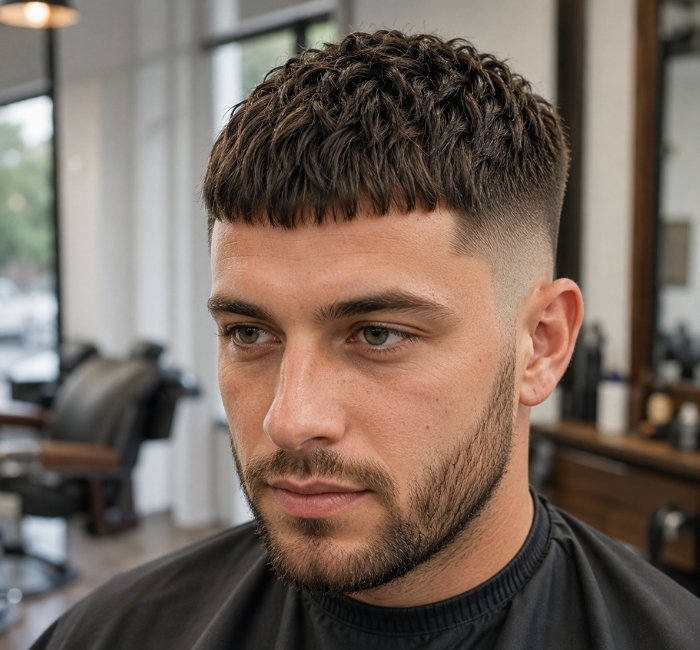
The French crop has a short top and a forward-facing fringe, usually paired with cropped or tapered sides. Its outline is generally more deliberate than a loose textured crop.
It’s appealing if you want a compact cut with little daily styling, especially on straight or slightly wavy hair. A fringe that’s too short may expose more forehead than you prefer.
Tell your barber to keep the fringe soft rather than sharply straight, unless you want a blunt edge. Use a touch of cream to guide it forward.
Key difference: a French crop emphasizes the fringe’s shape; a textured crop emphasizes movement through the top.
5. Side Part Haircut

A side part directs the longer top toward one side along a natural division. The sides can be scissor-cut or tapered, and the finish can look relaxed or polished without a shaved parting line.
It’s useful for men who like a tidy shape that doesn’t feel overly formal. Fighting your natural growth direction, however, can make it harder to style.
Show your barber where the hair separates and ask for enough length to brush across. Try lightweight cream on damp hair instead of starting with firm gel.
Practical tip: check the part after drying naturally; that tells you whether it will behave on ordinary mornings.
6. Slick Back Hairstyle
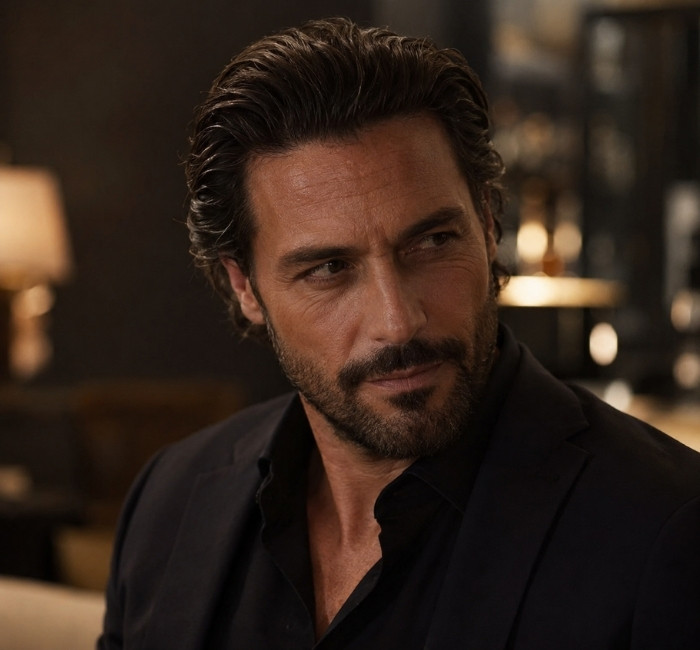
A slick back sweeps the top away from the forehead. It can sit close to the head with shine or have a softer finish with root volume. A tapered side gives a less dramatic outline than a skin fade.
It tends to suit straight or wavy hair with enough length to move backward. Be aware that it exposes the hairline, and heavy pomade may separate fine strands.
Ask for about 3–5 inches on top, keeping some movement through the length. Apply a little cream to damp hair and guide it backward without pulling tightly. Save stronger-hold products for occasions when you actually need them.
7. Curly Top Fade
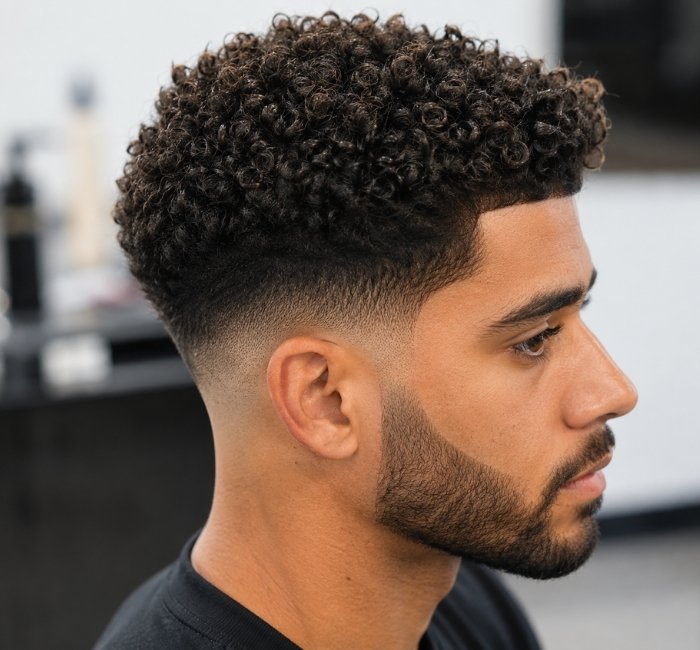
A curly top fade keeps curls or coils visible above shorter sides. You can choose a rounded top or leave more height at the front, depending on how your curls naturally form.
It’s a sensible option for men who want definition without flattening their texture.
Watch out for shrinkage: hair cut while stretched may look substantially shorter when dry.
Ask your barber to check your natural curl pattern before agreeing on top length and fade height. After washing, work in a suitable leave-in conditioner and avoid excessive handling as the curls dry.
My take: an intentional overall silhouette matters more than perfectly matching individual curls.
8. Ivy League Haircut
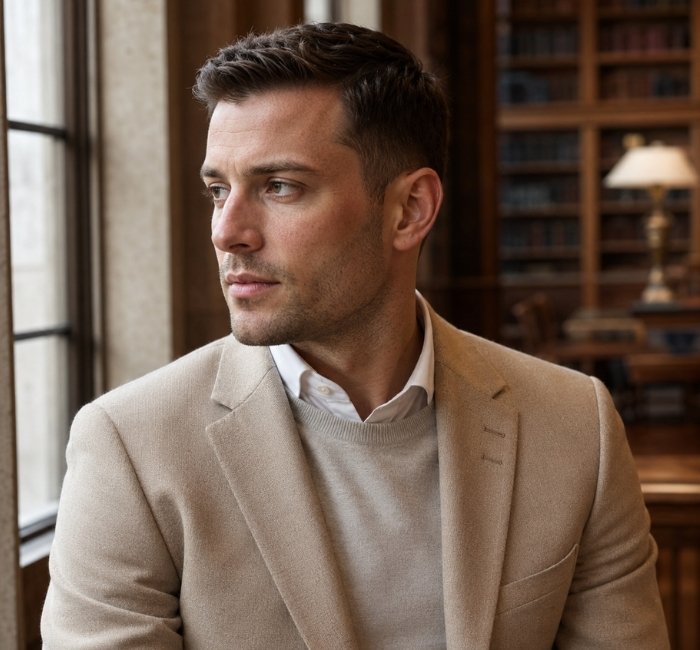
The Ivy League is a short cut with extra length near the front, allowing a small side sweep. It’s neater than many medium-length styles but offers more flexibility than a very short crew cut.
This suits straight or lightly wavy hair and a simple workday routine. If the barber cuts the front too close, you lose the option to part it.
Request around 1.5–3 inches toward the front, depending on your hair, with tapered sides. Style with fingers and a little light cream.
Practical tip: if you wear glasses, check that the hair at the temples doesn’t bunch up against the frames.
9. Two Block Haircut
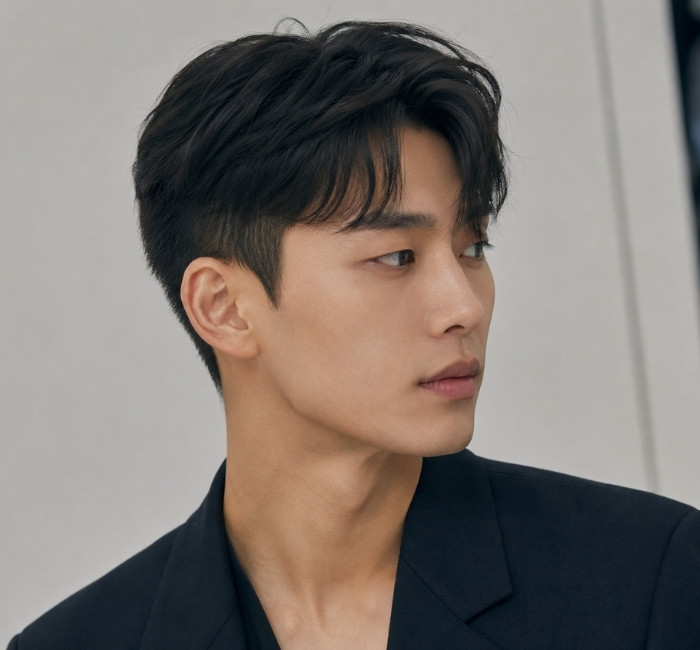
The two block have longer hair on top with a shorter section underneath, around the sides and back. The transition can be obvious or softened, and the front can fall forward or split into curtains.
Straight and wavy hair usually shows the shape clearly. But an upper section left too heavy can flare outward into a rounded, helmet-like outline.
Ask whether your barber plans a connected or disconnected version and bring a side-view reference. Use light cream to control the longer front.
Practical tip: agree on the length around the ears; it determines how strong the two-block contrast appears.
10. Modern Shag Haircut

A modern shag uses layers around the crown, sides, and back to make medium-length hair move naturally. Thoughtful layering redistributes weight instead of simply making the hair uneven.
It’s especially useful for wavy or thick hair and men who prefer a casual finish. Too-short crown layers can create puffiness; aggressive thinning can leave fine ends looking stringy.
Ask to preserve your overall length while adding soft layers where the hair feels heavy. Scrunch a little styling cream into damp hair rather than brushing every layer flat.
My take: the shape should still work when you leave it largely alone.
11. Bro Flow Hairstyle

Bro flow is medium-to-long hair encouraged away from the face and toward the sides and back. Unlike a slick back, it relies more on length and natural movement than on product or tight combing.
Straight and wavy hair can grow into this relaxed shape, but the awkward stage around the ears takes patience. Repeatedly cutting the sides short can slow your progress toward the finished look.
Tell your barber you’re growing a natural flow and need only light shaping. Condition the longer sections, finger-comb them back while damp, and let them settle before adding product. A small trim can improve the outline without resetting your length.
12. Wolf Cut

A wolf cut combines shag-like layers with a longer, mullet-inspired back. It typically has more volume near the crown and visible length toward the neckline, often with face-framing pieces.
Wavy, medium-to-thick hair displays the contrast naturally. On straight hair, a little extra styling may be needed; a crown cut too short can stick up awkwardly.
Bring front and back photos and ask for layered movement without losing the length behind your ears. Separate the ends with light texture cream.
Useful distinction: a wolf cut generally makes the difference between crown volume and back length more pronounced than a modern shag.
Quick Comparison of the 12 Haircuts
These are estimates, not rules. Styling times exclude washing, and curly lengths vary with shrinkage.
| Haircut | Approximate top length | Typical daily styling | Suggested trim interval |
| Low taper fade | Flexible | 2–8 min | 2–4 weeks |
| Textured crop | 1.5–3 in | 2–5 min | 4–6 weeks |
| Curtains | 4–6 in | 5–10 min | 6–10 weeks |
| French crop | 1–2.5 in | 2–4 min | 3–5 weeks |
| Side part | 2–4 in | 3–7 min | 4–6 weeks |
| Slick back | 3–5 in | 5–10 min | 4–8 weeks |
| Curly top fade | Varies by curl pattern | 3–8 min | 3–5 weeks |
| Ivy League | 1.5–3 in | 2–5 min | 3–5 weeks |
| Two block | 3–6 in | 4–8 min | 4–7 weeks |
| Modern shag | 4–8 in | 3–10 min | 8–12 weeks |
| Bro flow | 5–9 in | 3–8 min | 8–12 weeks |
| Wolf cut | 4–9 in | 5–12 min | 6–10 weeks |
For quick styling, consider the French crop or Ivy League. For more movement, compare curtains, bro flow, and shag.
What to Discuss With Your Barber Before Your Appointment
I’d recommend bringing two or three photographs showing the front, sides, and back, ideally on hair with a texture similar to yours. A front-only photo can hide essential details.
Explain what happens when your hair air-dries. Does the crown stick up? Does one side curl more? Does your fringe separate by itself? These details help your barber adapt the cut.
Be precise about your limits. Say how much length you’re willing to lose, whether you want skin showing at the sides, and how many minutes you’ll spend styling. Ask for a quick demonstration using tools you own.
Common Mistakes to Avoid
Copying a Photo Without Considering Your Hair
A cut photographed on dense, straight hair won’t automatically behave the same way on fine curls or strong waves. Use the photo as a goal for shape, then adapt it to your texture.
Removing Too Much Length Too Quickly
If you’re unsure about the fringe or crown, ask to begin longer. Those areas can always be shortened during the appointment; they can’t be immediately restored afterward.
Using More Product Than You Need
Start small, distribute product evenly, and add more only if necessary. Too much wax or pomade can make fine hair separate and leave thick hair feeling coated.
Treating Styling as More Important Than Hair Health
High heat and rough detangling can leave hair more difficult to manage. The American Academy of Dermatology’s hair-care guidance recommends conditioning appropriately, handling wet hair gently, and limiting excessive heat. For sudden or persistent hair loss, seek advice from a dermatologist rather than relying on a haircut to disguise it.
Frequently Asked Questions
Which men’s haircut is easiest to maintain?
A short French crop or Ivy League is often straightforward because there isn’t much length to control. However, a low taper may need more frequent edge cleanups, even if you spend very little time styling the top.
What’s the difference between a French crop and a textured crop?
Both are short cuts, but the French crop puts more emphasis on a forward fringe and compact outline. A textured crop emphasizes separated strands and a looser, deliberately imperfect top.
Which haircut works best for fine or thinning hair?
An Ivy League or carefully cut short crop may be easier to control without exposing separated sections. The right choice depends on where your hair is thin; neither haircut increases density or treats hair loss.
Can I get a wolf cut with straight hair?
Yes, although straight hair may need intentional layers and occasional styling to show the shape. Show your stylist how much crown volume and back length you want rather than relying on the haircut’s name alone.
How often should men visit the barber?
Short cuts often need trims every three to six weeks; longer layers may last six to twelve. Crisp fades may need earlier tidying.
How do I know whether to keep my hair short or grow it out?
Consider styling time, natural movement, and whether hair touching your face bothers you. When unsure, grow it slightly longer before making a dramatic change.
Conclusion
My biggest takeaway is that the best men’s haircuts don’t require you to fight your natural hair every morning. If you want structure, consider the Ivy League, side part, or French crop. If you prefer movement, curtains, bro flow, or a modern shag may feel more natural.
Choose the haircut you can maintain, describe the details clearly to your barber, and adjust it as you learn what works. That is more useful than chasing a style that only looks good in one photograph.
Disclaimer
This article is for general informational purposes only. Haircut results vary by hair type and personal preference. Consult a professional barber or dermatologist for individual advice.



Leave a Reply