
Hair wax can make a haircut look sharper, add texture, and keep stubborn strands in place without the stiff finish some gels leave behind. The catch is that “wax” covers several formulas, from dry matte products to glossy, flexible blends, and the wrong one can leave hair flat or greasy. Your hair type, length, preferred finish, and required hold all matter.
This guide explains what hair wax for men does, how to choose a formula, ten common types, and how to apply it without overdoing it.
My advice is to choose the finish you want first, then find the lightest hold that keeps your style in shape.
What Makes Hair Wax for Men Different or Important?
Hair wax shapes hair while usually leaving some movement, so you can often restyle it with your fingers during the day. It works well for textured crops, messy quiffs, side parts, short spikes, and relaxed styles that should not look stiff.
“Wax” is not one standard formula. Products may contain waxes, oils, clays, fibers, or water-based ingredients, and brands use terms such as paste, cream, clay, and pomade differently. Two tubs labeled “strong hold” can behave quite differently, so check the finish, ingredients, and instructions instead of relying on the name.
Hold and finish are separate. Hold describes how firmly the product keeps hair in place; finish describes how it looks. Matte wax can offer strong hold, while a shiny wax may be light or firm. Extra shine does not automatically mean extra control.
Match the product to your cut. A heavy wax can drag down fine hair, while a light formula may struggle with thick hair that springs back. On longer hair, wax is often best for defining the ends or smoothing flyaways rather than coating every strand.
Some oil-containing styling products can also contribute to spots around the forehead or hairline. If you notice bumps where your hair touches your skin, consider an oil-free or non-comedogenic option. The American Academy of Dermatology explains this in its guide to hair-care products and acne.
How to Choose the Right Option
Start with what your hair naturally does. A good product should make it easier to manage, not force it to behave like a different hair type.
- Fine or thinning hair: Try a lightweight matte wax or flexible formula. Use very little and avoid loading the roots, which can make strands look separated and flat.
- Thick or coarse hair: Look for clay-wax, fiber wax, or a firm-hold formula. Warm it well between your palms before applying.
- Straight hair: Matte or fiber wax adds separation; a medium-hold product with slight shine can suit a neat side part.
- Wavy or curly hair: Choose a flexible cream-wax or soft paste to define the shape without crushing it. Work gently to avoid creating frizz.
- Short hair: Matte and fiber formulas are useful for crops, textured fringes, and piecey styles.
- Medium-length hair: A pliable paste or cream-wax can shape a quiff or swept-back style without making the lengths feel rigid.
- Oily scalp or acne-prone skin: Keep wax off the scalp and forehead. Look for oil-free or non-comedogenic wording where available.
- Dry hair: A creamier formula may feel softer, but wax is not a replacement for conditioner or a sound hair-care routine.
My take: if you are unsure, start with medium hold and low shine. It is easier to add a little more than to remove a heavy coating after your hair goes flat.
10 Types of Hair Wax for Men and When to Use Them
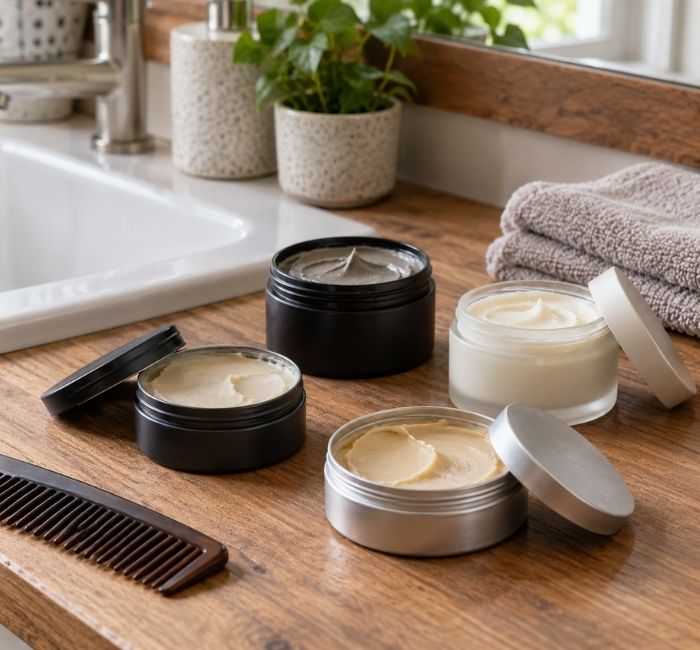
These categories overlap: a product can be water-based and matte, or combine clay with fibers. Use the descriptions to compare formulas, not as strict industry-wide definitions.
1. Matte Wax
Matte wax gives hair a low-shine, natural finish. It suits textured crops, messy fringes, and casual quiffs, especially if you dislike a wet look. The downside is that some formulas feel dry or become hard to spread when overused.
Rub a pea-sized amount between your palms, work it through dry or nearly dry hair, then separate sections with your fingertips. Start small; too much can make the finish look dusty.
2. High-Shine Wax
High-shine wax adds visible sheen and helps hair sit in a tidy, deliberate shape. It suits combed-back hair and defined side parts, but can make fine hair or oily roots look greasy.
Apply a small amount to dry hair and use a comb for a sharp part or your fingers for a softer sweep. My take: shine looks best when the haircut is already tidy, because it can highlight uneven ends rather than disguise them.
3. Water-Based Wax
Water-based wax uses water as a significant part of its formula and may wash out more easily than a heavy oil-based product. It can suit men who style their hair often and prefer a simpler clean-up routine.
Still, water-based does not guarantee a light feel or one-rinse removal; formulas vary. Check the label, warm a small amount in your hands, and apply only where you need control. It can be a sensible first option if you are new to wax.
4. Oil-Based Wax
Oil-based wax often feels richer and can provide a pliable, sometimes glossy finish. It may help tame coarse or unruly hair, but can leave residue or weigh down fine strands. Oils in styling products may also contribute to hairline breakouts for some people.
Use a small amount on the hair lengths rather than rubbing it into your scalp, and check the label for removal instructions before buying.
5. Clay Wax

Clay wax blends styling ingredients with clay for grip and a drier, textured finish. It is useful for messy crops, quiffs, and styles that need separation rather than a slick surface. Thick or straight hair often benefits most, while a heavy formula can make fine hair look smaller.
Warm a little between your hands, apply from the back toward the front, and shape the fringe last. Choose a lighter clay formula if your hair is fine.
6. Fiber Wax
Fiber wax has a stretchy, stringy texture and is designed to create separation and flexible definition. It suits short-to-medium hair, particularly thick hair that needs extra grip. Too much can feel tacky or stick strands together.
Emulsify a small dab between your palms, then pinch or twist selected sections instead of coating the whole head. Fiber wax is generally better for piecey texture than for a smooth, combed finish.
7. Cream Wax
Cream wax has a softer, more spreadable consistency than many firm waxes. It works well for waves, medium-length styles, and anyone who wants a natural look with light-to-medium definition. Its control may not be enough for very thick hair or a high quiff.
Apply it to mostly dry hair, focusing on the mid-lengths and ends before smoothing the surface with your fingers. My take: consider cream wax if you want your hair to look styled but still move naturally.
8. Styling Paste or Wax-Paste Hybrid
Paste usually sits between cream and firm wax in texture, although brands use the terms inconsistently. Many pastes provide flexible, reworkable hold for side-swept styles, relaxed pompadours, and everyday shaping.
A dense formula can still flatten fine hair, and a soft one may not control very resistant hair. Warm a small amount in your hands, set the overall direction first, then add definition to the ends. Compare the listed hold and finish rather than trusting the word “paste” alone.
9. Strong-Hold Wax
Strong-hold wax is designed for styles that need more control, such as thick short hair, pronounced quiffs, or defined spikes. It suits dense hair and structured looks, but a firm formula can be difficult to spread and may encourage excessive tugging
If you keep restyling. Warm a small amount thoroughly, work it through the hair, and shape with your fingers before using a comb for detail. Buy strong hold only when your style needs it; more hold does not always mean a better result. My take: treat strong hold as a tool for stubborn hair, not the default setting.
10. Flexible or Lightweight Wax
Flexible wax prioritizes movement and restyling over a locked-in shape. It suits casual, tousled looks, shorter cuts, and fine-to-medium hair that does not need dramatic height. It may struggle with thick hair or styles that must stay lifted for hours.
Spread a little across your fingertips and guide the hair without pressing down on the roots. Once styled, you should be able to reshape it with your fingers without adding another full layer.
Quick Comparison Table
| Wax type | Typical finish | Hold to look for | Best use | Main caution |
| Matte wax | Low shine | Medium to strong | Textured crops and quiffs | Too much can look dry |
| High-shine wax | Noticeable shine | Light to strong | Side parts and slick styles | Can emphasize oily roots |
| Water-based wax | Varies by formula | Light to strong | Frequent styling | Washability varies |
| Oil-based wax | Often glossy | Medium to strong | Coarse hair, pliable shaping | Residue and possible breakouts |
| Clay wax | Dry, textured | Medium to strong | Lift and separation | Heavy formulas can flatten fine hair |
| Fiber wax | Natural to matte | Medium to strong | Short, piecey styles | Can feel tacky if overused |
| Cream wax | Soft, natural | Light to medium | Waves and relaxed styles | May not control resistant hair |
| Paste / wax-paste | Natural or textured | Medium | Side sweeps and everyday shaping | Labels vary by brand |
| Strong-hold wax | Depends on formula | Strong | Structured styles | Can be harder to spread and remove |
| Flexible wax | Usually natural | Light to medium | Casual, reworkable styles | Less control for high-volume looks |
These are typical characteristics, not guarantees. Check the specific product label before buying.
What to Discuss Before Your Appointment or Purchase

Be clear about the result you want. “Natural finish with texture” is more useful than asking for the strongest product. Check the hold, shine, wash-out instructions, scent, and whether the formula is intended for your hair type.
At the barbershop, ask what was used to finish your cut and how much the barber applied. Explain how long you spend styling in the morning, whether you use a hairdryer, and how long the style needs to last.
I’d recommend testing a small amount at home before using it every day. Check your hair in natural light after styling and again a few hours later. If it turns greasy, flat, crunchy, or difficult to wash, try a different formula.
Pay attention to your scalp, too. Stop using a product that causes persistent itching, redness, or bumps. The American Academy of Dermatology recommends choosing hair-care products for your hair type and washing the scalp to remove build-up; its healthy hair tips explain the basics.
Common Mistakes to Avoid
Using Too Much at Once
A large scoop can make hair greasy, separate fine strands, or leave residue. Begin with a pea-sized amount for short hair and add more only if needed.
Thick or long hair may need more, but build in stages.
Applying It to Soaking-Wet Hair
Unless the label says otherwise, towel-dry first and apply to dry or nearly dry hair. This makes the final texture easier to judge.
If you want a softer result, experiment with slightly damp hair rather than soaking-wet hair.
Choosing Hold Before Finish
A strong hold does not tell you whether a wax is matte or shiny. Decide whether you want a dry, natural look or a polished sheen, then choose the hold level that supports the style.
Rubbing It Into the Scalp
Wax is meant to shape hair, not coat the scalp. Keep it off the forehead and avoid leaving a heavy layer at the roots. If bumps appear along your hairline, stop using the product or consider a non-comedogenic option.
Expecting Wax to Replace a Haircut
Product can add texture, but it cannot create a shape the cut does not support. If your fringe always falls into your eyes or your sides puff out, ask your barber whether the length or weight needs adjusting.
Leaving Build-Up in Your Hair
Daily layers can leave hair heavy and harder to style. Shampoo according to how oily your scalp gets and how much product you use.
The AAD recommends adjusting washing to your hair and scalp needs rather than following one schedule for everyone.
Frequently Asked Questions
Is hair wax good for men?
Yes. Wax is useful for texture, flexible control, and styles you may want to reshape during the day. Choose according to hair type, length, scalp sensitivity, and preferred finish.
Is hair wax better than gel?
Neither is always better. Many waxes stay pliable, while gels often dry to a firmer finish. Try wax if you dislike stiffness; compare hold if your style needs to stay fixed.
Should I apply hair wax to wet or dry hair?
Most waxes are easiest to control on dry or nearly dry hair, but directions vary. Dry hair also gives a clearer idea of the final finish. Follow the label and test a small amount.
Does hair wax cause hair loss?
Hair wax is not automatically a cause of hair loss, but forceful styling, repeated tugging, or scalp irritation can contribute to hair damage or other problems. Style gently and consult a dermatologist about ongoing thinning or irritation.
How much hair wax should I use?
Start with about a pea-sized amount for short hair. Rub it between your palms, then apply gradually. Thick or long hair may need more, but several small amounts are easier to control than one large scoop.
Can I use hair wax every day?
Regular use may be fine if your hair and scalp tolerate it, but remove build-up and watch for irritation. If your hair feels coated or your hairline develops bumps, reduce use or try another formula. Stop if a product causes a persistent reaction.
Conclusion

My biggest takeaway is that the best hair wax for men works with your hair rather than against it. Choose a finish you like, match the hold to your cut, and start with a small amount.
Matte wax is a practical choice for texture, cream or flexible wax suits softer looks, and high-shine formulas help create a more polished finish.
If a product leaves your hair flat, greasy, or difficult to wash, try another formula. A good wax should make your morning routine simpler and your haircut easier to manage.



Leave a Reply