
Ever had a haircut that looked great at the barbershop but became difficult to manage at home? Sometimes, the problem isn’t your styling routine but how the hair has been cut. Layered haircuts for men can reduce unwanted bulk, add movement to straight hair, and give curls a more balanced shape.
This guide covers 12 practical layered hairstyles, how to choose one for your hair type, what to tell your barber, and how to style each cut at home.
My advice: Choose layers that work with your natural hair rather than a hairstyle that only looks good after twenty minutes of styling.
What Makes Layered Haircuts for Men Different?
A layered haircut uses different lengths to control the weight, shape, and movement of your hair.
Instead of cutting every section to a similar length, your barber removes weight strategically. Shorter sections can help longer hair move naturally, while subtle layering can prevent thick hair from looking overly bulky.
For example, a man with thick, straight hair might find that his hairstyle sticks outward around the ears. Carefully positioned layers can reduce that heaviness without drastically shortening the entire haircut.
Layering offers several practical advantages:
- Less bulk: Removes excess weight from thick hair.
- Better movement: Helps hair fall into a more natural shape.
- Improved texture: Creates separation between sections.
- Styling flexibility: Works with short crops, side parts, quiffs, and longer hairstyles.
However, more layers don’t automatically mean better results. Fine hair can appear thinner when excessive weight is removed.
What Professional Barbers Say About Layering
In a February 2024 GQ grooming video, professional barber Matty Conrad explains several commonly misunderstood haircut terms.
While describing longer layered hairstyles that sweep backward, Conrad says layering:
“leaves you enough hair on the sides to push back.”
Matty Conrad, GQ: What to Say to Your Barber to Get the Haircut You Want
Conrad is specifically discussing a longer hairstyle called a flowback, where the sides retain enough length to sweep naturally backward.
This illustrates one use of layering, but shorter crops and textured quiffs can also incorporate layers.
A fade, meanwhile, gradually changes the length around the sides or back. Both techniques can be used in the same haircut.
How to Choose the Right Layered Haircut for Your Hair Type
Your hair texture, density, growth direction, and preferred length should guide your decision.
Straight Hair
Short textured crops, layered fringes, and side parts introduce visible separation. Avoid excessive thinning if your hair already lies flat.
Thick Hair
Medium-length layers, shags, and bro flows can reduce bulk. Keep enough weight through the ends so shorter sections don’t stick outward.
Fine Hair
Choose subtle layers that preserve density. A lightly textured crop or soft side part is often more practical than an aggressively thinned hairstyle.
Wavy Hair
Medium and longer layers allow natural waves to form without excessive heaviness. Avoid cutting the crown too short if your hair tends to become puffy.
Curly Hair
Layering can improve shape and distribute volume. Your stylist should consider curl shrinkage before removing length.
Coarse Hair
Longer, blended layers can soften a bulky outline. Very short layers may make coarse hair harder to control.
Face shape matters too. A little height can balance a rounder face, while a softer fringe may suit a longer face better than a tall quiff.
12 Best Layered Haircuts for Men
1. Short Textured Layered Crop
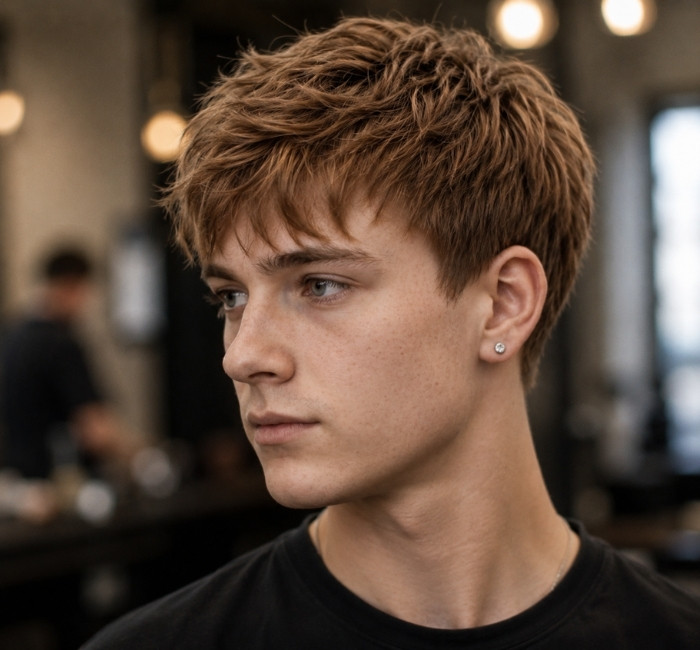
The short textured crop keeps the top relatively short while introducing subtle layers for separation. Tapered or faded sides create a tidy outline.
Best for: Straight or moderately thick hair and men who prefer minimal daily styling.
Ask your barber for approximately 1.5–2.5 inches on top, softly textured ends, and neatly blended sides.
Avoid heavy thinning around the crown if your hair is sparse.
How to style it: Rub a pea-sized amount of matte paste between your palms. Work it through dry hair, starting at the back and moving toward the front.
Use the remaining product to separate a few strands around the fringe.
Practical tip: If your hair falls flat during the day, lift the roots gently with your fingers rather than adding another layer of product.
2. Medium-Length Layered Haircut
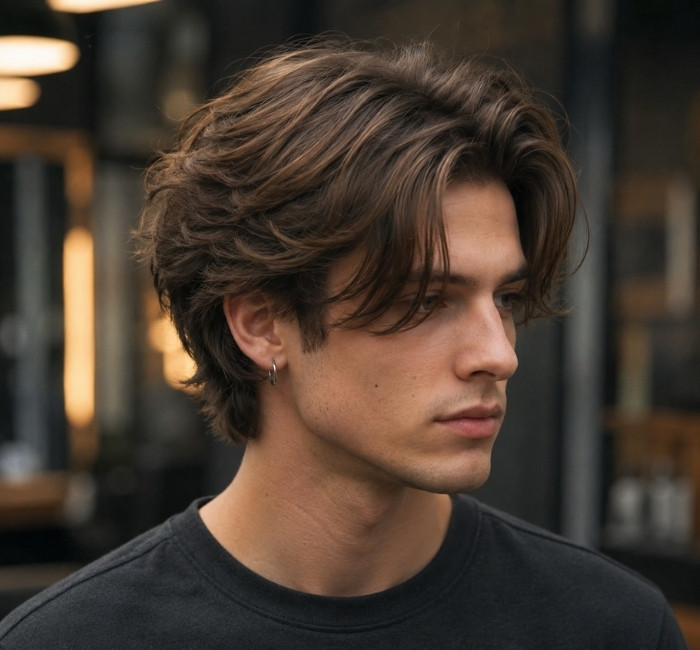
A medium-length layered haircut offers enough length for movement without reaching the shoulders. It helps reduce heaviness around the ears while preserving a relaxed shape.
Best for: Straight or wavy hair that becomes bulky as it grows.
Ask for approximately 3–5 inches through the longer sections, with blended layers following your natural growth direction.
If you have a strong cowlick, avoid very short layers around the crown.
Apply a little lightweight styling cream to damp hair. Use your fingers while blow-drying on low heat, directing the hair where you want it to fall.
Practical tip: For a tidier appearance, create a loose side part while the hair is still damp. Avoid forcing a perfectly straight part if your natural growth pattern resists it.
3. Long Layered Haircut for Men
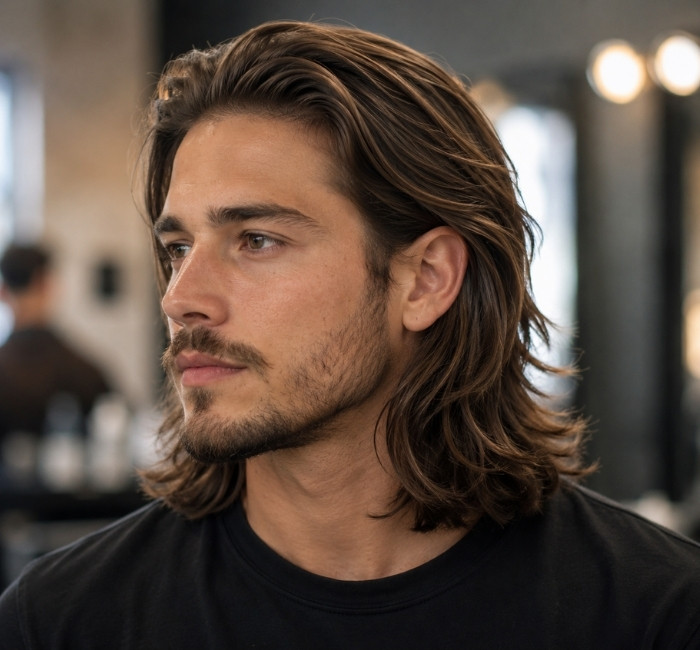
Long layered hair preserves the overall length while allowing shorter sections to move independently. It can reduce heaviness and create a softer outline around the face.
Best for: Thick, wavy, or naturally flowing hair reaching the shoulders or beyond.
Ask your stylist to maintain the main length and introduce gradual layers through the middle and ends.
Avoid excessive layering if the lower sections already appear thin.
Long hair needs gentle detangling and appropriate conditioning. The American Academy of Dermatology’s healthy hair tips recommend choosing products suited to your hair type and handling wet hair carefully.
Practical tip: Apply lightweight leave-in conditioner to the mid-lengths and ends rather than coating the roots. This can improve manageability without making the top appear flat.
4. Layered Fringe Haircut
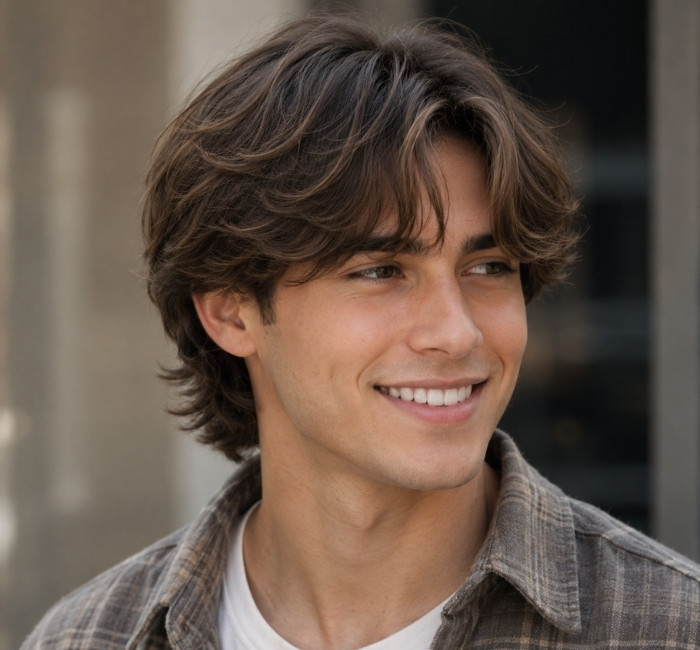
The layered fringe features textured sections that fall forward over the forehead. Its uneven ends create a softer appearance than a blunt, straight-across fringe.
Best for: Straight or slightly wavy hair, particularly if you prefer a casual hairstyle.
Ask your barber to leave enough length for the fringe to settle naturally when dry.
A fringe cut too short can become difficult to manage, especially when the front grows upward.
How to style it: Direct slightly damp hair forward with your fingers. Once dry, separate a few strands using a small amount of matte paste.
Avoid applying heavy wax directly at the roots.
Practical tip: If your fringe separates into unwanted gaps, try adjusting its direction while damp rather than adding more styling product.
5. Layered Side-Part Haircut
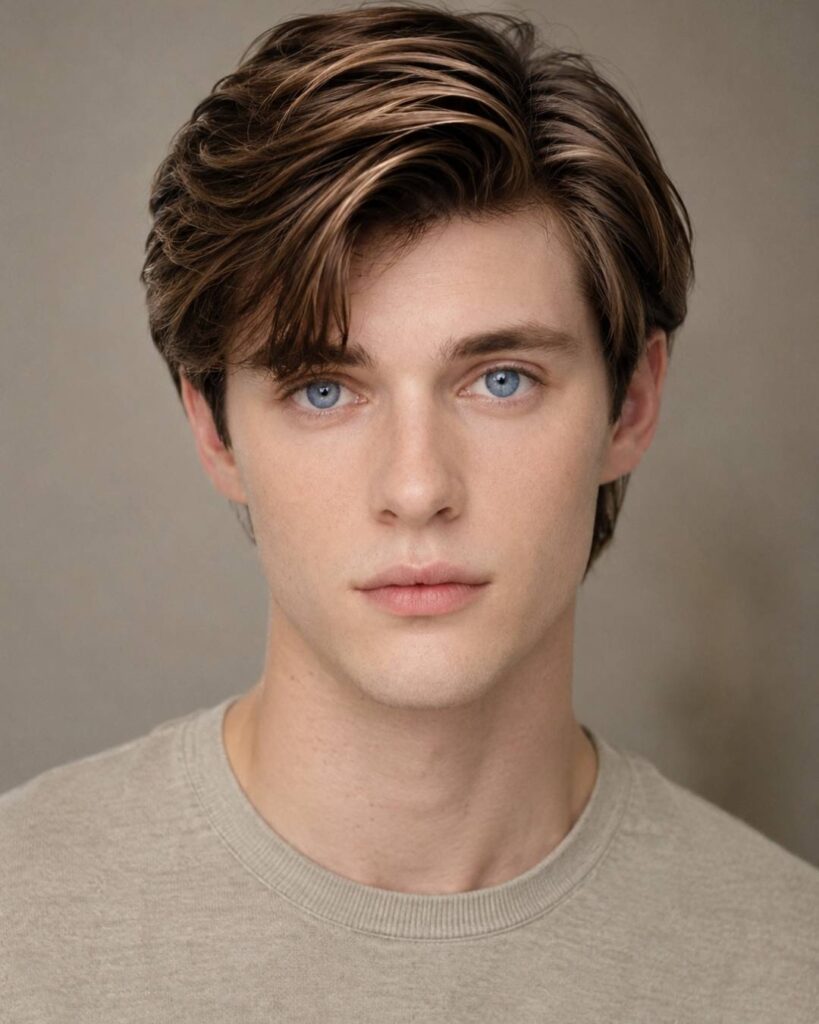
The layered side part combines a tidy appearance with subtle movement through the top. Its blended layers prevent the longer section from looking too heavy.
Best for: Straight, fine-to-medium hair and men who prefer a professional appearance.
Ask for approximately 3–4 inches on top, softly graduated layers, and neatly tapered sides.
A sharp part may draw attention to thinning temples, so consider a softer division if your hairline is uneven.
Use lightweight styling cream for natural movement or a little pomade for a more controlled finish.
Practical tip: Follow the direction your hair naturally separates before creating a part. Fighting a strong growth pattern can make the style difficult to maintain.
6. Layered Shag Haircut
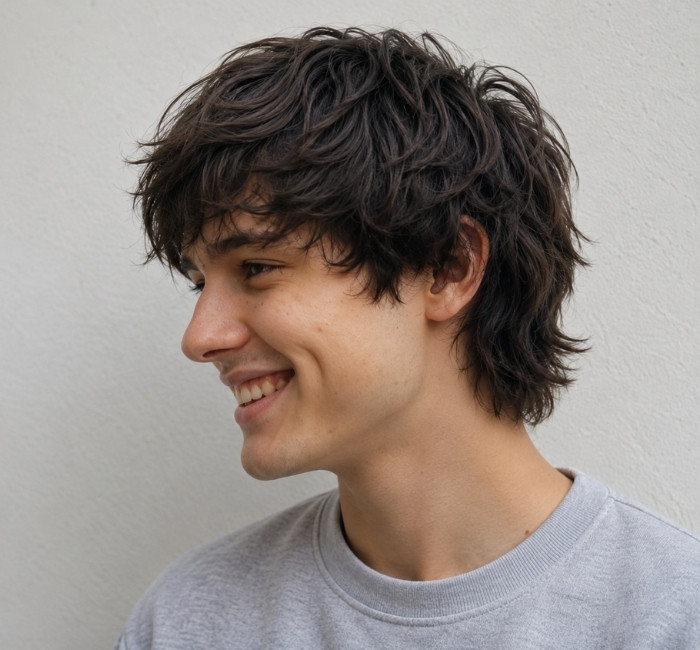
The layered shag features shorter sections around the crown and longer pieces near the ears and neckline. Its loose, textured shape works well without a perfectly polished finish.
Best for: Naturally wavy or medium-to-thick hair.
Ask for soft crown layers, textured sides, and enough weight through the ends to maintain balance.
Very short crown layers can create unwanted puffiness, particularly on thick hair.
How to style it: Scrunch lightweight mousse into damp hair, then allow it to air-dry.
For extra separation, gently loosen the dried waves with your fingertips.
A slightly irregular finish suits this haircut better than a rigid, combed shape.
7. Layered Wolf Cut for Men
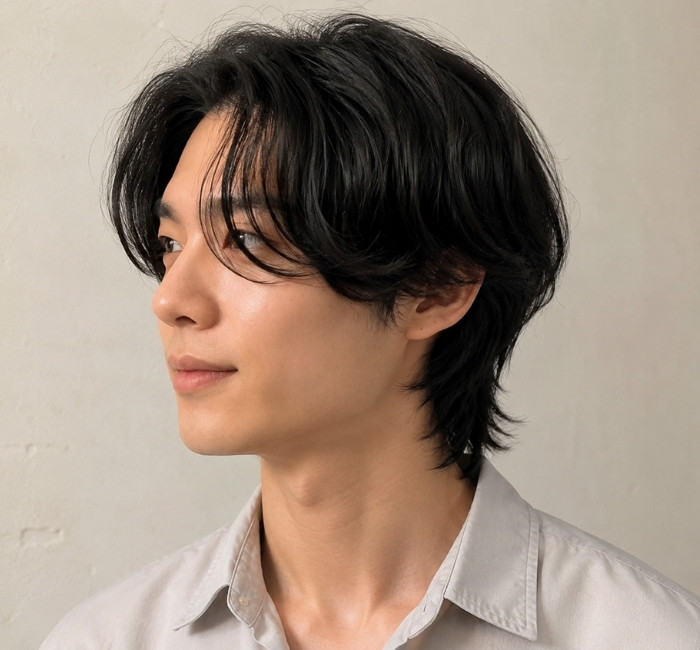
The wolf cut combines a textured, shag-like crown with longer hair toward the back. Its shape is more pronounced than a traditional medium-length layered haircut.
Best for: Medium-to-thick wavy hair and men who prefer a distinctive style.
Ask your stylist for controlled crown volume, textured sides, and a gradual transition into the back.
Removing too much weight from the sides can make the crown appear disproportionately large.
A diffuser on low heat can encourage natural waves without creating excessive frizz.
Practical tip: If you’re trying a wolf cut for the first time, request a softer version. You can add more pronounced layers at a later appointment without needing to regrow excessively short sections.
8. Curly Layered Haircut
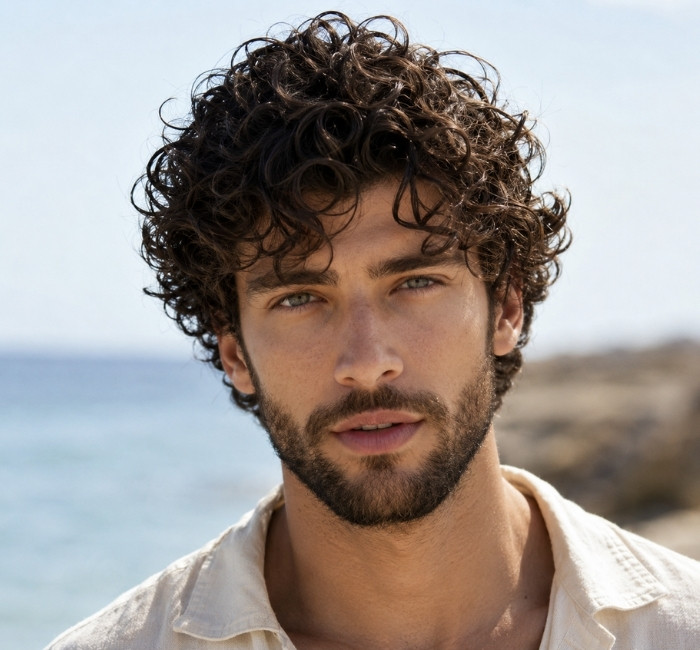
A curly layered haircut uses different lengths to distribute volume and create a balanced outline. The exact placement depends on curl pattern, density, and natural shrinkage.
Best for: Loose curls, defined ringlets, and longer curly hairstyles.
Ask your stylist to assess your natural curl pattern and explain where the shortest layers will sit when dry.
Wet curls can appear longer than dry curls, so cutting without considering shrinkage may produce an unexpectedly short result.
How to style it: Apply curl cream to damp hair, gently scrunch, and allow the curls to settle without repeatedly touching them.
The AAD’s curly hair care guide provides additional advice on moisturising, detangling, and preventing breakage.
Practical tip: Judge the final shape after the curls have dried naturally rather than relying only on how the hair looks while wet.
9. Layered Undercut
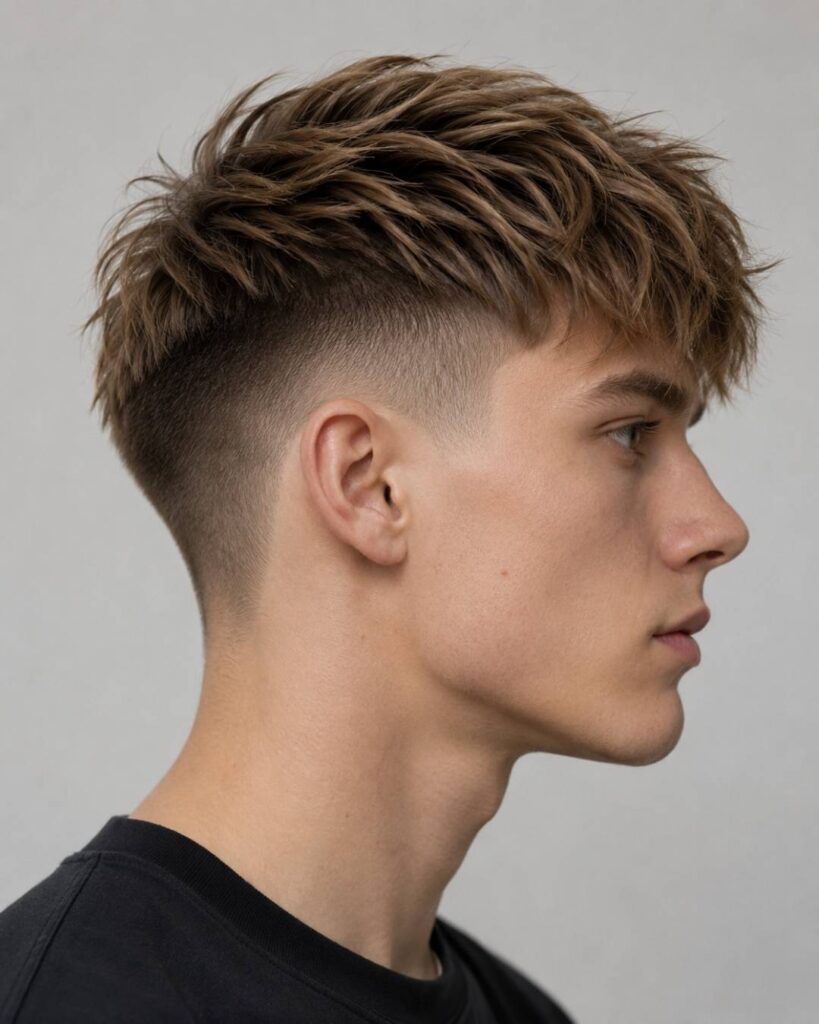
The layered undercut combines short sides with a substantially longer top. Layers through the upper section create separation and allow the hair to be styled forward, sideways, or backward.
Best for: Thick straight or wavy hair with enough density to support the longer top.
Ask your barber for approximately 3–5 inches on top and discuss whether you want a sharply disconnected undercut or a softer variation.
A dramatic undercut creates stronger contrast but can be awkward to grow out.
How to style it: Apply a small amount of pre-styling cream to towel-dried hair. Blow-dry the top in your preferred direction, then finish with matte paste.
Practical tip: If the longer top keeps falling over the sides, direct the airflow toward the roots first. Shape the ends afterward rather than adding more product.
For men who frequently change hairstyles, a softer transition is generally more versatile.
10. Layered Quiff Haircut
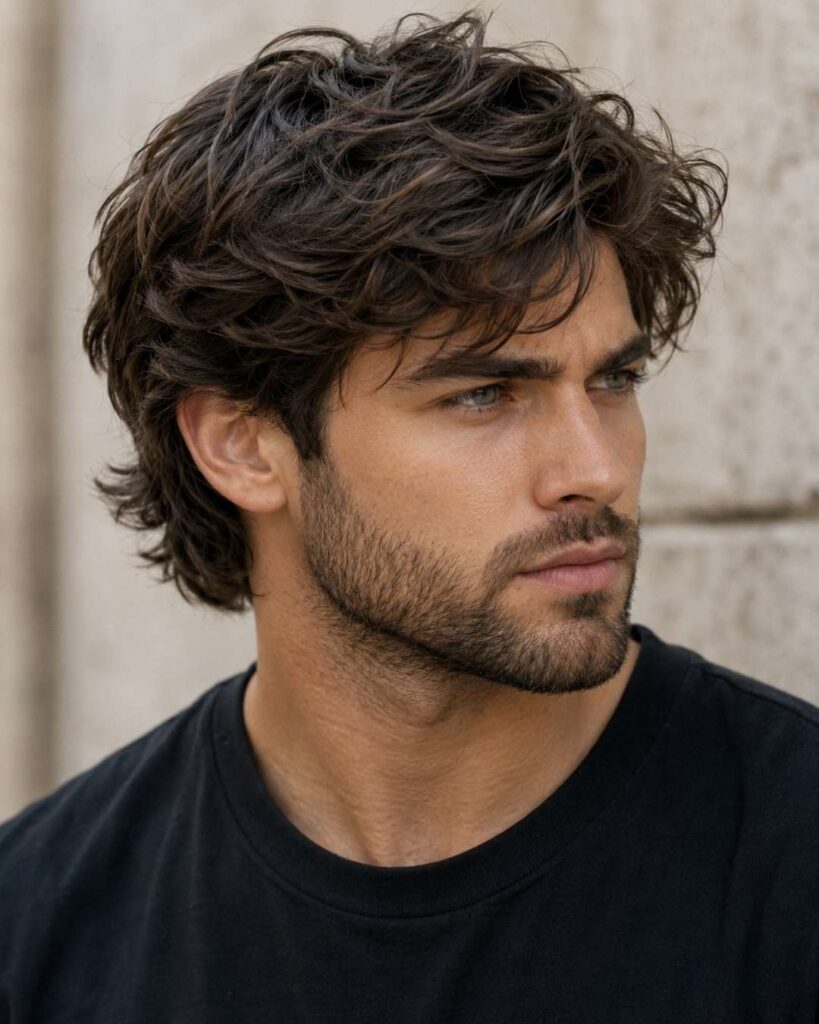
The layered quiff keeps extra length toward the forehead, allowing the hair to lift upward and slightly backward. Shorter supporting layers create texture without making the top appear excessively heavy.
Best for: Straight or wavy hair with enough density to support front volume.
Ask for approximately 3-4 inches at the front, slightly shorter crown layers, and neatly tapered sides.
Excessive height may exaggerate a longer face, while lifting a sparse hairline too aggressively can expose more scalp.
How to style it: Begin with damp hair and lift the front using your fingers or a vent brush. Blow-dry upward on a low-to-moderate heat setting, then apply a small amount of matte clay.
Practical tip: Hold the lifted section briefly while it cools. This helps the shape settle before you release it.
Use lightweight products if your hair is fine. Heavy wax can pull the quiff downward.
11. Layered Bro Flow Hairstyle
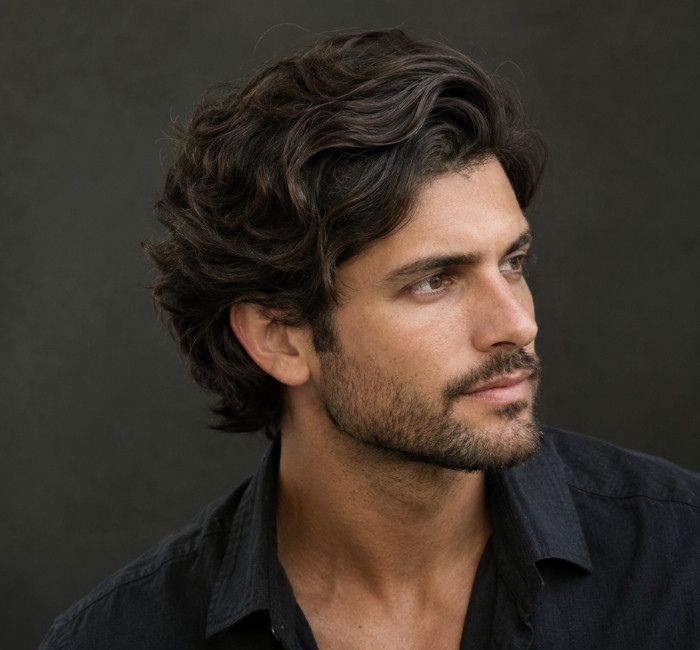
The bro flow is a medium-to-long hairstyle that sweeps naturally away from the face. Subtle layers help reduce weight around the ears while preserving enough length for movement.
Best for: Medium-to-thick straight or wavy hair.
Ask your stylist to maintain enough length to tuck the sides behind your ears, with soft layers through the top and back.
Hair that naturally grows forward may require additional length before it settles backward.
Apply lightweight styling cream to damp hair and guide it away from your face with your fingers.
Practical tip: If one side falls forward repeatedly, adjust its direction during drying. Once completely dry, stubborn sections usually take more effort to reposition.
12. Layered Mullet Haircut
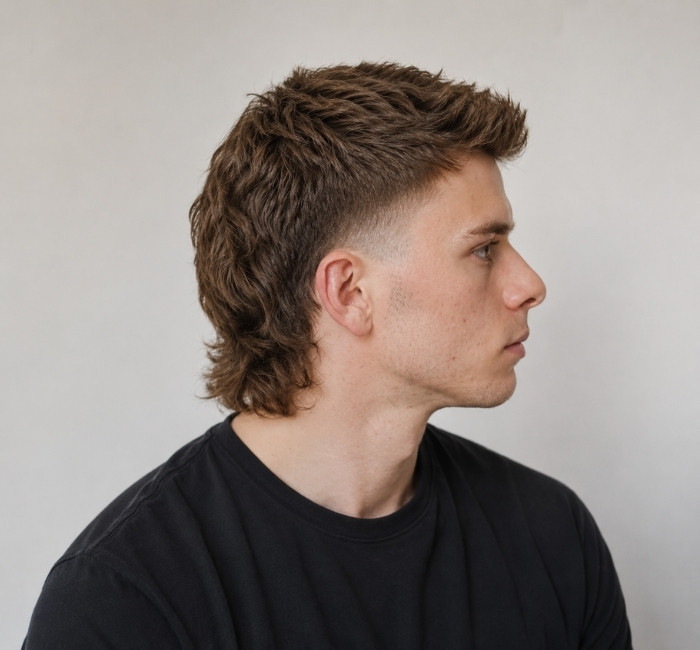
The modern layered mullet keeps the top and sides relatively controlled while maintaining more length toward the back. Layers add texture and help connect the different sections.
Best for: Thick, wavy, or curly hair and men who enjoy a noticeable hairstyle.
Ask for textured crown layers, softly shaped sides, and controlled length around the nape.
Avoid allowing the back to become excessively heavy compared with the crown.
How to style it: Apply lightweight mousse or texture spray to damp hair. Lift the crown using your fingertips and scrunch the longer back sections.
Practical tip: Check the haircut from the side using two mirrors. If the back appears unbalanced, ask your barber to refine the transition rather than shortening the entire neckline.
For a first mullet, keeping the difference between the sides and back moderate makes future changes easier.
Quick Comparison: Which Layered Haircut Should You Choose?
These measurements and maintenance schedules are approximate starting points. Hair growth, density, and styling preferences will affect the actual requirements.
| Haircut | Best hair type | Approx. longer length | Daily styling | Typical trim interval |
| Textured crop | Straight, thick | 1.5–2.5 inches | 2–5 min | 3–5 weeks |
| Medium layers | Straight, wavy | 3–5 inches | 5–10 min | 6–8 weeks |
| Long layers | Thick, wavy | 8+ inches | 5–15 min | 8–12 weeks |
| Layered fringe | Straight, wavy | 2–4 inches | 3–7 min | 4–6 weeks |
| Side part | Fine, straight | 3–4 inches | 5–8 min | 4–6 weeks |
| Layered shag | Wavy, thick | 4–7 inches | 5–10 min | 6–8 weeks |
| Wolf cut | Wavy, thick | 4–8 inches | 5–12 min | 6–8 weeks |
| Curly layers | Curly | Depends on shrinkage | 5–15 min | 6–10 weeks |
| Layered undercut | Thick, straight | 3–5 inches | 5–10 min | 3–5 weeks |
| Layered quiff | Straight, wavy | 3–4 inches | 5–10 min | 4–6 weeks |
| Bro flow | Wavy, straight | 5–8 inches | 3–8 min | 8–10 weeks |
| Layered mullet | Thick, curly | 3–7 inches | 5–10 min | 4–8 weeks |
Are Layered Haircuts Good for Fine or Thinning Hair?
Fine hair and thinning hair aren’t the same thing.
Fine hair describes the diameter of individual strands. Thinning hair refers to reduced density, which may become noticeable around the temples, hairline, or crown.
For naturally fine hair, subtle layers can create separation without sacrificing too much coverage.
However, aggressive layering may make sparse areas more visible.
A few guidelines can help:
- Preserve weight around areas where the scalp shows.
- Avoid unnecessary thinning shears.
- Choose lightweight styling products.
- Consider short textured crops or softly layered side parts.
- Check the finished haircut in natural lighting.
For thinning at the crown, ask your barber to work with your natural growth pattern rather than forcing the hair in the opposite direction.
Remember that a haircut changes appearance, not actual hair density.
If you notice unexplained or progressive hair loss, the American Academy of Dermatology’s hair-loss guidance explains why professional assessment may be appropriate.
What to Discuss With Your Barber Before Getting Layers
A reference photograph helps, but it shouldn’t replace a proper conversation.
Explain your usual styling routine, how your hair behaves after washing, and which areas you find difficult to control.
Before the haircut, discuss:
- Length: Where should the shortest and longest layers sit?
- Bulk: Which sections need weight removed?
- Hairline: Are there areas where you want to preserve coverage?
- Styling: Will you need a hairdryer or additional products?
- Maintenance: How often will the shape need refreshing?
I’d recommend bringing two photographs: one showing the overall hairstyle you like and another featuring someone with hair similar to yours.
In GQ’s guide to communicating with your barber, writer Garrett Munce draws on professional barber Matty Conrad’s advice about explaining haircut preferences clearly.
Rather than relying on unfamiliar technical terms, describe the result you want.
For example, saying, “I’d like less weight around my ears but enough length to sweep my hair backward,” gives your barber useful direction.
Before leaving, ask your barber to show you how to recreate the hairstyle using the products and tools you already have.
Common Mistakes to Avoid With Layered Haircuts
Removing Too Much Weight
Excessive layering can make fine hair look sparse or leave thick hair with uneven sections.
Start with conservative changes, particularly if you’re trying layers for the first time.
Ignoring Your Natural Texture
A hairstyle that works on straight hair may look completely different on curls.
Choose a cut that accommodates your natural growth pattern.
Applying Too Much Product
Heavy waxes and pomades can flatten fine hair or cause textured sections to clump.
Begin with a small amount and add more only when necessary.
Skipping Regular Maintenance
Layers gradually lose their shape as hair grows.
Schedule trims according to how quickly your haircut becomes difficult to manage.
Using Excessive Heat
Frequent high-heat styling can damage hair.
Use lower heat settings when practical and allow hair to dry naturally when possible.
The AAD’s hair styling guidance explains how to reduce avoidable heat damage.
Frequently Asked Questions About Layered Haircuts for Men
Are layered haircuts good for men with thin hair?
Yes, subtle layers can improve texture and overall shape. However, removing too much weight may expose sparse areas, so conservative layering is usually preferable.
Do layers make men’s hair look thicker?
Layers can create the appearance of volume and movement. They don’t increase the number of hair follicles or change actual hair density.
What is the best layered haircut for thick hair?
Medium-length layers, layered shags, and bro flows are practical choices. The best option depends on your preferred length and how much bulk you want removed.
How often should men trim layered hair?
Short layered styles often need reshaping every three to six weeks. Medium and longer hairstyles may maintain their shape for six to twelve weeks, depending on growth.
Can men with curly hair get layered haircuts?
Yes. Carefully positioned layers can distribute volume and improve shape. Your stylist should consider curl pattern and shrinkage before cutting.
Are layered haircuts difficult to maintain?
Not necessarily. Textured crops and bro flows can be relatively simple, while quiffs and structured undercuts generally require more daily styling.
Conclusion
My biggest takeaway is that layered haircuts for men should make your hair easier to manage, whether you’re dealing with excessive bulk, flat hair, or an awkward shape.
Choose layers based on your natural texture, explain your expectations clearly to your barber, and consider how much time you’re willing to spend styling.
A good layered haircut should look natural, feel comfortable, and fit your everyday routine.



Leave a Reply