
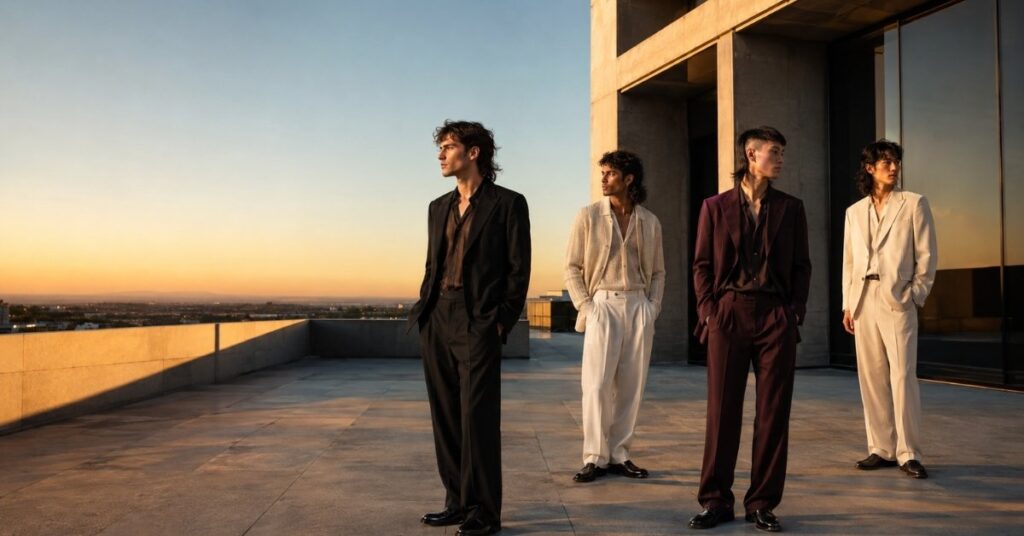
The mullet is a men’s haircut built around shorter sides with more length through the back, but modern versions can look very different depending on the fade, fringe, texture, and overall length. Some styles keep the shape subtle and clean, while others use stronger contrast, heavier layering, or more length through the nape.
In this guide, you’ll find 28 mullet hairstyle ideas for men, from short and tapered versions to curly, shaggy, faded, and longer styles. You’ll also find practical advice on what to ask your barber, how to style different mullet variations, and how much maintenance each one typically requires.
Mullet Hairstyle Quick Comparison
| Style | Hair Type | Maintenance | Best For |
|---|---|---|---|
| Modern Mullet | Straight / Wavy / Medium-Thick | Medium | Balanced, adaptable mullet |
| Long Mullet | Straight / Wavy / Thick | Medium | Extra length and movement |
| Curly Mullet | Curly / Coily | Medium | Keeping natural curl texture |
| Burst Fade Mullet | Straight / Wavy / Curly / Medium-Thick | Medium-High | Curved fade with defined sides |
| Shaggy Mullet | Straight / Wavy / Fine-Medium | Low-Medium | Soft layers and relaxed texture |
| Short Mullet | Straight / Wavy / Medium-Density | Low-Medium | Subtle shape with less back length |
| Permed Mullet Taper | Straight / Slightly Wavy | Medium-High | Added curl and movement |
| Wolf Cut Mullet | Wavy / Curly / Medium-Thick | Medium | Layering and crown volume |
| Skin Fade Mullet | Straight / Wavy / Curly / Medium-Thick | High | Strong side-to-back contrast |
| Disconnected Mullet | Straight / Slightly Wavy / Medium-Thick | Medium-High | Sharp separation between sections |
28 Mullet Hairstyles for Men
1. Modern Mullet
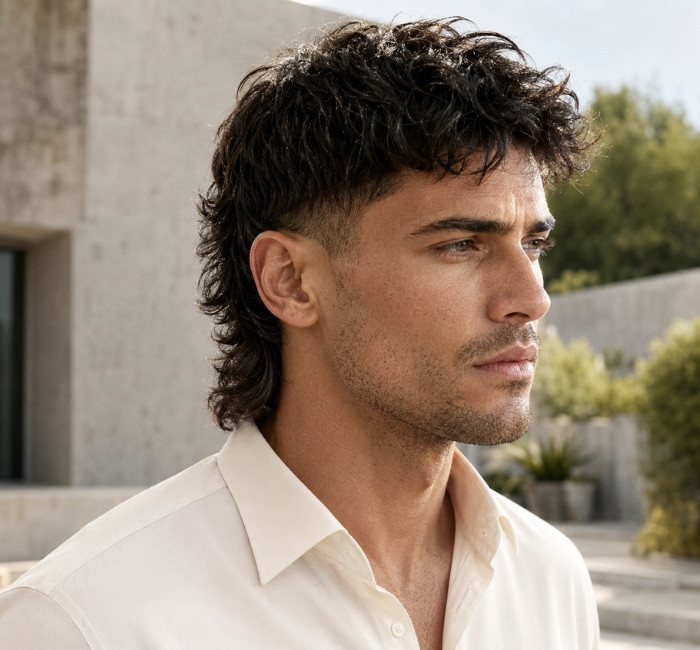
The modern mullet keeps the recognizable longer back while using shorter, cleaner sides and a textured top for a more controlled shape. Compared with a traditional mullet, the transition between sections is usually softer and the back can be kept at a more manageable length.
Maintenance: Medium; the sides and top need occasional shaping, while the longer back can grow out more naturally between trims.
Best For: Straight, wavy, or medium-to-thick hair; men who want a balanced introduction to the mullet shape
Ask Your Barber: Keep noticeable length through the back, leave enough length on top for texture and movement, and taper or softly fade the sides without removing too much weight around the crown.
How to Style: Blow-dry the top with your fingers for natural movement, then apply a small amount of matte paste or styling cream if extra texture or control is needed. Let the back follow its natural shape.
2. Long Mullet
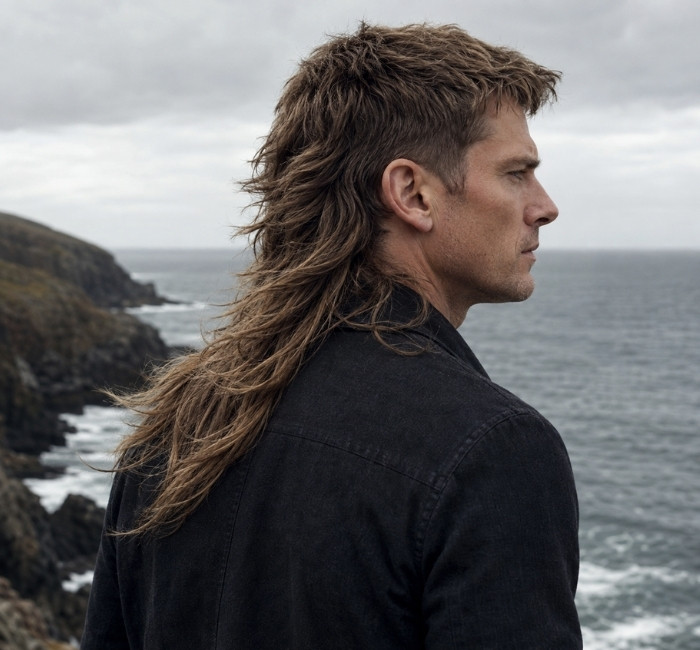
The long mullet keeps substantial length through the back while the top and sides stay shorter for contrast. Light layering through the back can add movement and help prevent the longer section from looking too heavy or flat.
Maintenance: Medium; the longer back needs occasional shaping and conditioning, while the shorter sides may need more frequent cleanup.
Best For: Straight, wavy, or thick hair; men who want a more noticeable mullet with extra length through the back
Ask Your Barber: Keep significant length through the nape and back, add light layering for movement, and taper or fade the sides based on how much contrast you want.
How to Style: Apply a small amount of sea salt spray, texture cream, or lightweight mousse to damp hair, then air-dry or blow-dry gently to encourage movement through the longer sections.
3. Mullet Taper Fade
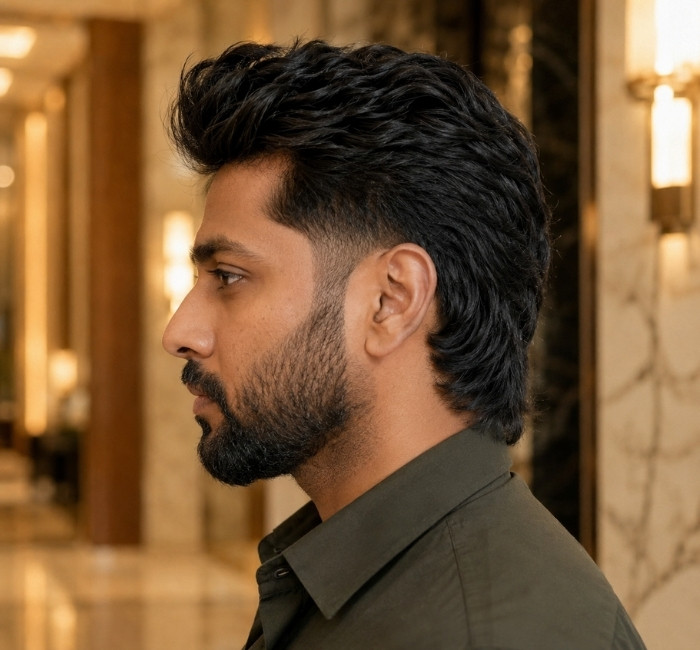
The mullet taper fade keeps the longer back and textured top while gradually shortening the hair around the sides, temples, and neckline. Compared with a skin fade, the transition stays softer and retains more visible hair through the sides.
Maintenance: Medium; the tapered edges need occasional cleanup, while the longer top and back can grow out more naturally.
Best For: Straight, wavy, or medium-density hair; men who want a cleaner mullet with a softer transition
Ask Your Barber: Keep noticeable length through the back, leave enough length on top for movement, and add a low, mid, or higher taper depending on how much contrast you prefer.
How to Style: Blow-dry the top forward or slightly upward for shape, then use a small amount of matte paste, cream, or pomade if extra control is needed.
4. Mohawk Mullet
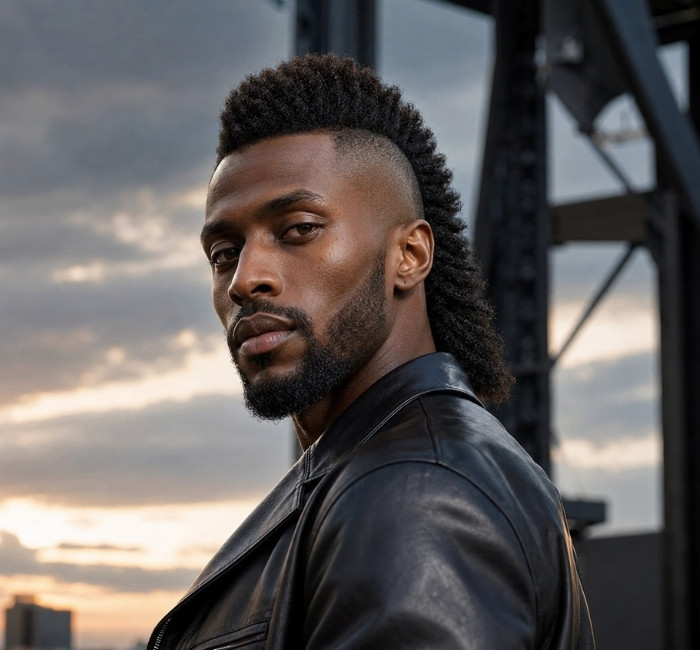
The mohawk mullet keeps a defined strip of longer hair running from the front through the crown and into the longer back, while the sides are cut much shorter or faded. Compared with a faux hawk mullet, the contrast is stronger and the central section is more clearly separated from the sides.
Maintenance: Medium to high; the short sides need regular cleanup, while the center strip and longer back need occasional shaping to keep the silhouette defined.
Best For: Straight, wavy, thick, or medium-to-high density hair; men who want a sharper, high-contrast mullet
Ask Your Barber: Keep a noticeable central strip of length from the forehead through the crown and into the back, then cut or fade the sides much shorter to create a clear mohawk-inspired shape.
How to Style: Apply a small amount of matte clay, paste, or gel to the central section, then lift and shape it upward or slightly back with your fingers. Leave the longer back looser for contrast.
5. Short Mullet
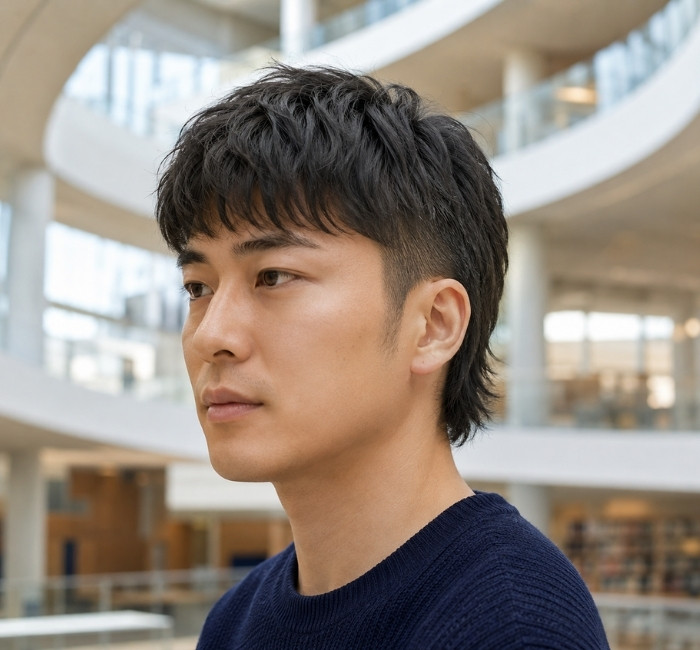
The short mullet keeps the back only moderately longer than the sides, creating a more compact version of the traditional shape. The top can stay textured or lightly layered, while the shorter overall length makes the haircut easier to manage.
Maintenance: Low to medium; the shorter back is easier to control, while occasional trims help preserve the difference between the sides and back.
Best For: Straight, wavy, or medium-density hair; men who want a subtle mullet with less length at the back
Ask Your Barber: Keep the back slightly longer than the sides, leave enough length through the top for texture, and use a taper or soft fade if you want a cleaner transition.
How to Style: Blow-dry the top with your fingers for light volume, then apply a small amount of matte paste, clay, or styling cream if extra texture is needed.
6. Burst Fade Mullet
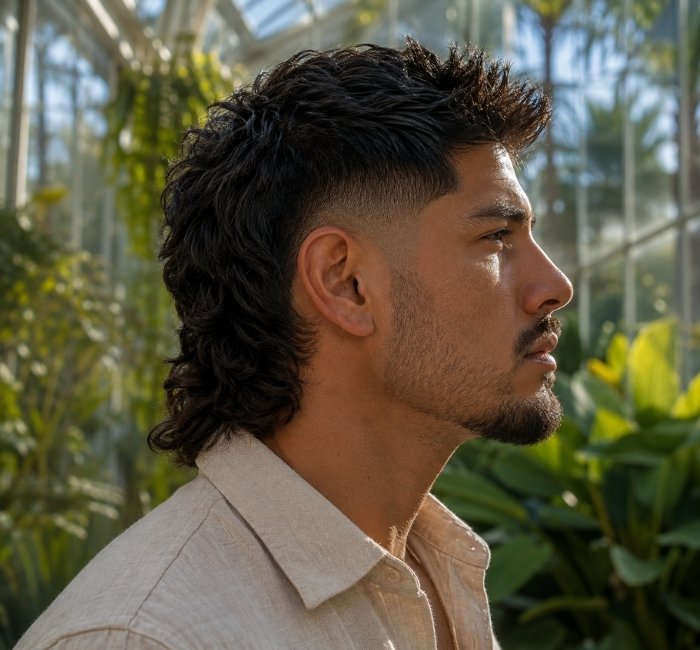
The burst fade mullet keeps the top and back longer while using a curved fade around the ears to create a rounded transition through the sides. The fade adds shape without removing the longer back that defines the mullet.
Maintenance: Medium to high; the curved fade needs regular cleanup to keep its shape, while the longer top and back can grow out more naturally.
Best For: Straight, wavy, curly, or medium-to-thick hair; men who want a cleaner side profile with noticeable contrast
Ask Your Barber: Keep length through the top and back, then add a burst fade that curves around the ears while preserving enough weight through the crown to maintain the mullet shape.
How to Style: Blow-dry or shape the top with your fingers, then use a small amount of matte clay, paste, or styling cream if extra texture or control is needed.
7. Curly Mullet
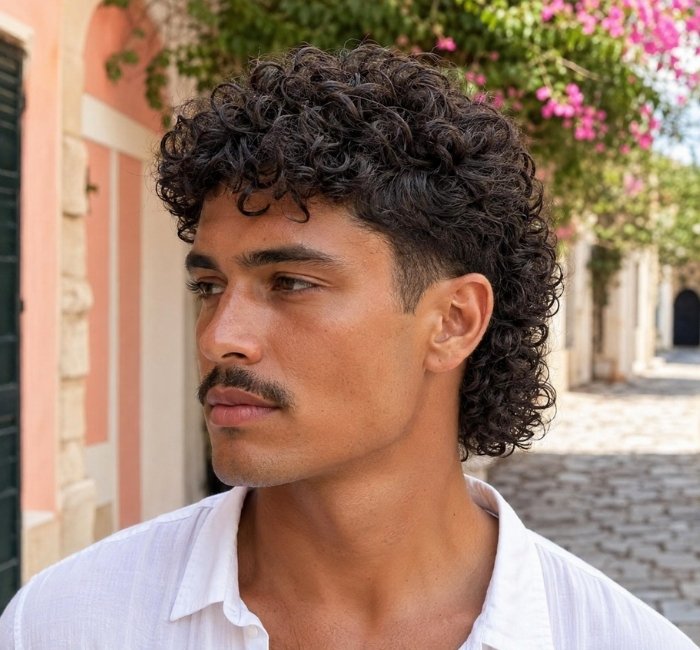
The curly mullet keeps natural curls longer through the top and back while the sides stay shorter for contrast and easier shaping. The extra length through the back allows the curl pattern to remain visible without making the entire haircut feel overly bulky.
Maintenance: Medium; the curls need occasional shaping to control bulk, while the shorter sides may need more frequent cleanup.
Best For: Naturally curly or coily hair; men who want to keep visible curl texture with a defined mullet shape
Ask Your Barber: Keep enough length through the top and back to preserve the curl pattern, remove excess bulk only where needed, and taper or fade the sides without cutting too high into the curls.
How to Style: Apply a lightweight curl cream or mousse to damp hair, scrunch gently, then air-dry or diffuse on low heat. Avoid overworking the hair once it is dry.
8. Mullet Fade
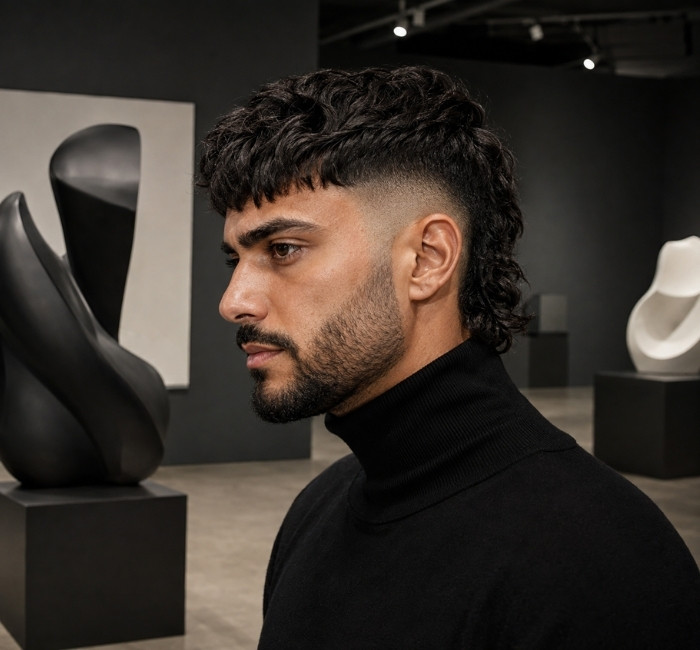
The mullet fade combines a longer back and textured top with gradually faded sides for a cleaner, more structured shape. The fade can be kept low, mid, or high depending on how much contrast you want, without necessarily taking the sides all the way down to skin.
Maintenance: Medium; the fade needs occasional cleanup, while the longer back can grow out more naturally between trims.
Best For: Straight, wavy, or medium-to-thick hair; men who want a cleaner mullet with adjustable contrast
Ask Your Barber: Keep noticeable length through the back, maintain enough top length for texture, and fade the sides at your preferred height while keeping some visible hair at the shortest point.
How to Style: Blow-dry the top forward, upward, or slightly back depending on the shape you want, then use a small amount of matte paste or clay for texture and control.
9. Shaggy Mullet

The shaggy mullet uses soft, uneven layers through the top, sides, and back to create a loose, textured shape. Unlike faded mullets, the sides stay fuller and connect into the longer back through layering rather than a sharp clipper transition.
Maintenance: Low to medium; the layered shape grows out naturally, but occasional trims help prevent the fringe and back from becoming too heavy.
Best For: Straight, wavy, fine-to-medium, or medium-density hair; men who want a softer, more relaxed mullet
Ask Your Barber: Keep layered length through the top and back, leave the sides fuller rather than heavily faded, and add light choppy texture to create movement without removing too much weight.
How to Style: Apply a small amount of sea salt spray or lightweight texture cream to damp hair, scrunch gently, then air-dry or blow-dry with your fingers for a loose finish.
10. Two-Block Mullet
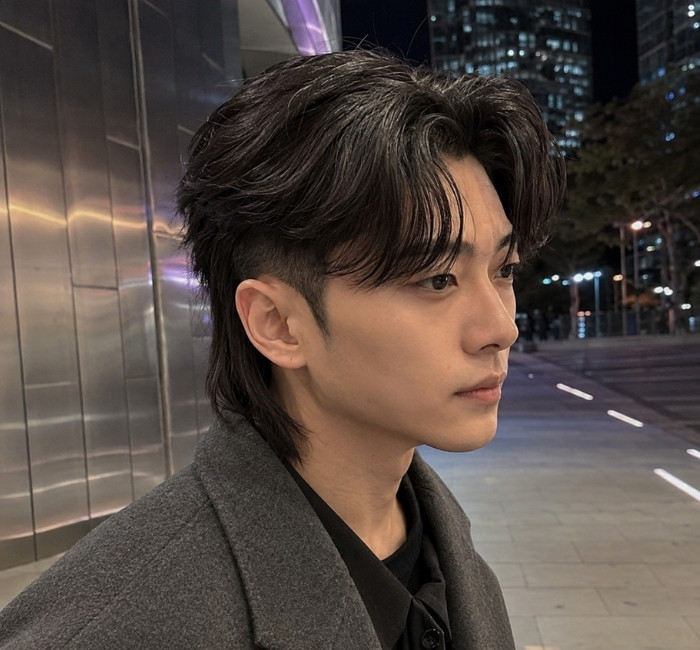
The two-block mullet combines the shorter sides of a two-block haircut with a longer top and extended length through the back. The stronger separation between the upper and lower sections creates a cleaner contrast than a softer, fully layered mullet.
Maintenance: Medium; the shorter sides need occasional cleanup, while the longer top and back need periodic shaping to keep the two-block contrast clear.
Best For: Straight, slightly wavy, or medium-density hair; men who want a sharper, more structured mullet
Ask Your Barber: Keep the top and back noticeably longer, cut the sides shorter to create a clear two-block contrast, and preserve enough weight through the crown so the longer back connects naturally.
How to Style: Blow-dry the top forward, parted, or slightly back depending on the finish you want, then use a small amount of lightweight cream or matte paste for control and separation.
11. Short Mullet with Low Taper Fade
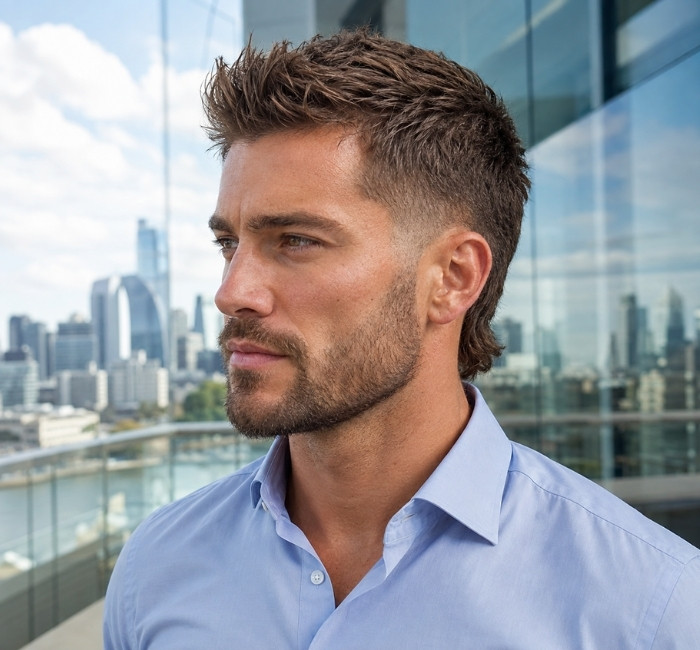
The short mullet with low taper fade keeps the back only moderately longer than the sides while using a subtle taper around the temples, ears, and neckline. Compared with a standard short mullet, the cleaner lower edges create a more defined contrast without making the fade too aggressive.
Maintenance: Low to medium; the low taper needs occasional cleanup, while the short back and top are relatively easy to manage.
Best For: Straight, wavy, or medium-density hair; men who want a compact mullet with a cleaner finish
Ask Your Barber: Keep the back slightly longer than the sides, leave enough length through the top for texture, and add a low taper around the temples and neckline while preserving the short mullet shape.
How to Style: Blow-dry the top with your fingers for light volume, then apply a small amount of matte paste or styling cream if extra texture and control are needed.
12. Mullet Faux Hawk
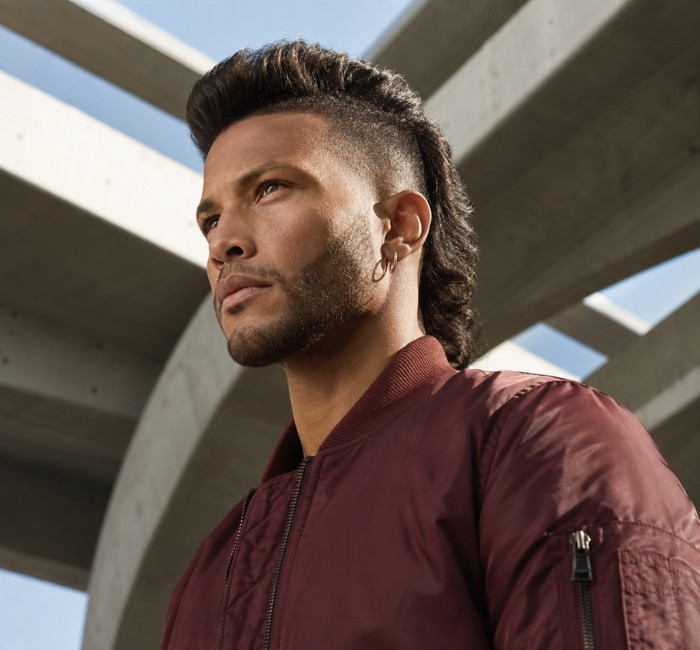
The mullet faux hawk keeps extra length through the center of the top while the sides stay shorter and more blended than a true mohawk. The back retains the longer mullet shape, creating a lifted center without the stronger separation of a mohawk mullet.
Maintenance: Medium; the center section needs regular styling, while the shorter sides and longer back need occasional shaping.
Best For: Straight, wavy, or medium-to-thick hair; men who want added height without an extreme central strip
Ask Your Barber: Keep more length through the center and front, taper or fade the sides without removing them completely, and preserve enough length through the back to maintain the mullet shape.
How to Style: Apply a small amount of matte clay or paste, lift the center section upward and slightly back with your fingers, then keep the sides softer and more blended.
13. Temp Fade Mullet
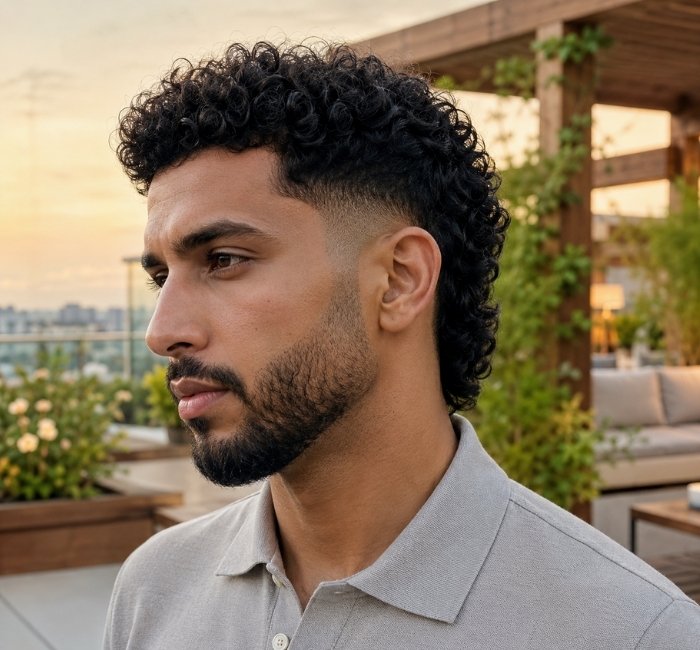
The temp fade mullet keeps the longer top and back while using a short fade around the temples and sideburn area. Because the fade is concentrated near the front of the sides, more length can remain through the upper sides and back for a softer transition.
Maintenance: Medium; the temple area needs occasional cleanup to keep the outline neat, while the longer top and back can grow out more naturally.
Best For: Straight, wavy, curly, or medium-density hair; men who want cleaner edges without heavily fading the entire side
Ask Your Barber: Keep the top and back long enough to preserve the mullet shape, then add a temple fade around the hairline and sideburn area while leaving more weight through the rest of the sides.
How to Style: Shape the top according to your natural texture, then use a small amount of styling cream, matte paste, or curl cream if extra definition is needed.
14. Faded Mullet with Fringe
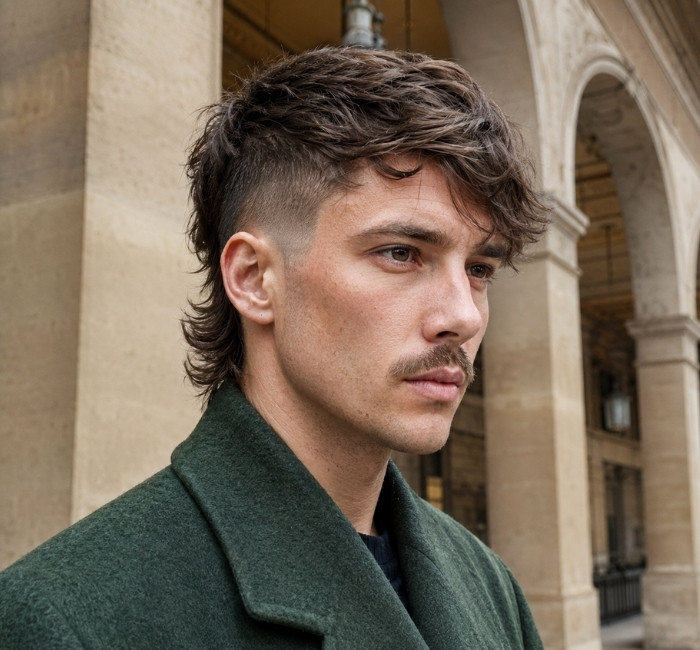
The faded mullet with fringe combines a longer back with shorter faded sides and extra length through the front. The fringe can be worn forward or swept slightly to one side, creating a softer front shape while the fade keeps the sides more defined.
Maintenance: Medium; the fringe and faded sides need occasional cleanup, while the longer back can grow out more naturally.
Best For: Straight, slightly wavy, fine-to-medium, or medium-density hair; men who want a softer fringe with a cleaner side profile
Ask Your Barber: Keep enough length through the front for a visible fringe, preserve the longer back, and fade the sides to your preferred height while maintaining a clear mullet shape.
How to Style: Blow-dry the fringe forward or slightly to one side, then use a small amount of lightweight styling cream or matte paste for control. Let the back follow its natural texture.
15. Fluffy Mullet
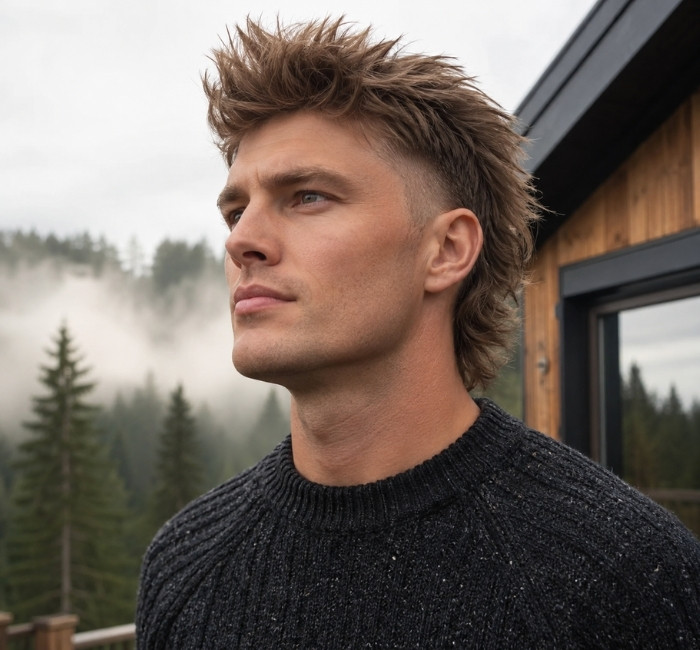
The fluffy mullet keeps more volume through the top and crown while the sides stay shorter and the back remains longer. The fuller top creates a softer, airier shape than a sharply structured mullet, especially when the hair has natural body or texture.
Maintenance: Medium; the top needs occasional shaping to control bulk, while the shorter sides may need more frequent cleanup.
Best For: Thick, coarse, wavy, or medium-to-high density hair; men who want more lift and volume through the top
Ask Your Barber: Keep enough length through the top and crown to create volume, preserve the longer back, and taper or fade the sides based on how much contrast you prefer.
How to Style: Apply a small amount of volumizing mousse or lightweight texture product to damp hair, then blow-dry upward with your fingers or a round brush. Use texture powder at the roots only if extra lift is needed.
16. Side-Part Mullet
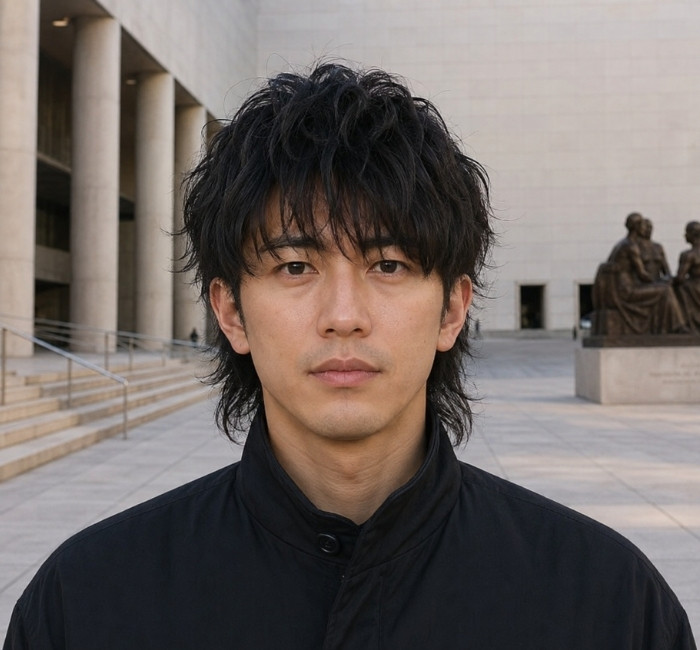
The side-part mullet combines the longer back of a traditional mullet with a defined part through the top, creating a cleaner and more controlled shape. The sides can remain softly tapered or slightly shorter, while the longer top is directed to one side instead of being styled forward or straight back.
Maintenance: Medium; the part and top need occasional shaping, while the longer back can grow out more naturally between trims.
Best For: Straight, slightly wavy, or medium-density hair; men who prefer a neater, more structured mullet
Ask Your Barber: Keep noticeable length through the back, leave enough length on top to create a defined side part, and taper or shorten the sides without removing too much weight around the temples.
How to Style: Apply a lightweight styling cream or matte paste to damp hair, create the part with a comb or your fingers, then blow-dry the top toward one side while letting the back fall naturally.
17. Messy Mullet with Texture

The messy mullet keeps the top and back loosely textured while the sides stay shorter to preserve the overall shape. Unlike a shaggy mullet, which relies more on layered cutting throughout, this version focuses on a deliberately tousled styling finish.
Maintenance: Low to medium; the textured finish grows out naturally, but occasional trims help prevent the top and back from becoming too bulky.
Best For: Wavy, curly, or medium-density hair; men who prefer a relaxed, less structured mullet
Ask Your Barber: Keep enough length through the top and back for natural movement, add light texture without over-layering, and taper or shorten the sides while maintaining the mullet shape.
How to Style: Apply a small amount of sea salt spray or texture cream to damp hair, scrunch gently, then air-dry or diffuse on low heat. Use your fingers to loosen the fringe and layers once dry.
18. Edgy Mullet with Beard
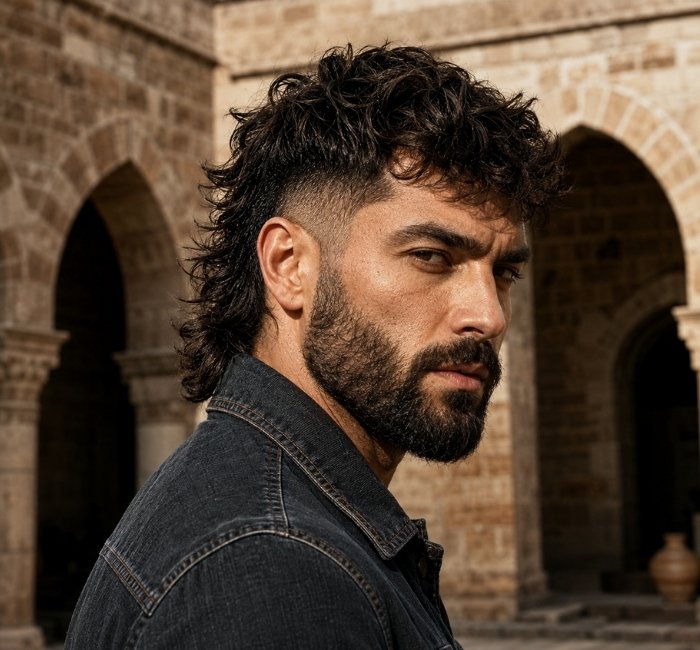
The edgy mullet with beard combines a textured mullet with facial hair for a stronger overall contrast. The top can be worn spiky or loosely textured, while the sides stay shorter so the haircut can transition more cleanly into the beard.
Maintenance: Medium to high; both the haircut and beard need occasional shaping to keep the transition around the sideburns clean.
Best For: Straight, wavy, thick, or medium-to-high density hair; men who want a more defined mullet with visible facial hair
Ask Your Barber: Keep noticeable length through the back, add texture through the top, and taper or fade the sideburn area so the haircut connects smoothly with the beard.
How to Style: Use a small amount of matte clay or paste to separate the top and create texture, then keep the beard shaped with beard balm or oil if needed.
19. Classy Mullet
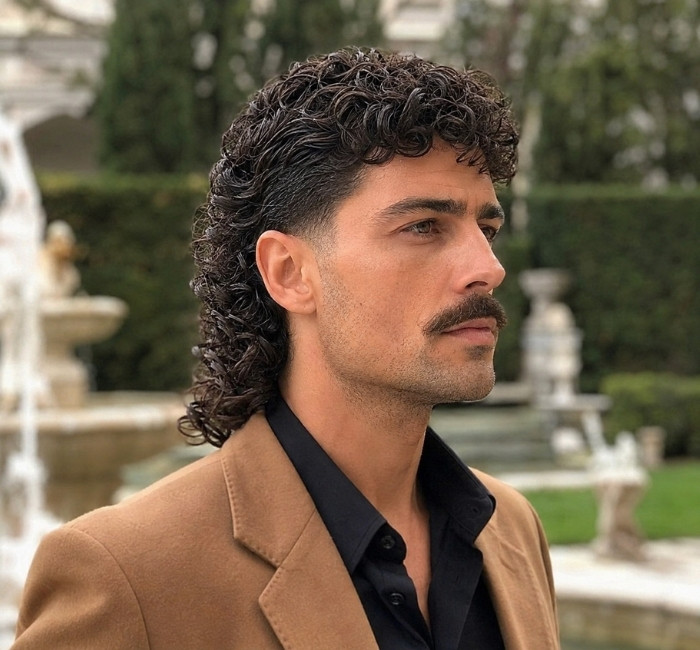
The classy mullet uses softer layering, a more controlled top, and a subtle taper through the sides to create a cleaner overall shape. Compared with more heavily faded or choppy versions, this style keeps the transitions smoother and the longer back more restrained.
- Maintenance: Medium; the softer shape grows out fairly well, but occasional trims help keep the top, sides, and back balanced.
- Best For: Wavy, curly, or medium-to-thick hair; men who prefer a softer, more polished mullet
- Ask Your Barber: Keep enough length through the top and back for natural flow, add soft layering rather than heavy choppiness, and use a subtle taper through the sides for a smoother transition.
- How to Style: Apply a lightweight styling cream or curl-defining cream to damp hair, then air-dry or blow-dry gently to preserve natural movement.
20. Quiff Mullet Fade
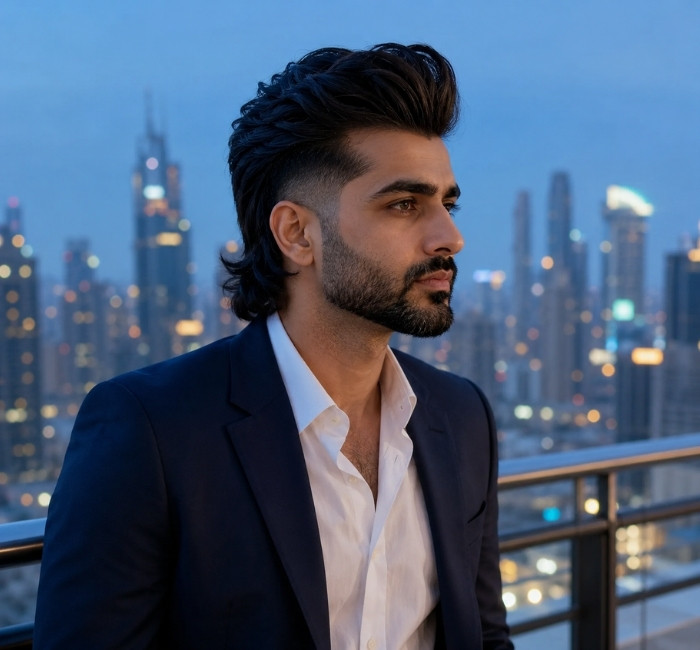
The quiff mullet fade combines a lifted front section with shorter faded sides and extra length through the back. The quiff adds height at the front, while the longer back keeps the overall mullet shape clearly visible.
Maintenance: Medium to high; the quiff needs regular styling, while the faded sides and longer back require occasional cleanup and shaping.
Best For: Straight, wavy, thick, or medium-to-high density hair; men who want more volume through the front
Ask Your Barber: Keep extra length through the front for the quiff, preserve noticeable length through the back, and fade the sides to your preferred height while maintaining enough weight through the crown for a smooth transition.
How to Style: Blow-dry the front upward and slightly back, then apply a small amount of matte paste or pomade for hold and definition. Keep the back looser so the shape does not look overly stiff.
21. Permed Mullet Taper
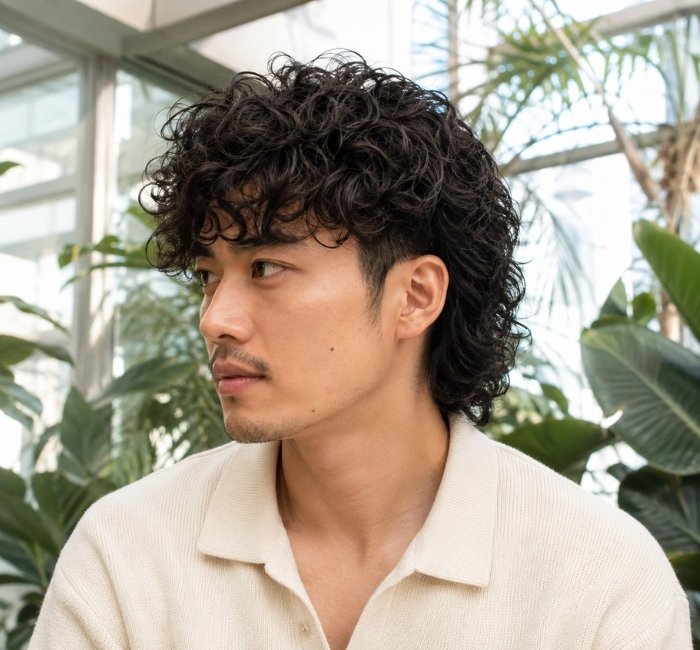
The permed mullet taper combines added curl or wave through the top and back with shorter tapered sides. The perm creates more texture and movement, while the taper keeps the edges cleaner and helps maintain the mullet shape.
Maintenance: Medium to high; the perm gradually loosens as the hair grows, while the tapered sides and overall shape need occasional cleanup.
Best For: Straight or slightly wavy hair; men who want added curl, texture, or movement through the top and back
Ask Your Barber: Keep enough length through the top and back for the perm pattern to show clearly, taper the sides for a softer transition, and choose a loose or medium curl pattern based on the finish you want.
How to Style: Apply a lightweight curl cream to damp hair, scrunch gently, then air-dry or diffuse on low heat. Use a small amount of light styling product only if extra definition is needed.
22. Medium Mullet
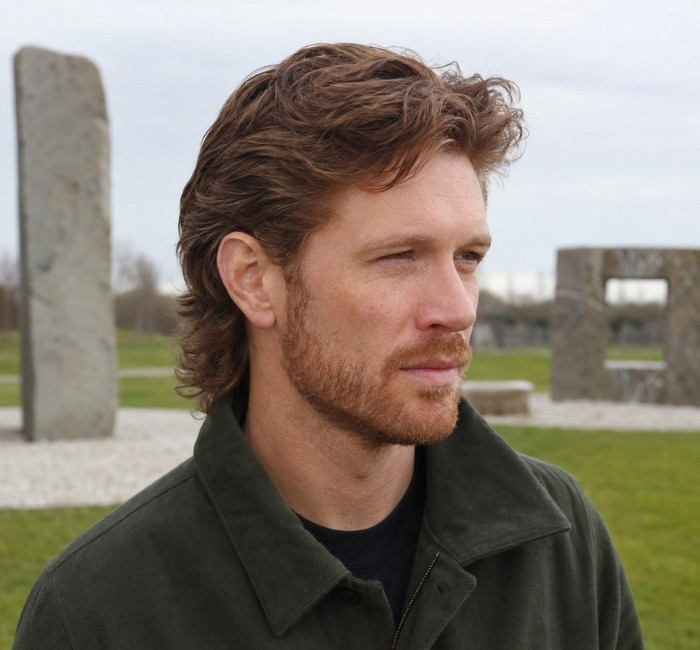
The medium mullet sits between the short and long versions, keeping enough length through the back for a clear mullet shape without extending too far past the neckline. Soft layering through the top and sides can add movement while keeping the overall haircut easier to manage than a longer mullet.
Maintenance: Medium; the back and layers need occasional shaping, while the sides may need more frequent cleanup depending on how short they are.
Best For: Straight, wavy, or medium-to-thick hair; men who want a noticeable mullet without committing to excessive length
Ask Your Barber: Keep medium length through the back, add light layering through the top and crown, and taper or soften the sides so the transition feels balanced rather than overly sharp.
How to Style: Blow-dry or shape the layers with your fingers, then use a small amount of styling cream, sea salt spray, or matte paste depending on whether you want a smoother or more textured finish.
23. Spiky Mullet
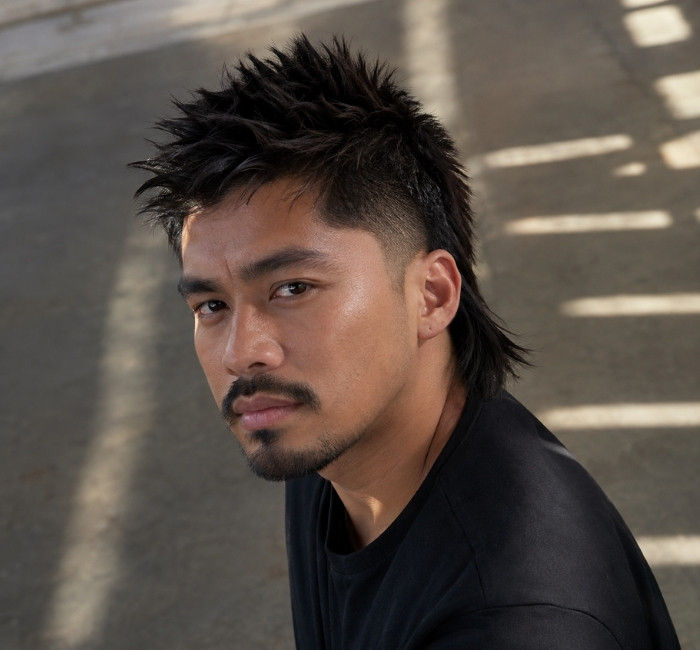
The spiky mullet keeps the back longer while styling the top into separated, upward-pointing sections for a sharper textured finish. The sides stay shorter to create contrast and keep the focus on the lifted top and longer back.
Maintenance: Medium; the top needs regular styling, while occasional trims help keep the shorter sides and longer back balanced.
Best For: Straight, thick, or medium-to-high density hair; men who want a more defined, textured top
Ask Your Barber: Keep enough length through the top to form visible spikes, preserve the longer back, and shorten or taper the sides to create a clear mullet shape.
How to Style: Work a small amount of matte wax, clay, or paste through slightly damp or dry hair, then separate sections with your fingers and shape them upward. Add stronger hold only if your hair needs extra support.
24. Choppy Mullet Taper Fade
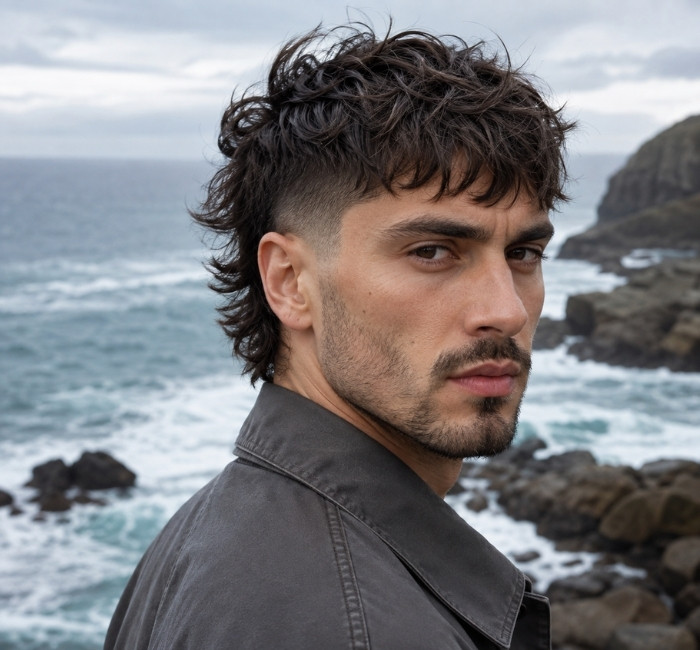
The choppy mullet taper fade combines uneven, textured layers through the top and back with a cleaner taper or fade through the sides. The choppy cutting creates more separation and movement, while the shorter sides keep the overall shape defined.
Maintenance: Medium; the textured top and back grow out fairly well, while the tapered sides need occasional cleanup.
Best For: Straight, wavy, or medium-to-thick hair; men who want a more textured mullet with cleaner sides
Ask Your Barber: Keep noticeable length through the back, add choppy or point-cut texture through the top and fringe, and taper or fade the sides to your preferred level of contrast.
How to Style: Apply a small amount of texture paste or matte cream to dry or slightly damp hair, then use your fingers to separate the layers and create movement.
25. Flowing Mullet

The flowing mullet keeps more length through the front and top so the hair can sweep backward into the crown and longer back. Compared with a fringe-heavy mullet, this version creates a smoother, more continuous shape from front to back.
Maintenance: Medium; the longer top and back need occasional shaping, while the sides may need cleanup to maintain the overall flow.
Best For: Straight, slightly wavy, or medium-density hair; men who want a softer mullet with more movement through the top
Ask Your Barber: Keep enough length through the front and top to sweep the hair backward, preserve the longer back, and taper or softly shorten the sides so the sections connect smoothly.
How to Style: Apply a lightweight styling cream to damp hair, then blow-dry or comb the front backward toward the crown. Let the back fall naturally and use a small amount of light-hold product only if extra control is needed.
26. Wolf Cut Mullet
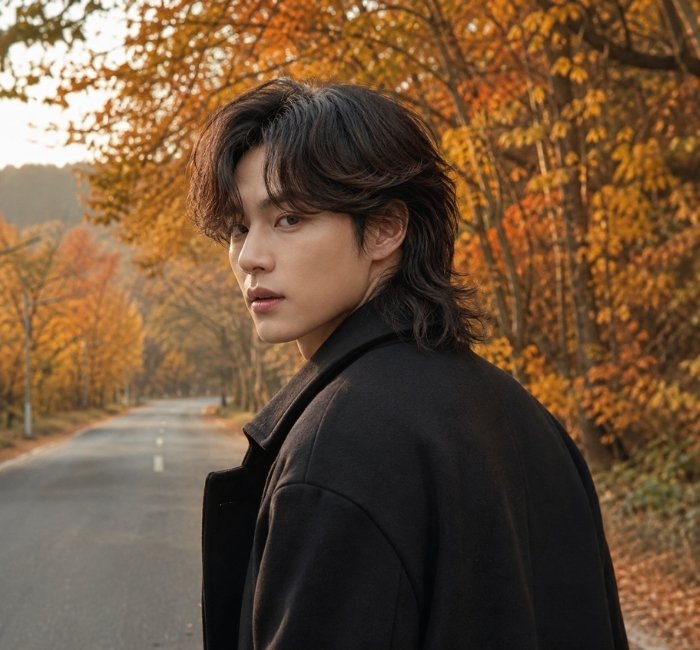
The wolf cut mullet combines heavy layering through the top and crown with extra length through the back, creating a fuller and more textured shape. Compared with a shaggy mullet, the wolf cut usually has more pronounced crown volume and a stronger layered transition into the longer back.
Maintenance: Medium; the layered shape grows out fairly well, but occasional trims help control bulk and keep the crown and back balanced.
Best For: Wavy, curly, or medium-to-thick hair; men who want a layered mullet with more volume and movement
Ask Your Barber: Keep noticeable length through the crown and back, add layered texture throughout the top, and maintain enough weight through the sides so the shape stays connected rather than heavily disconnected.
How to Style: Apply a small amount of sea salt spray, lightweight mousse, or curl cream to damp hair, then scrunch and air-dry or diffuse on low heat. Use your fingers to separate the layers once dry.
27. Skin Fade Mullet
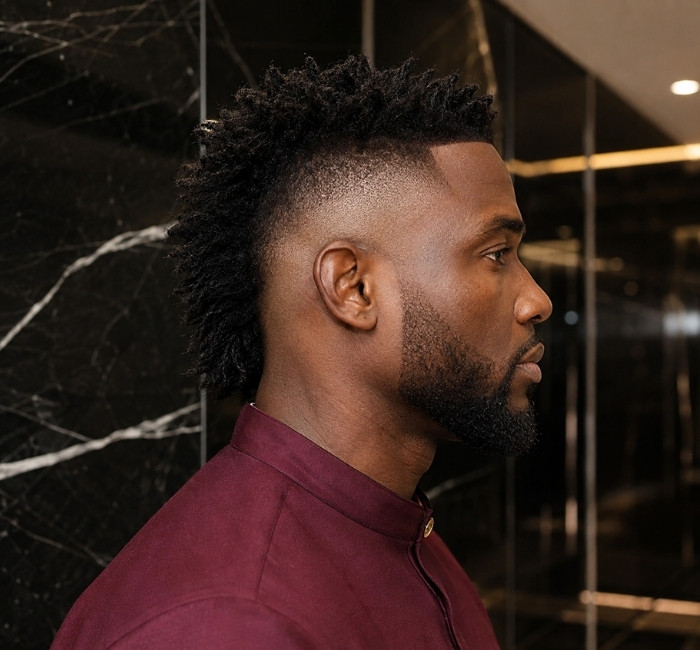
The skin fade mullet creates stronger contrast by fading the sides completely down to the skin while keeping the top and back noticeably longer. Compared with a standard mullet fade, this version has a much sharper transition between the bare sides and the fuller top and back.
Maintenance: High; skin fades usually require more frequent cleanup than standard fades to keep the transition looking sharp.
Best For: Straight, wavy, curly, or medium-to-thick hair; men who prefer a sharper, higher-contrast mullet
Ask Your Barber: Keep the top and back long enough to preserve the mullet shape, then use a low, mid, or high skin fade through the sides depending on how dramatic you want the contrast to be.
How to Style: Keep the top loose or lightly textured with a small amount of matte clay, paste, or styling cream, while allowing the longer back to follow its natural shape.
28. Disconnected Mullet
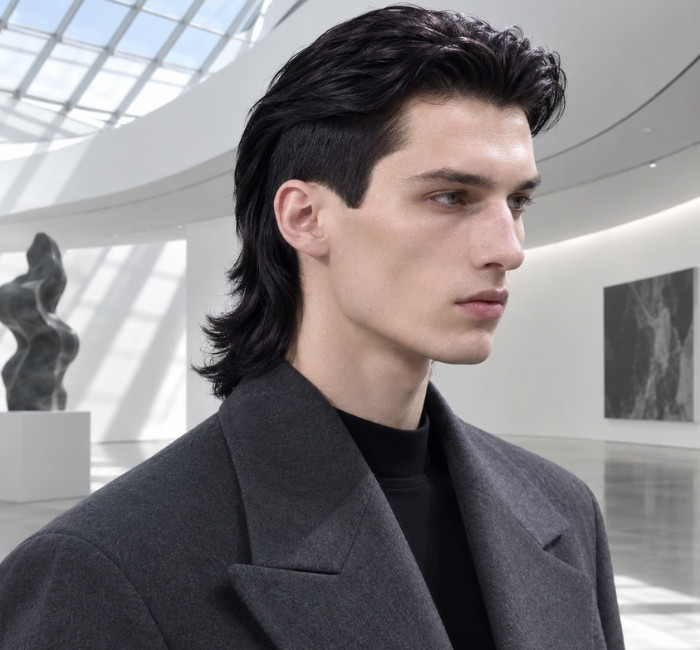
The disconnected mullet keeps a clear break between the longer top and back and the much shorter sides instead of blending the sections gradually. This creates a sharper contrast than a tapered or faded mullet and makes the difference in length more obvious from the side.
Maintenance: Medium to high; the shorter sides need regular cleanup, while the longer top and back require occasional shaping to keep the disconnected silhouette clear.
Best For: Straight, slightly wavy, or medium-to-thick hair; men who prefer a sharper, high-contrast mullet
Ask Your Barber: Keep noticeable length through the top and back, cut the sides much shorter, and preserve a clear separation between the sections rather than blending them heavily.
How to Style: Apply a small amount of matte paste, cream, or light gel to control the top and sides, then leave the longer back natural or lightly textured depending on your preferred finish.
How to Style a Mullet Haircut: Step-by-Step
Step 1: Start with Damp Hair
Wash your hair as needed and towel-dry it until it is damp rather than dripping wet. The products and drying method you use should depend on your natural hair texture and the mullet variation you are styling.
Step 2: Choose a Pre-Styling Product
Use a lightweight product that matches your hair type and desired finish:
- Sea salt spray: Adds grip and texture to straight or wavy hair.
- Lightweight mousse: Helps create volume without making the hair feel heavy.
- Curl cream: Helps define curly, coily, or permed hair while reducing unwanted frizz.
- Styling cream: Works well when you want a softer, smoother finish.
You do not need a pre-styler for every mullet, especially if your hair already has enough natural texture or volume.
Step 3: Dry the Hair Into Shape
For straight or wavy hair, use your fingers while blow-drying to direct the top and back into the shape you want. A round brush can add extra lift through the front or crown if needed.
For curly or permed mullets, air-drying or using a diffuser on low heat can help preserve the natural curl pattern while reducing disruption to the shape.
Step 4: Add a Finishing Product if Needed
Choose the finishing product based on the style rather than using the same product for every mullet:
- Matte paste or clay: Useful for textured, spiky, or structured styles.
- Styling cream: Better for flowing, longer, or softer mullets.
- Texture powder: Adds root lift and grip when the top needs extra volume.
- Curl cream: Helps maintain definition in curly or permed styles.
Start with a small amount of product and add more only if necessary. Apply it mainly where you need control, separation, or hold instead of coating the entire haircut heavily.
Which Mullet Suits Your Face Shape?
Face shape can help guide your choice, but it should not be treated as a strict rule. Hair texture, density, fringe length, side volume, and top height can all change how a mullet looks.
| Face Shape | Mullet Ideas to Consider | What to Keep in Mind |
|---|---|---|
| Round | Quiff Mullet Fade, Mullet Faux Hawk, Fluffy Mullet | Some height through the top can create a more elongated appearance. |
| Square | Short Mullet, Burst Fade Mullet, Modern Mullet | Softer texture and controlled side volume can balance a stronger jawline. |
| Oval | Modern Mullet, Medium Mullet, Flowing Mullet | Many variations can work, so focus more on hair texture, length, and maintenance preference. |
| Oblong | Medium Mullet, Flowing Mullet, Curly Mullet | Softer volume and less extreme height on top can help maintain balanced proportions. |
| Heart | Shaggy Mullet, Classy Mullet, Wolf Cut Mullet | Layering and movement around the sides and back can create a softer overall shape. |
| Diamond | Mohawk Mullet, Choppy Mullet Taper Fade, Temp Fade Mullet | Some texture or width around the temples can soften stronger cheekbone definition. |
Use these as starting points rather than fixed rules. Bring a reference photo to your barber and ask how the fringe, top volume, side length, and back length can be adapted to your natural hair and preferred look.
What to Tell Your Barber for a Mullet
Bring one or two reference photos and explain the overall shape you want. Focus on the back length, sides, top, texture, and fringe rather than relying on one exact measurement.
1. Back Length
Tell your barber how noticeable you want the mullet to be. You can ask for a shorter back that stays close to the neckline or a longer version that extends farther down the nape.
2. Fade or Taper
Explain whether you want the sides softly tapered or faded for stronger contrast. You can also specify a low, mid, high, burst, temple, or skin fade depending on the variation you choose.
3. Top Length
Ask for enough length on top to support your preferred style, whether that is textured, spiky, parted, swept back, or worn with a fringe.
4. Texture and Layers
Tell your barber whether you want a smoother finish or more visible texture. For a shaggy or wolf-cut mullet, ask for more layering and movement; for a cleaner mullet, keep the shape more controlled.
5. Fringe Style
Choose whether you want the front worn forward, side-swept, parted, blunt, or textured. Show your barber how much forehead coverage you prefer.
A reference photo from the front, side, and back can help your barber understand the proportions and adapt the cut to your natural hair texture and density.
Frequently Asked Questions
Are mullets still in style?
Modern mullets remain a recognizable men’s hairstyle, especially in versions that use fades, tapers, textured tops, softer layering, and more controlled back lengths.
Is a mullet hard to maintain?
Maintenance depends on the variation. Short or softly tapered mullets are usually easier to manage, while skin fades, sharp tapers, longer backs, and heavily styled tops may need more frequent shaping.
What hair types can work with a mullet?
Mullets can be adapted to straight, wavy, curly, or coily hair by adjusting the layering, side length, and amount of texture. The best variation depends on your natural hair pattern, density, and preferred finish.
How long does it take to grow a mullet?
Growth time depends on your starting length, desired back length, and individual hair growth rate. A barber can shape the sides and top during the growing process so the haircut develops more evenly.
Can a mullet look professional?
Shorter, cleaner mullets with subtle tapers or softer layering can look more restrained than heavily faded or disconnected versions. Whether a mullet is appropriate also depends on your workplace and dress expectations.
Can a mullet work with fine or thinning hair?
It can, depending on where the hair is finer and how much density remains. Shorter backs, lighter layering, and controlled texture may work better than very long or heavily thinned sections.
Final Thoughts
The modern mullet can be adapted in many ways, from short and subtle versions to longer, layered, faded, or heavily textured styles. The best option depends on your natural hair texture, preferred level of contrast, and how much daily styling and maintenance you want.
Use the examples in this guide as a starting point, then bring a reference photo to your barber and discuss the back length, side treatment, top texture, and fringe shape. Small adjustments to those details can make the haircut better suited to your hair and preferred look.


Leave a Reply