
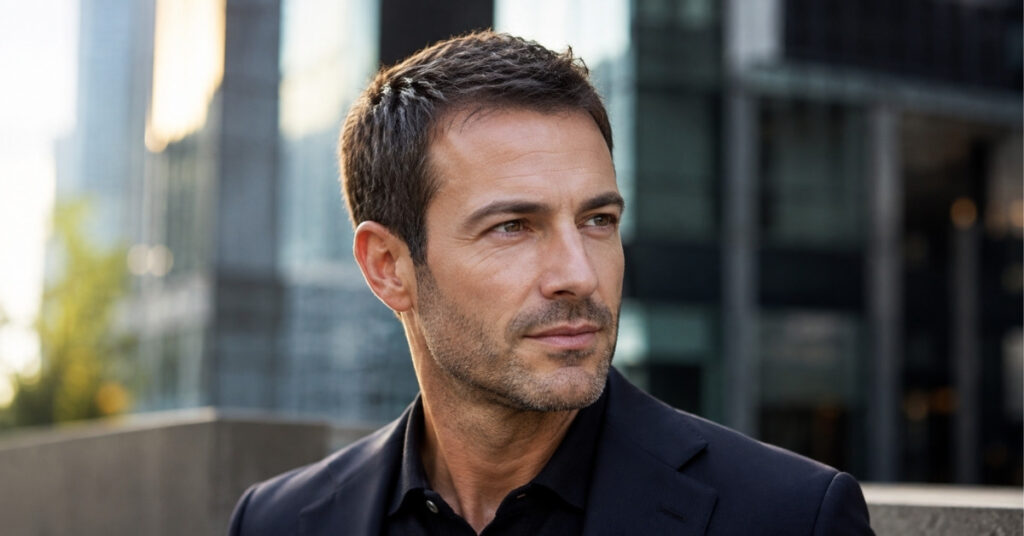
Thin hair does not mean you have to settle for a flat, lifeless or outdated hairstyle. The right haircut can reduce the contrast between dense and sparse areas, add controlled texture and make your overall hairstyle look more balanced. The key is choosing a cut that works with your current density instead of trying to force your hair into a style it cannot comfortably hold.The best haircuts for men with thin hair are generally short, textured and easy to direct.
Styles such as the French crop, crew cut, buzz cut and Caesar cut can create a fuller appearance by keeping the hair compact and reducing visible gaps.
However, no single haircut works for everyone. Your ideal choice depends on whether you have fine strands, a receding hairline, a thinning crown or reduced density across the entire scalp.
This guide will help you identify your hair concern, compare the most suitable cuts and understand exactly what to ask your barber.
Quick Guide: Which Haircut Is Best for Your Thin Hair?
Start by identifying where your hair looks thinnest. A haircut that works for receding temples may not be the best choice for a thinning crown.
| Hair Concern | Recommended Haircuts | Maintenance |
| Receding temples | French crop, Caesar cut, crew cut | Low to medium |
| Thinning crown | Buzz cut, textured crop, high-and-tight | Low |
| Thin hair on top | Short quiff, Ivy League, side-swept crop | Medium |
| Overall thinning | Buzz cut, induction cut, clean shave | Very low |
| Fine straight hair | Ivy League, textured crop, short side part | Medium |
| Thin wavy hair | Messy crop, short waves, textured fringe | Medium |
| Thin curly hair | Curly crop, short curly fringe, tapered curls | Medium |
| Professional appearance | Ivy League, regulation cut, crew cut | Medium |
| Minimal daily styling | Buzz cut, crew cut, high-and-tight | Very low |
| Fuller-looking front | French crop, Caesar cut, textured fringe | Low to medium |
A shorter haircut is not automatically better in every situation. Men who still have reasonable density on top may benefit from keeping enough length to create texture. Men with more noticeable overall thinning may prefer an even, closely cropped style that reduces the difference between the scalp and the remaining hair.
Fine Hair, Thin Hair and Thinning Hair Are Not the Same
People frequently use the words “fine,” “thin” and “thinning” as though they mean the same thing. Understanding the difference will make it easier to choose a suitable haircut.
Fine hair refers to the diameter of each individual strand. A man can have fine strands while still having a large number of hairs across his scalp. Fine hair often feels soft and lightweight, but it can become flat when overloaded with heavy styling products.
Thin or low-density hair means there are fewer strands covering a particular area. The scalp may become more noticeable under bright lighting or when the hair is wet.
Thinning hair means the density has changed over time. You may notice that your hairline is moving backward, the crown is becoming more visible or your hairstyle no longer looks as full as it once did.
These differences matter because fine hair with good density can support styles such as an Ivy League or short quiff. Noticeable thinning may look more balanced with a French crop, crew cut or buzz cut.
A haircut can improve the visual balance of your hairstyle, but it cannot identify or treat the underlying cause of changing hair density.
That distinction becomes important if your hair loss appears suddenly or progresses quickly.
1. Textured French Crop

The textured French crop is one of the most dependable options for men with thin hair around the temples or front hairline.
It keeps the sides short while leaving enough hair on top to create controlled texture.
The front is usually styled slightly forward, helping soften the appearance of a receding hairline.
Unlike a long comb-over, the French crop does not depend on moving a large section of hair across the scalp.
Its compact shape looks intentional and remains relatively easy to maintain.
Best for: Receding temples, fine straight hair and mild thinning at the front.
Avoid if: Your crown is significantly thinner than the front and you plan to keep the top noticeably long.
Why it works: The forward texture breaks up the visible hairline and creates the impression of greater density. Short sides also keep attention on the textured top.
What to tell your barber: Ask for approximately one to two inches on top, a soft textured fringe and a low or mid taper on the sides.
Request point cutting for movement, but tell the barber not to remove unnecessary density with thinning shears.
How to style it: Apply a small amount of lightweight matte clay or texture paste to dry or nearly dry hair. Work the product through with your fingertips and direct the fringe slightly forward.
Maintenance: Schedule a trim every three to five weeks to preserve the clean outline.
2. Crew Cut

The crew cut is a classic, practical choice that suits many stages of thinning. The hair remains slightly longer at the front and gradually becomes shorter toward the crown.
This creates a structured silhouette without requiring significant volume.
It is especially useful for men who want a tidy haircut suitable for work, formal occasions and everyday wear.
Best for: Mild thinning, receding temples, straight hair and men who prefer low-maintenance grooming.
Avoid if: You want enough length for dramatic movement or frequent restyling.
Why it works: The gradual length creates subtle height at the front while keeping the rest of the hair compact. It does not ask thin strands to support a heavy hairstyle.
What to tell your barber: Ask for a traditional crew cut with slightly more length at the front, a gradual transition toward the crown and a low or mid fade. The top should remain short enough to stand naturally.
How to style it: Use a pea-sized amount of matte paste. Lift the front lightly with your fingers rather than flattening it with a comb.
Maintenance: A crew cut normally looks best with a trim every three to four weeks.
3. Buzz Cut

A buzz cut creates an even, deliberate appearance by keeping the hair at a similar short length across the scalp. It is one of the most effective options for reducing the contrast between thicker and thinner areas.
The style does not hide thinning. Instead, it makes density differences less visually dominant. It can also create a stronger outline when paired with neat facial hair.
Best for: Diffuse thinning, a thinning crown, receding hairlines and men who want minimal styling.
Avoid if: You have scalp marks or uneven areas you would prefer to keep covered.
Why it works: When all the hair is cut close to the scalp, sparse areas blend more naturally with the surrounding hair. There are no long strands separating into visible sections.
What to tell your barber: Ask for a uniform buzz cut or a slightly longer top with a faded neckline and sides. Guard lengths between a number one and number four can work depending on your density and preferred level of scalp visibility.
How to style it: No daily styling product is required. Use a gentle shampoo and protect an exposed scalp from strong sunlight.
Maintenance: Trim every two to four weeks, depending on how sharp you want the finish to remain.
4. Caesar Cut

The Caesar cut features a short, horizontally directed fringe and an even, compact top. It resembles the French crop but usually has a more uniform length and a straighter front edge.
This haircut works particularly well when the hairline has begun to recede at the corners but enough density remains through the centre.
Best for: Receding temples, fine straight hair and men who prefer a short, structured style.
Avoid if: A blunt fringe makes your face appear too round or the front section is too sparse to create a defined edge.
Why it works: Directing the hair forward reduces the visual depth of the temples. The short length also limits separation between fine strands.
What to tell your barber: Request a short Caesar cut with a softly textured top and a natural fringe rather than an excessively sharp, heavy line. Keep the sides tapered.
How to style it: Work a small amount of matte cream through the top and push the hair forward. Avoid wet-look gel, which can separate the strands.
Maintenance: A trim every three to five weeks will maintain the fringe and side shape.
5. Short Textured Crop

A short textured crop creates movement without relying on long hair. The top is cut into small, irregular sections that help prevent the hair from lying in one flat sheet.
This is a versatile choice because it can be styled forward, slightly upward or diagonally depending on the location of the thinner area.
Best for: Mild crown thinning, fine hair, straight hair and uneven density on top.
Avoid if: Your top hair is too short to create texture or too long to remain lightweight.
Why it works: Irregular texture creates subtle shadows and reduces the appearance of spaces between strands. It also prevents the style from looking overly neat or separated.
What to tell your barber: Ask for a short layered crop with point-cut texture on top and a low taper or natural scissor-cut finish on the sides. Tell the barber to preserve density in the sparse areas.
How to style it: Blow-dry the hair in the direction that gives the best coverage. Finish with a light matte paste or texture powder.
Maintenance: Trim every four to five weeks.
6. Ivy League

The Ivy League is a longer and more polished version of the crew cut. It leaves enough length at the front to create a subtle side direction while keeping the crown and sides controlled.
It is an excellent professional haircut for men whose hair is fine but still reasonably dense.
Best for: Fine straight hair, mild temple recession and office-friendly grooming.
Avoid if: Your front hair separates easily or the side direction exposes a large thinning area.
Why it works: The style creates controlled shape without requiring the heavy height of a pompadour. A soft side direction can also make the hairline look less severe.
What to tell your barber: Ask for an Ivy League with around one and a half to two inches at the front, shorter hair toward the crown and a low taper. Request a natural part rather than a shaved hard part.
How to style it: Blow-dry the front gently upward and to one side. Use a lightweight matte cream for flexible hold.
Maintenance: Expect a trim every four weeks.
7. High-and-Tight

The high-and-tight keeps the sides extremely short while leaving a compact section of hair on top. It creates a strong, clean shape and requires little daily effort.
The haircut can work particularly well when the remaining hair is denser through the centre of the scalp than around the sides.
Best for: Receding temples, active lifestyles and men who prefer a sharp, masculine shape.
Avoid if: The contrast between the top and crown makes crown thinning more noticeable.
Why it works: Closely cut sides create a deliberate transition into the top. The short length prevents fine strands from collapsing.
What to tell your barber: Ask for a high fade with a short, even top. Keep the transition smooth rather than creating an extreme disconnected strip.
How to style it: Use no product or apply a very small amount of matte paste for added texture.
Maintenance: The fade may require refreshing every two to three weeks.
8. Side-Swept Crop

A side-swept crop uses a short diagonal direction rather than a deep, traditional side part. It can help create movement across a mildly receding front without looking like a forced comb-over.
The success of this style depends on keeping the top relatively short and natural.
Best for: Mild hairline recession, fine straight hair and men who want a versatile casual style.
Avoid if: You need to move a large amount of hair across a wide sparse area.
Why it works: A soft diagonal direction creates movement and reduces the emphasis on a symmetrical receding hairline.
What to tell your barber: Request a short layered top that naturally falls diagonally, combined with a low taper. Avoid a hard part or excessive disconnection.
How to style it: Apply a lightweight styling cream and guide the hair to one side with your fingers. Do not press it flat against the scalp.
Maintenance: Trim every four to five weeks.
9. Short Quiff

A short quiff can give fine hair a fuller appearance when there is still enough density at the front. The important word is “short.”
A very tall quiff requires more hair, more product and stronger hold, which may expose sparse sections.
The restrained version creates lift without appearing exaggerated.
Best for: Fine hair with reasonable frontal density and men willing to blow-dry their hair.
Avoid if: The front hairline is significantly sparse or cannot hold its shape.
Why it works: Light upward movement separates the hair from the scalp and creates visible volume. Keeping the quiff short prevents it from becoming thin and stringy.
What to tell your barber: Ask for two to three inches at the front, gradually shortening toward the crown, with tapered sides. Request lightweight texture rather than aggressive thinning.
How to style it: Blow-dry the front upward at low or medium heat. Finish with a small amount of matte paste, applying it from the roots rather than coating the ends.
Maintenance: Trim every four weeks and allow a few minutes for styling each morning.
10. Regulation Cut

The regulation cut is a conservative style inspired by traditional military grooming. It keeps enough length on top for a subtle side direction while maintaining neat, tapered sides.
It is suitable for men who want a professional haircut without the severity of a full buzz cut.
Best for: Fine straight hair, mature men, professional settings and mild frontal thinning.
Avoid if: A clear side direction exposes your scalp or widens the appearance of your part.
Why it works: Its restrained proportions keep the hair looking tidy and controlled. The top does not need excessive volume or heavy styling products.
What to tell your barber: Ask for a short regulation cut with a natural taper, a softly directed top and no shaved part. The barber should keep the parting area blended.
How to style it: Use a small amount of light grooming cream and style with your fingers or a wide-tooth comb.
Maintenance: Trim every three to five weeks.
11. Taper Fade With a Textured Top

A taper fade gradually shortens the hair near the ears and neckline while maintaining more weight above.
Combined with a short textured top, it creates a clean but less aggressive appearance than a skin fade.
The balanced transition makes it suitable for many face shapes and age groups.
Best for: Fine hair, mild thinning and men who want a modern haircut without an extreme fade.
Avoid if: The top is grown too long and becomes noticeably flat.
Why it works: The taper creates clean edges while the textured top adds dimension. Because the fade remains relatively low, it does not create excessive contrast around a sparse crown.
What to tell your barber: Ask for a low taper fade and a short top with natural, uneven texture. Keep the corners soft if your temples are receding.
How to style it: Use a texture powder or lightweight matte paste and lift the top with your fingertips.
Maintenance: Refresh the taper every three to four weeks.
12. Short Curly Crop
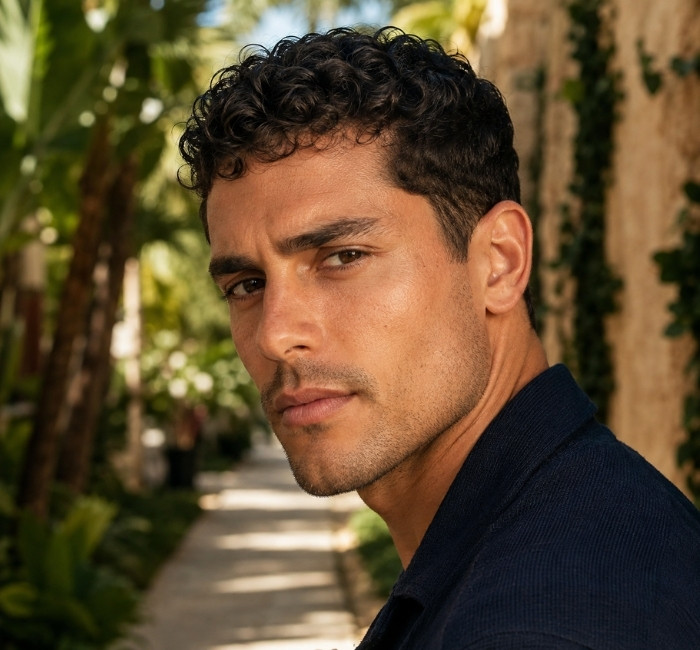
Natural curls can create useful texture and visual depth, but excessive length may cause fine curls to separate or become weighed down.
A short curly crop keeps the movement while maintaining a compact silhouette.
The goal is not to straighten or flatten the curls. It is to shape them so that they sit evenly across the scalp.
Best for: Fine curly hair, mild overall thinning and men who want to preserve their natural texture.
Avoid if: The curl pattern is uneven around a large sparse area and requires significant length to cover it.
Why it works: Short curls overlap naturally and create visual dimension. Their shape can make density differences less obvious than a flat, straight finish.
What to tell your barber: Ask for a short, scissor-shaped curly crop with balanced weight on top and a low taper around the sides. Request that the barber assess the curls when dry or close to their natural state.
How to style it: Apply a small amount of lightweight curl cream to damp hair. Scrunch gently and allow the curls to dry without repeatedly touching them.
Maintenance: Shape the haircut every four to six weeks.
13. Short Messy Waves

Men with fine wavy hair can use natural movement to create a fuller appearance.
A short messy style prevents the waves from becoming heavy while allowing them to form soft layers.
The finish should look relaxed rather than deliberately untidy.
Best for: Fine wavy hair, uneven density and casual grooming.
Avoid if: The waves become flat at the roots or separate into long, thin sections.
Why it works: Natural bends create shadows and movement, which can make the top appear more dimensional.
What to tell your barber: Ask for short, lightweight layers that follow the natural wave pattern. Keep the sides tapered without making them dramatically shorter than the top.
How to style it: Use a light mousse or sea-salt-style texturizing spray in moderation. Scrunch the hair and blow-dry with controlled airflow.
Maintenance: Trim every five to six weeks.
14. Subtle Faux Hawk

A subtle faux hawk directs the hair gently toward the centre rather than creating a tall or sharply pointed ridge. It can be effective when the central hair remains stronger than the temples.
This version should remain short, wearable and blended into the sides.
Best for: Receding temples, younger-looking styles and reasonably dense central hair.
Avoid if: The centre or crown is the thinnest area.
Why it works: Bringing the hair slightly inward creates a more concentrated silhouette and reduces attention on the temple corners.
What to tell your barber: Ask for a short, blended faux hawk with additional texture through the centre and tapered sides. Avoid a disconnected mohawk shape.
How to style it: Apply matte paste and push the hair lightly toward the centre with both hands. Keep the finish loose rather than creating a stiff point.
Maintenance: Trim every three to five weeks.
15. Buzz Cut With a Beard

Combining a buzz cut with a well-shaped beard creates visual balance between the upper and lower parts of the face.
It is particularly effective for men who feel that a very short haircut alone looks too severe.
The beard does not need to be long. Even short, even facial hair can strengthen the overall frame.
Best for: Overall thinning, receding hairlines and men who can grow balanced facial hair.
Avoid if: Your facial hair grows unevenly and requires more maintenance than you prefer.
Why it works: The haircut looks deliberate, while the beard adds structure around the jaw and shifts some visual attention away from the scalp.
What to tell your barber: Request an even buzz cut with clean edges and a beard shape that complements your jaw. Ask for a gradual connection between the sideburns and beard.
How to style it: Keep both the scalp hair and beard neatly trimmed. Use a small amount of beard conditioner if the facial hair feels dry.
Maintenance: Clean the neckline and cheek lines regularly, with a full trim every two to four weeks.
16. Short Afro With a Taper
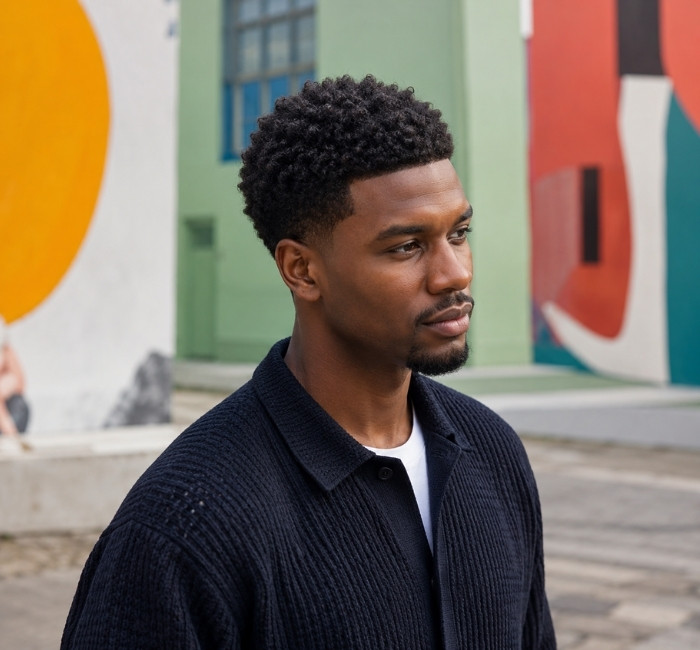
A short Afro preserves natural coily texture while controlling the overall shape. A gentle taper around the temples and neckline creates definition without removing too much density from the sides.
This haircut should be customized carefully because coily hair can look very different when stretched, wet or freshly cut.
Best for: Fine coily hair, mild thinning and men who want a natural, shaped style.
Avoid if: There are sudden patches of hair loss or scalp irritation that require professional assessment.
Why it works: Coily texture creates natural volume and a rounded silhouette. Keeping the shape short prevents weak areas from becoming stretched or separated.
What to tell your barber: Ask for a short, evenly shaped Afro with a low temple and neckline taper. Tell the barber to preserve density and avoid creating unnecessary contrast around sparse sections.
How to style it: Use a lightweight leave-in product suitable for your texture and shape the hair gently without excessive pulling.
Maintenance: Reshape every three to five weeks.
17. Clean-Shaven Head
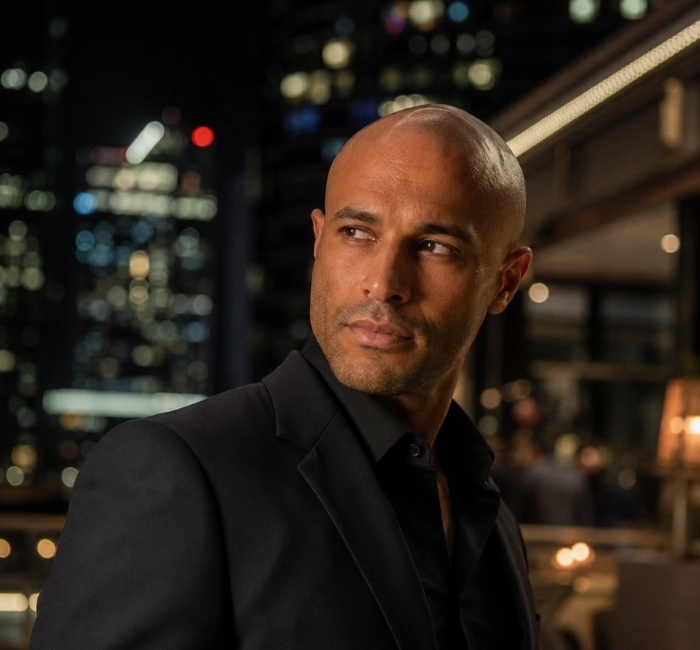
A clean-shaven head is not simply a last resort. For many men with advanced thinning, it offers a confident, consistent and extremely low-maintenance appearance.
It removes the contrast between remaining hair and bare areas, eliminating the need to position strands around the scalp.
Best for: Advanced thinning, large sparse areas and men who want a decisive style change.
Avoid if: You are not comfortable with regular scalp maintenance or frequent sun protection.
Why it works: An even scalp appearance replaces an irregular hair outline with a clear, intentional shape.
What to tell your barber: Ask for a close clipper shave first if you are uncertain about going completely smooth. You can then assess your head shape before choosing a razor finish.
How to maintain it: Keep the scalp clean and moisturized with products appropriate for your skin. Protect exposed skin outdoors.
Maintenance: A smooth finish requires frequent upkeep, while a very short clipper cut can be refreshed less often.
Best Haircuts for a Receding Hairline

A receding hairline commonly becomes noticeable around the temple corners. Trying to hide both sides with long, carefully placed strands can make the hairstyle look fragile, especially when wind or moisture changes its position.
A French crop or Caesar cut can work well because the hair moves forward naturally. A crew cut is another strong option when you want a more conventional shape.
Men with greater central density may also consider a subtle faux hawk, which directs attention toward the middle.
Avoid creating an unusually sharp or low artificial hairline. A natural outline usually ages better and is easier to maintain.
The objective is to soften the contrast around the temples, not pretend that the hairline has never changed.
Best Haircuts for a Thinning Crown
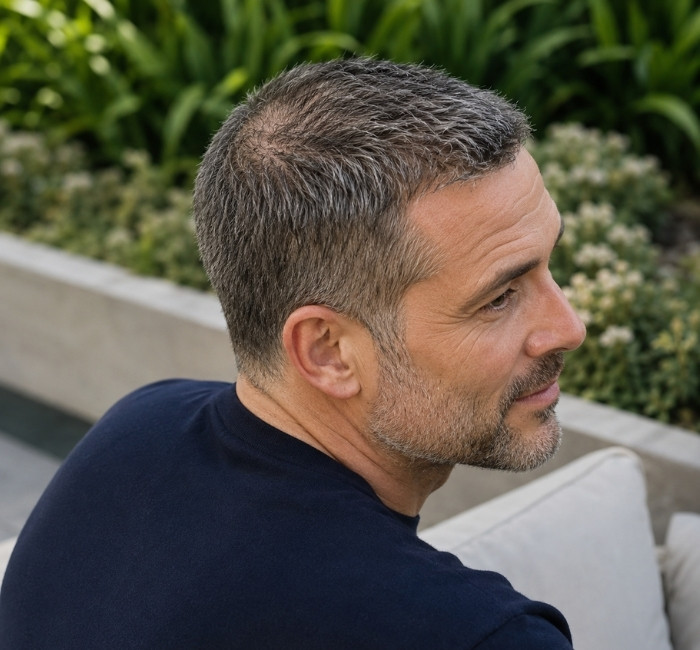
Crown thinning can be difficult to evaluate in a mirror because it sits above and behind your usual viewing angle.
Ask your barber to show you the area under normal lighting before deciding how much length to keep.
A buzz cut, crew cut or short textured crop can reduce the difference between the crown and surrounding hair.
Men with enough natural waves may also use a short, loosely textured style, provided the hair does not separate into obvious sections.
Avoid growing a small amount of crown hair significantly longer than the surrounding area. Long strands can split under direct light and make the scalp more visible. Keeping the transition compact usually produces a more balanced result.
Best Haircuts for Overall or Diffuse Thinning
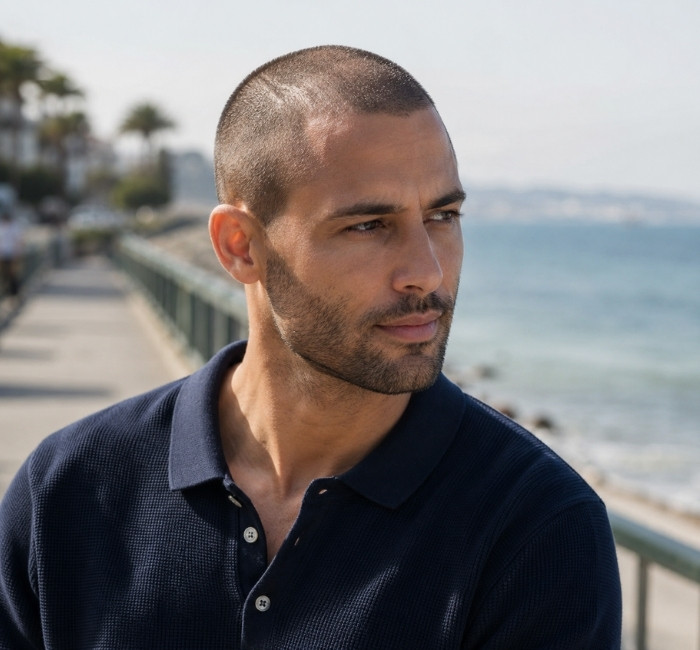
Diffuse thinning affects density across a broader portion of the scalp. In this situation, adding more length does not always add more visual fullness.
Longer strands may become flat, transparent or separated.
An even buzz cut is often the simplest option because it reduces contrast across the entire head. A very short crew cut can work when the front remains slightly denser.
Men ready for a more decisive change may prefer an induction cut or clean-shaven head.
The right length depends on your skin tone, hair colour and remaining density. Instead of selecting a guard number based only on a photograph, ask your barber to begin slightly longer and reduce the length gradually.
Best Haircuts for Thin Straight, Wavy, Curly and Coily Hair
Thin Straight Hair

Fine straight hair often becomes flat because it lies close to the scalp. A textured crop, crew cut, French crop or Ivy League can create shape without demanding excessive volume.
Use lightweight, matte styling products and avoid applying too much product at once.
Heavy waxes and glossy gels can bind strands together and expose more scalp.
Thin Wavy Hair

Wavy hair already contains movement, so the haircut should preserve that advantage. Short messy waves, a layered crop or a relaxed fringe can create dimension.
Keep the waves light around the roots. Excessive length may pull them downward and reduce their natural shape.
Thin Curly Hair

A short curly crop or controlled curly fringe can help curls overlap naturally. The barber should shape the hair according to its natural shrinkage and avoid removing too much weight from sparse sections.
A small amount of curl cream is usually more useful than a heavy pomade that compresses the pattern.
Thin Coily Hair

A short Afro, sponge-style crop or low tapered shape can maintain natural volume while keeping the overall silhouette balanced.
Avoid excessive tension, harsh brushing or unnecessarily sharp contrast around thin areas.
Choose a barber familiar with your texture and ask them to assess density before cutting.
Haircuts That Can Make Thin Hair Look More Noticeable
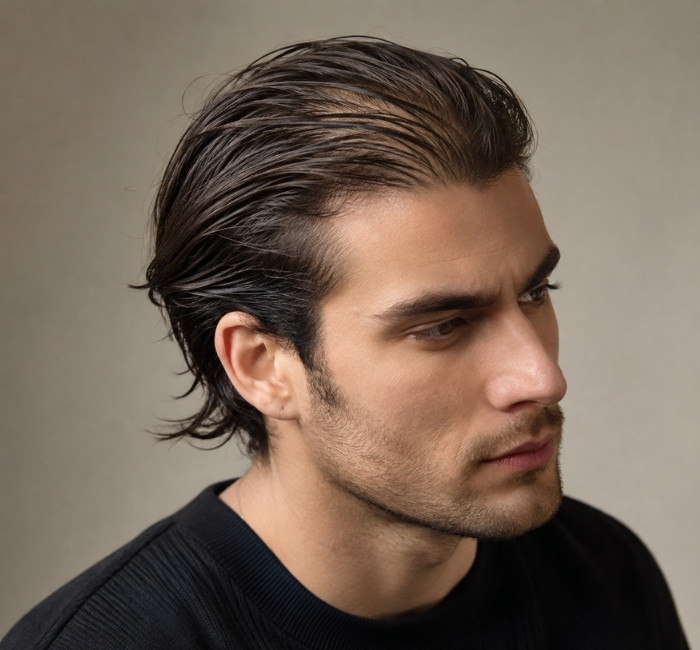
No hairstyle is universally wrong, but certain cuts become difficult when density is limited.
Long, Flat Comb-Overs
A small amount of hair stretched across a large area can separate throughout the day. It may also draw more attention to the section it is intended to cover.
A shorter side-swept crop usually looks more natural because it follows the existing direction of the hair.
Heavy Slick-Back Styles
Slicking the hair firmly backward exposes the frontal hairline and can reveal spaces between strands. Glossy products may increase the visual contrast between the scalp and hair.
Men with good density can still wear a controlled slick-back, but it is less forgiving when the hairline or crown is noticeably thin.
Tall Pompadours
A large pompadour requires significant frontal density, length and product. When the available hair is fine, the style may look wide from the side but transparent from the front.
A short quiff offers a similar sense of lift with less strain on the hair.
Wet-Look Hairstyles
Wet-look gel can group several strands into one visible section. This reduces the number of separate strands covering the scalp and may make gaps appear wider.
Matte or natural-finish products generally create a softer texture.
Excessively Long Thin Hair
Long hair is not automatically unsuitable, but thin ends can become transparent. The weight may also reduce root volume.
Men who prefer length should consider a layered medium cut and ask the barber to maintain a strong perimeter rather than heavily thinning the ends.
Hard Parts Over Sparse Areas
A shaved part creates a strong line of visible scalp. That can look stylish with dense hair, but it may unintentionally widen an already noticeable parting.
A soft, natural side direction is usually more forgiving.
How to Style Thin Hair So It Looks Fuller

A good haircut creates the foundation, but your daily routine determines whether the style stays lifted or collapses.
Start With Less Product
Begin with less product than you think you need. You can always add a little more, but removing excess product usually requires washing the hair again.
Warm the product between your palms and distribute it through the roots and middle lengths. Avoid coating only the visible surface.
Blow-Dry for Direction
A blow-dryer can create shape before styling product is applied. Direct the hair upward, forward or diagonally according to the haircut.
Use controlled heat rather than holding the dryer extremely close to one area. Finish when the hair is dry enough to maintain its position.
Choose Matte or Natural Finishes
Matte clay, light paste, texture powder and flexible styling cream are common options for fine hair. The ideal product depends on your texture and the amount of hold required.
Avoid choosing the strongest product automatically. A heavy formula may overpower fine strands.
Style With Your Fingers
A tight comb can flatten the hair and create visible lines. Finger styling produces softer separation and irregular texture.
A comb may still be helpful for an Ivy League or regulation cut, but use it gently and loosen the finished style with your fingertips.
Avoid Building an Artificial Helmet
Using large amounts of hairspray, wax and powder at the same time can make the style rigid. Thin hair generally looks better when it retains some natural movement.
Aim for controlled texture rather than perfect, immovable coverage.
What to Tell Your Barber
Bringing a photograph is helpful, but the model’s density, texture and hairline may differ from yours. Explain what you want the haircut to achieve instead of asking for an exact copy.
You can use this general request:
I want a short, textured haircut that reduces the contrast between the thinner and denser areas.
Please preserve as much useful density as possible, avoid aggressive thinning shears and show me how the crown looks before finishing.
For a receding hairline, say:
Please keep enough texture at the front to style slightly forward. I want the temple area softened rather than outlined too sharply.
For a thinning crown, say:
Please keep the crown compact so it blends with the surrounding hair. I do not want a long section that separates under direct light.
For fine straight hair, say:
I need lightweight texture and enough support at the roots. Please avoid removing too much weight from the top.
For curly or coily hair, say:
Please shape the haircut according to my natural pattern and shrinkage. I want the density preserved around the thinner areas.
A good barber should also be able to explain how the cut will look from the front, side and crown. Ask how much daily styling it requires before committing to it.
How Often Should Men With Thin Hair Get a Haircut?
Most short styles maintain their balance with a trim approximately every three to five weeks. Very sharp fades may require more frequent appointments, while textured scissor cuts can often grow for slightly longer.
Regular trims do not cause hair to grow thicker, but they can prevent the hairstyle from becoming uneven. As the sides grow outward, the top may appear flatter or thinner by comparison. Restoring the proportions can make the entire haircut look more intentional.
Your ideal schedule depends on the cut:
- Buzz cut: every two to four weeks.
- Crew cut: every three to four weeks.
- French crop: every three to five weeks.
- Ivy League: every four to five weeks.
- Curly or wavy crop: every four to six weeks.
- Skin fade: every two to three weeks.
- Clean-shaven head: according to your preferred finish.
When Hair Thinning Should Be Professionally Assessed
A haircut can improve appearance, but it cannot explain why your hair density is changing. Hair loss can have different causes, and similar-looking patterns may require different approaches.
The American Academy of Dermatology advises that effective management begins with identifying the cause and recommends consulting a board-certified dermatologist for an accurate diagnosis.
Its guidance lists gradual thinning, a slowly expanding bald area and a progressively receding hairline among possible signs of hair loss.
Arrange a medical assessment when you are concerned about your hair loss, particularly if it appears sudden, develops in patches or occurs alongside scalp discomfort.
The NHS also advises speaking to a GP before approaching a commercial hair clinic so the possible cause can be considered first.
This guide provides grooming information and should not be treated as a diagnosis or personalised medical plan.
Frequently Asked Questions
What haircut makes men’s thin hair look thicker?
Short textured styles like the French crop, crew cut, Caesar cut and textured crop can make thin hair appear fuller by adding shape and reducing flatness.
Is short or long hair better for men with thin hair?
Short hair is usually easier to manage and creates a cleaner, fuller appearance. Longer styles can work if the hair still has enough density.
Is a fade good for thin hair?
A low or mid fade can improve the overall shape, but very high fades may make thinning areas more noticeable. Choose a fade based on your hair pattern.
What is the best haircut for a thinning crown?
Buzz cuts, crew cuts and short textured crops are good choices because they blend thinning areas and avoid visible separation.
Can men with thin hair wear a quiff?
Yes, if there is enough hair at the front. A short, natural quiff works better than a tall, heavily styled version.
Should men with thin hair use clay, wax or pomade?
Lightweight matte clay, paste or texture powder usually works best. Avoid heavy waxes and shiny products that can make hair look flatter.
Does a buzz cut hide thinning hair?
A buzz cut does not hide thinning but creates a more even appearance by reducing the contrast between thick and thin areas.
What should I ask my barber for if my hair is thinning?
Ask for a haircut that keeps natural density, avoids excessive thinning and suits your hairline, crown and daily styling routine.
Final Thoughts
The best haircuts for thin hair focus on balance, texture and easy maintenance. Styles like the French crop, crew cut, buzz cut and Ivy League can help create a fuller-looking appearance when chosen correctly.
Work with your barber to select a haircut that matches your hair pattern and lifestyle. The goal is not to hide your hair but to create a style that looks natural, confident and easy to maintain.



Leave a Reply