
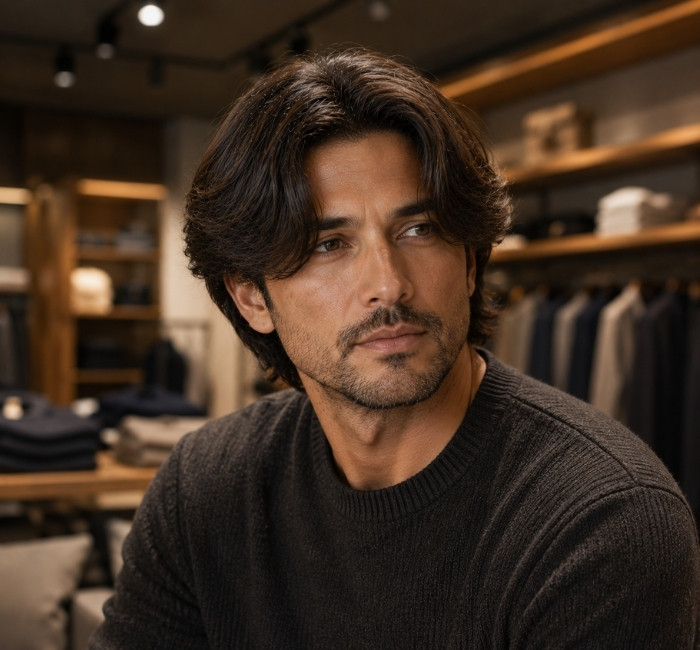
The curtain haircut is a men’s hairstyle featuring a middle or slightly off-center part with longer hair that falls naturally on both sides of the face.
It creates a relaxed frame around the forehead and cheeks while keeping the hair’s natural texture visible. The style works across different hair types, but the right length, layering, and styling approach make the biggest difference.
This guide explains how curtain haircuts work, which variations suit different hair textures, what to tell your barber, and how to maintain the look.
Quick Guide: Curtain Haircut at a Glance
| Factor | Guidance |
| Hair Length | Medium to long hair, usually 3–6 inches on top |
| Main Feature | Middle part with face-framing front sections |
| Best Hair Types | Straight, wavy, and curly textures |
| Styling Difficulty | Medium |
| Maintenance | Medium depending on length and sides |
| Best For | Men who want movement and natural flow |
| Common Pairings | Taper, fade, layers, textured finish |
What Is a Curtain Haircut?
A curtain haircut is a hairstyle where the front section of hair is divided into two parts, creating a curtain-like effect around the face.
Unlike short hairstyles that focus on sharp outlines, curtains depend on length, movement, and the way hair naturally falls.
The main features of a curtain haircut include:
- A center or relaxed side part
- Longer fringe around the forehead
- Hair flowing toward both sides
- Soft layers for movement
- A natural rather than heavily structured finish
The classic version became widely recognized during the 1990s, but modern interpretations often include textured layers, cleaner sides, and styling techniques that make the haircut easier to wear today.
A successful curtain haircut depends on balance. Too little length may prevent the hair from creating the curtain effect, while too much weight can make the style appear flat or heavy.
Why Is the Curtain Haircut Popular Again?
The curtain haircut has returned because it offers a balance between casual styling and a controlled shape.
Many men prefer it because it does not require the sharp lines or daily precision needed for some shorter hairstyles.
Reasons men choose curtain hairstyles include:
- Natural movement around the face
- Compatibility with different hair textures
- Flexible styling options
- A softer alternative to very structured cuts
- The ability to grow into longer hairstyles
However, curtains are not automatically low-maintenance. The haircut still requires the correct shape, regular trimming, and suitable styling products to keep the front sections sitting properly.
Best Curtain Haircut Variations for Men
Classic Curtain Haircut
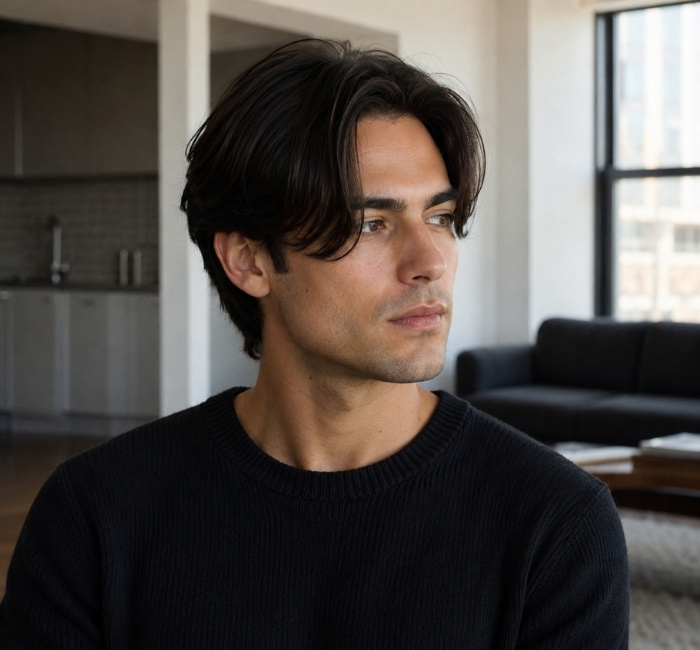
The classic curtain haircut features medium-length hair with a clear middle part and natural flow on both sides. The sides usually blend smoothly with the top rather than creating strong contrast.
This version keeps the traditional curtain shape while allowing the hair to move naturally.
Best For: Straight or slightly wavy hair with medium density.
Ideal Length: Around 3–5 inches on top.
Ask Your Barber: “Keep medium length on top with soft layers and enough length in the front for a natural middle part.”
How to Style: Apply a lightweight styling cream to damp hair, create the part, and allow the front sections to fall naturally.
Maintenance: Medium. Regular shaping helps maintain the flow.
Textured Curtain Haircut
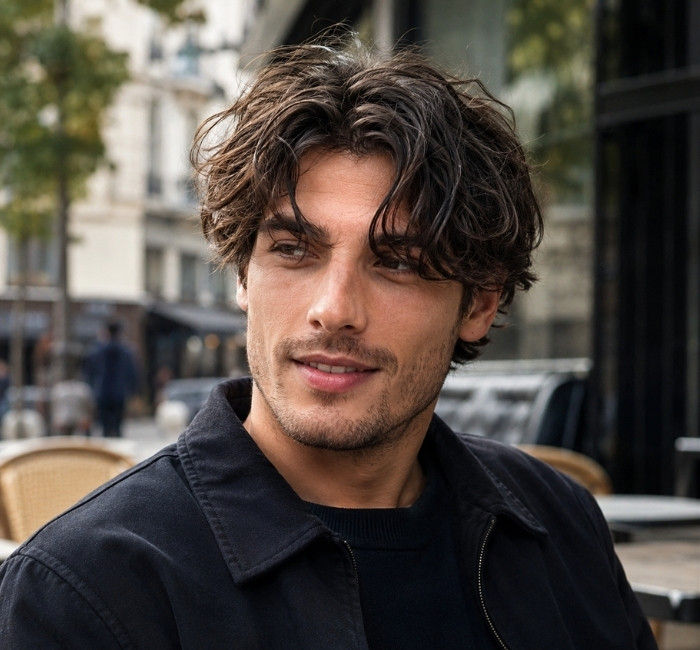
The textured curtain haircut adds layers and separation to create a more relaxed appearance. Instead of perfectly smooth sections, the hair has movement and a slightly messy finish.
This style works well for men who want curtains without the flatter appearance of traditional versions.
Best For: Wavy, thick, or textured hair.
Ideal Length: Medium length with layered ends.
Ask Your Barber: “Keep the curtain shape but add texture and soft layers for movement.”
How to Style: Use a sea-salt spray or lightweight cream and style with fingers instead of a comb.
Maintenance: Medium.
Curtain Haircut With Low Taper
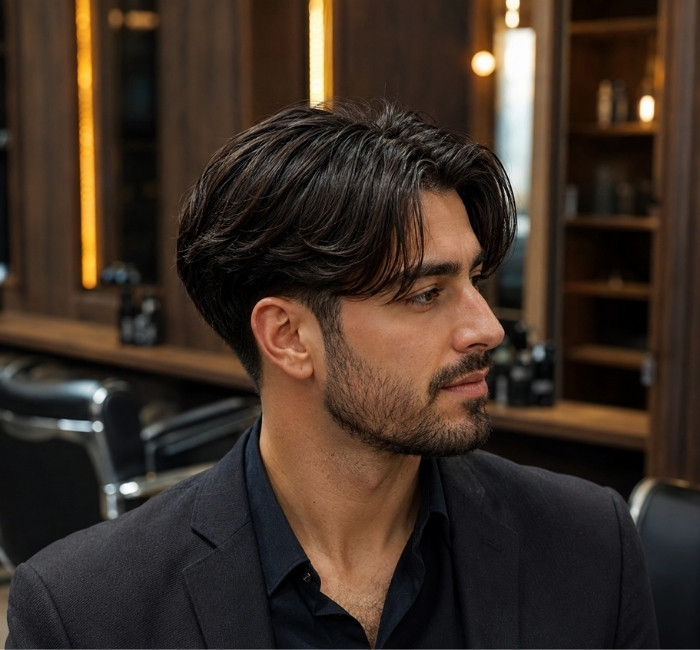
A low taper curtain haircut keeps the longer top section while cleaning the area around the ears and neckline. It creates a sharper outline without removing the relaxed nature of the hairstyle.
This is a good choice for men who want curtains but prefer a cleaner finish.
Best For: Men who want a balanced mix of casual and neat styling.
Ideal Length: 4–5 inches on top with tapered sides.
Ask Your Barber: “Keep the curtain length on top and add a subtle low taper around the sides and neckline.”
How to Style: Blow-dry the front sections outward and use a small amount of matte product.
Maintenance: Medium.
Curtain Haircut With Fade
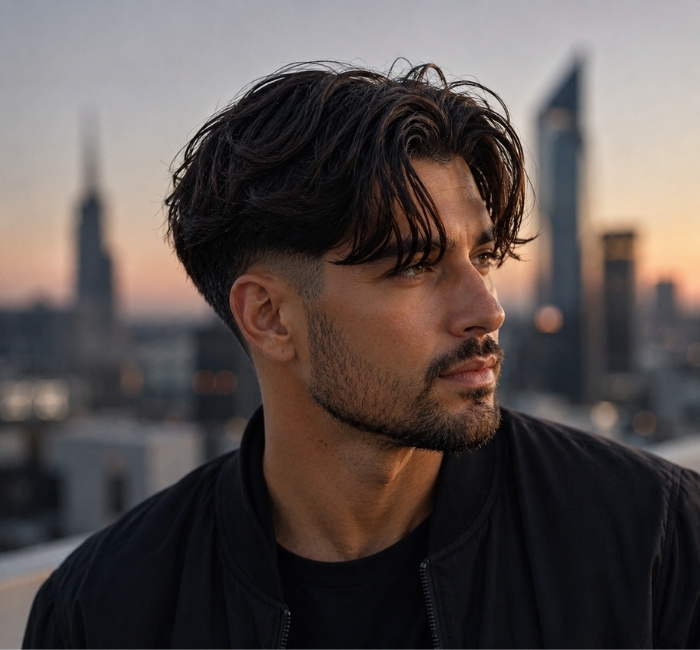
The faded curtain haircut creates more contrast by combining longer hair on top with shorter faded sides. The fade can range from subtle to noticeable depending on personal preference.
A fade can modernize the haircut, but too much contrast may overpower the curtain shape.
Best For: Men who prefer a cleaner, sharper haircut.
Ideal Length: Medium or long top with faded sides.
Ask Your Barber: “Keep enough length for curtains and use a fade that complements the top instead of dominating it.”
How to Style: Focus styling products on the longer top section.
Maintenance: Medium to high because fades need frequent cleanup.
Long Curtain Haircut
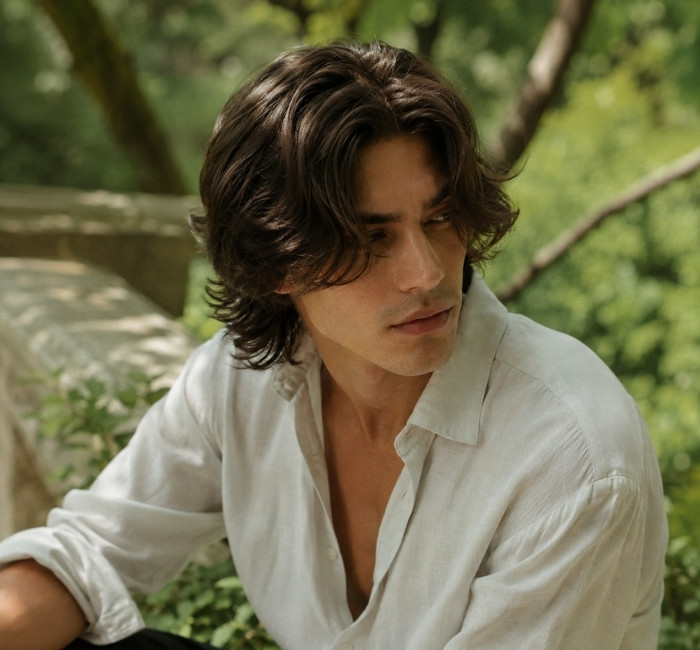
The long curtain haircut keeps extra length around the sides and back, creating a flowing hairstyle with more movement.
This version suits men who enjoy longer hairstyles and want a softer appearance.
Best For: Men growing their hair or preferring longer styles.
Ideal Length: Shoulder length or near shoulder length depending on preference.
Ask Your Barber: “Keep the overall length but add layers so the hair moves naturally.”
How to Style: Use lightweight cream or leave-in conditioner to control frizz and maintain softness.
Maintenance: Medium.
Curly Curtain Haircut
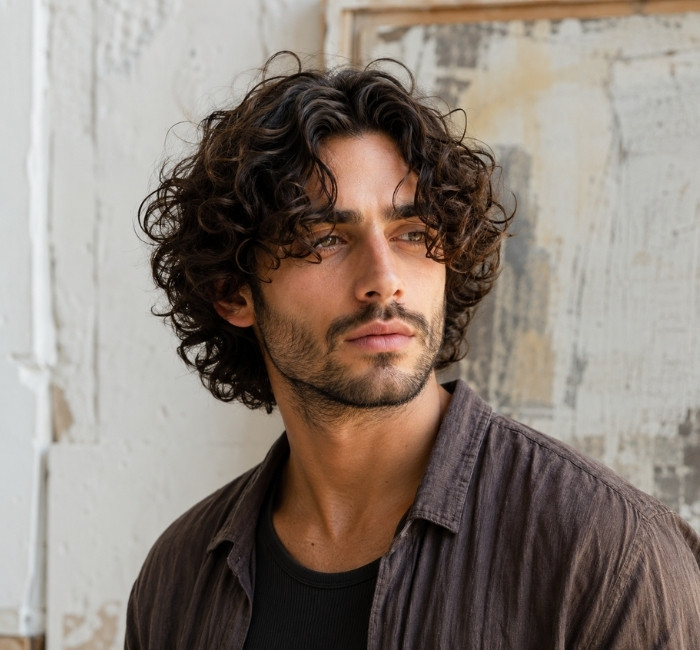
A curly curtain haircut uses natural curls to create a softer and more textured version of the style. Instead of forcing straight sections, the haircut follows the curl pattern.
The key is maintaining enough length because curls naturally shrink when dry.
Best For: Naturally curly or coily hair.
Ideal Length: Medium to longer lengths depending on curl pattern.
Ask Your Barber: “Shape the haircut around my natural curls and keep enough length for the curls to form properly.”
How to Style: Apply curl cream to damp hair and avoid brushing curls when dry.
Maintenance: Medium.
Curtain Haircut for Different Hair Types
The curtain haircut can work with different textures, but the cutting technique and styling routine should match how your hair naturally behaves. Hair density, thickness, curl pattern, and growth direction all influence the final result.
Straight Hair
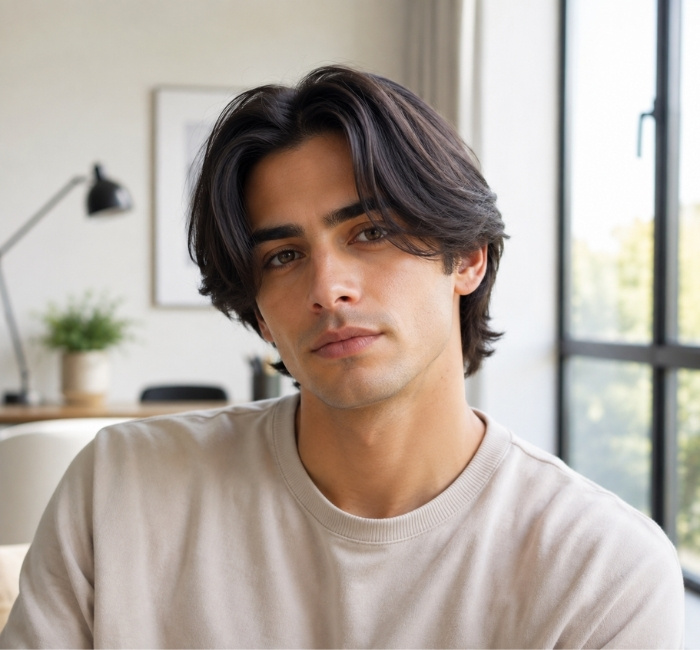
Straight hair is one of the easiest textures for a traditional curtain haircut because the middle part and falling sections are naturally visible.
The main challenge with straight hair is avoiding a flat appearance. Without enough texture or layering, the haircut can lose movement and look too heavy.
Tips for straight hair:
- Add soft layers to create movement
- Avoid heavy styling products that make hair stiff
- Use a blow dryer to direct the front sections outward
- Choose lightweight creams instead of strong-hold products
Straight hair often works well with classic curtains, textured curtains, and taper variations.
Wavy Hair
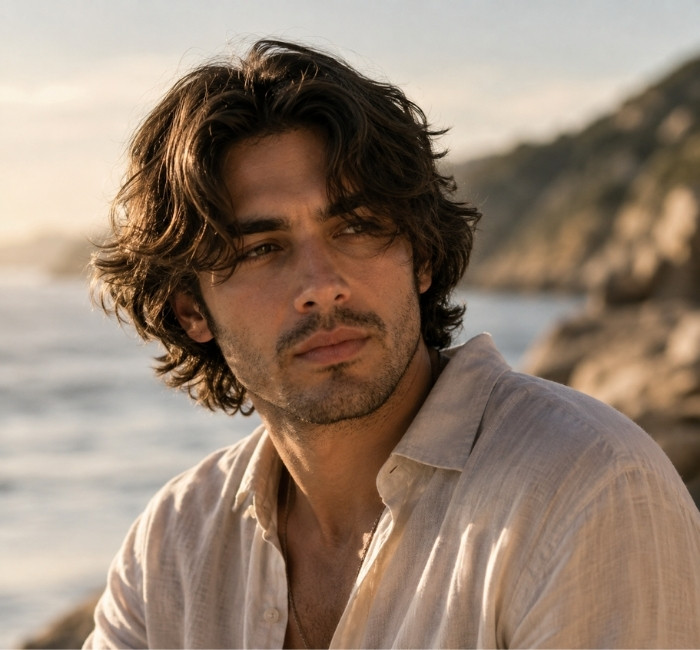
Wavy hair naturally adds texture and volume to a curtain haircut. The waves can create a more relaxed and effortless shape without requiring much styling.
The haircut should preserve the natural wave pattern instead of cutting away too much texture.
Tips for wavy hair:
- Keep enough length for waves to form properly
- Use sea-salt spray to enhance texture
- Avoid over-layering thick waves
- Apply styling products while hair is slightly damp
Wavy curtains often have more natural movement than straight versions.
Curly Hair
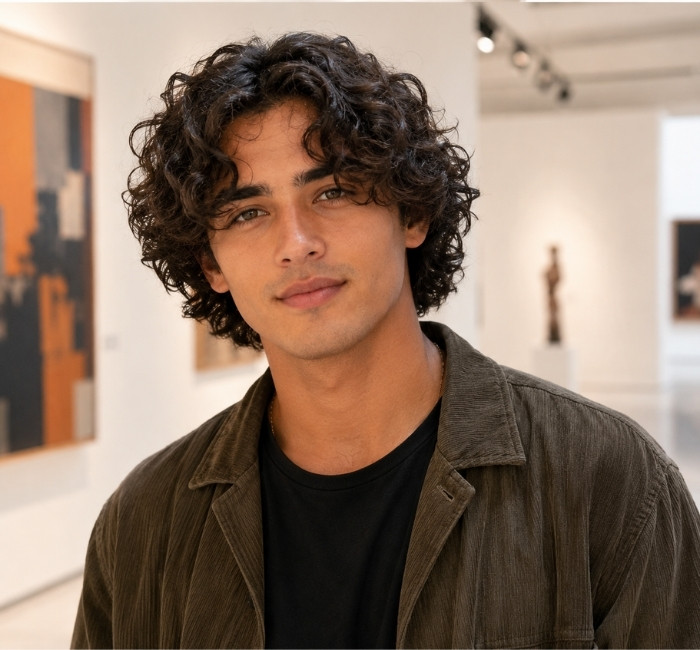
Curly hair can create a unique curtain style with volume and personality. The key is shaping the haircut around the curl pattern instead of forcing a straight middle-part look.
Because curls shrink when dry, barbers usually need to consider how the hair behaves after drying.
Tips for curly hair:
- Keep additional length if curls shrink significantly
- Use curl-friendly styling products
- Avoid brushing curls after they dry
- Maintain moisture to reduce frizz
A curly curtain haircut should enhance the natural texture rather than hide it.
Thick Hair
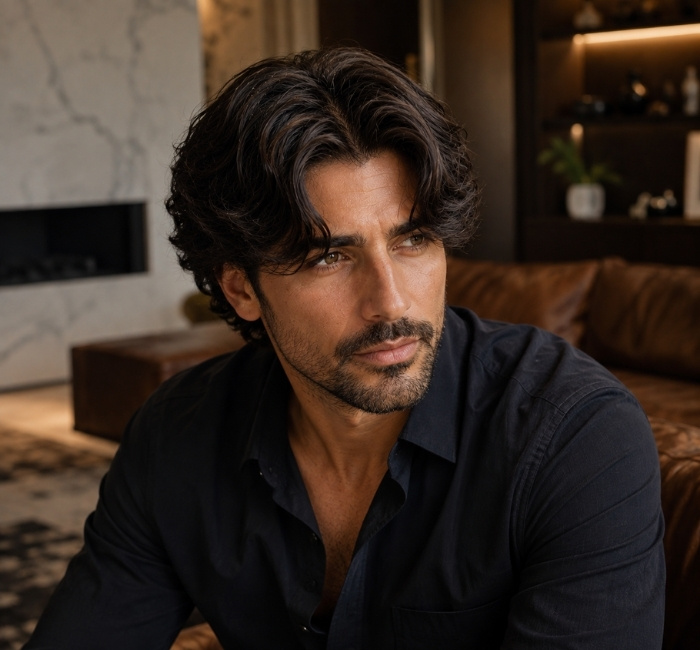
Thick hair can create excellent volume for curtain hairstyles, but too much density can make the haircut feel bulky.
The goal is controlling weight while keeping enough fullness for the curtain shape.
Tips for thick hair:
- Ask for controlled layering
- Remove unnecessary weight without making the hair thin
- Keep the sides balanced with the top
- Use lightweight products
Avoid excessive thinning because it can remove the structure that helps curtains hold their shape.
Fine Hair
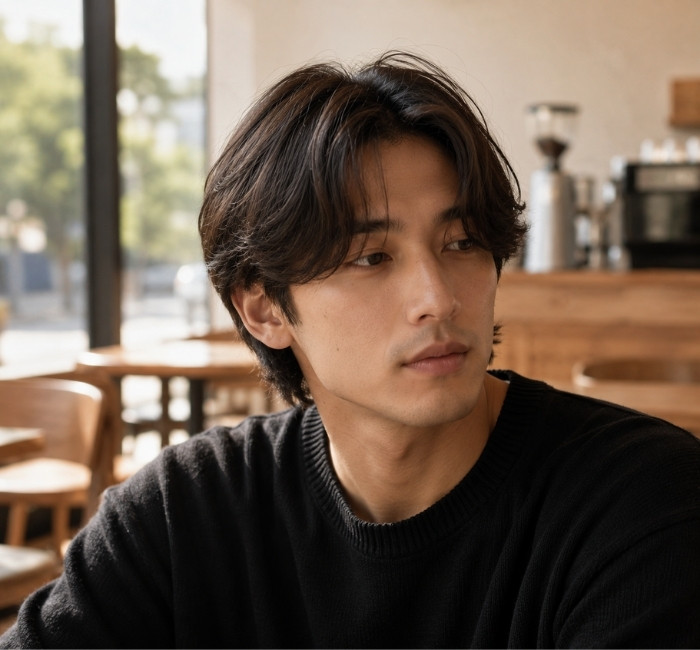
Fine hair can work with curtain hairstyles, but the haircut needs careful shaping. Very long, heavy sections may make fine hair appear flatter.
Adding texture and choosing the right length can improve the overall shape.
Tips for fine hair:
- Avoid excessive length that pulls hair down
- Add subtle texture for movement
- Use lightweight volume products
- Blow-dry for lift around the roots
A shorter textured curtain style may work better than an extremely long version.
Curtain Haircut and Face Shape
Face shape should not limit your hairstyle choices, but small adjustments can improve overall balance. The goal is not to hide your natural features but to create harmony between hair shape and facial proportions.
Oval Face
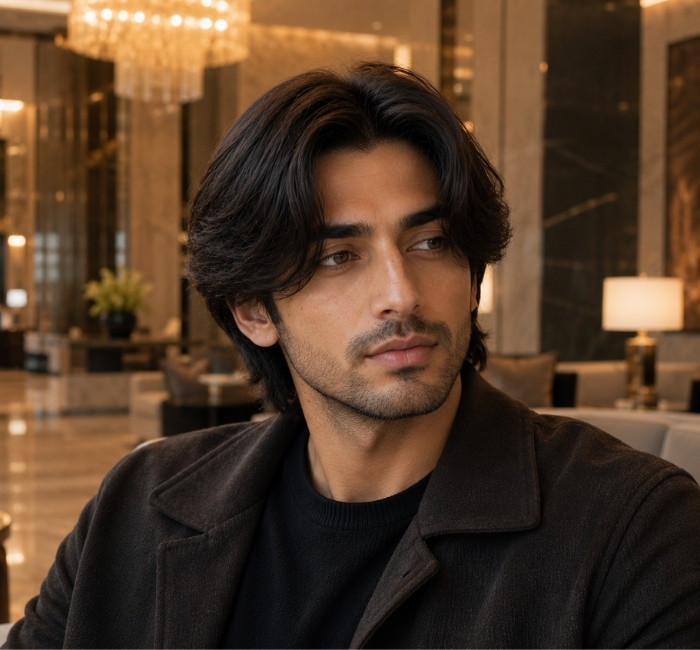
An oval face usually works well with many curtain haircut variations because the proportions are naturally balanced.
Suitable options:
- Classic curtains
- Textured curtains
- Long curtain styles
- Tapered curtain cuts
Most lengths can work, depending on hair type and personal preference.
Round Face
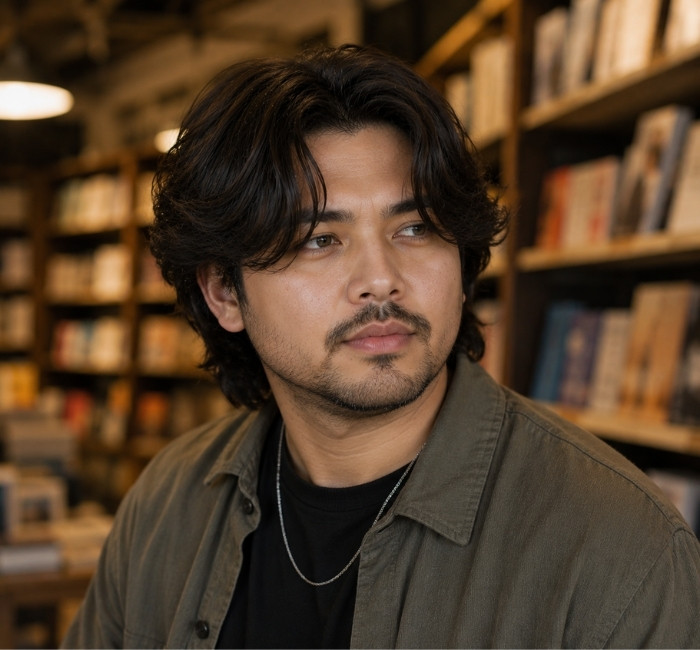
For round face shapes, many men prefer hairstyles that create more vertical movement and avoid adding unnecessary width.
Consider:
- Slightly longer top sections
- More height at the crown
- Less volume directly at the sides
A textured curtain haircut can help create a more balanced appearance.
Square Face
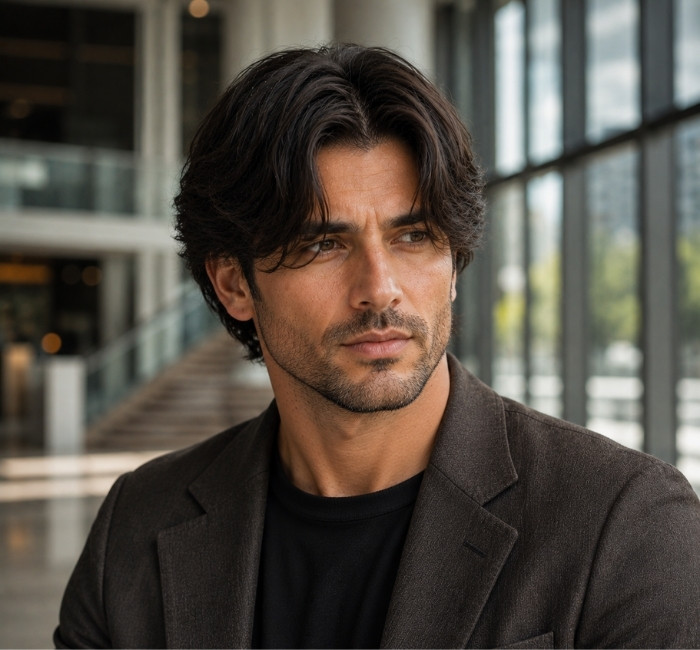
A curtain haircut can soften stronger facial angles by adding movement around the forehead and cheeks.
Consider:
- Layered curtains
- Natural texture
- Softer edges
- Medium-length styles
Avoid making the haircut too rigid if you prefer a softer appearance.
Heart Face
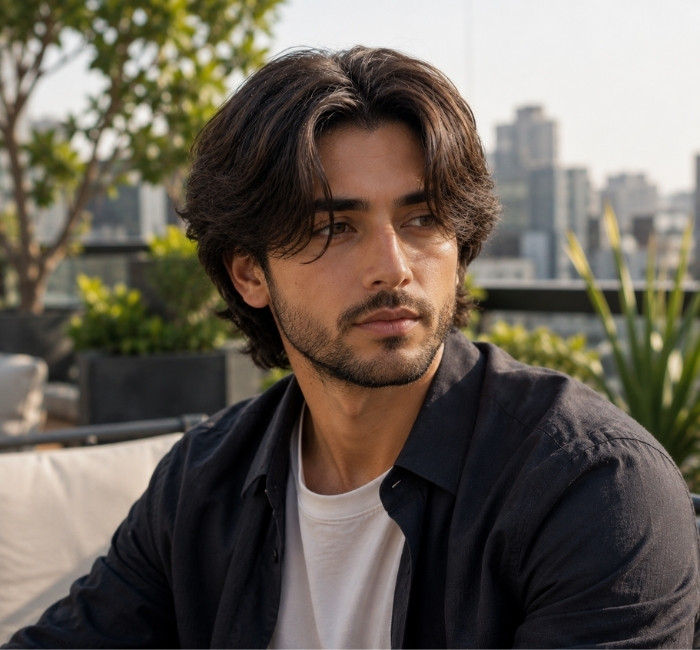
Heart-shaped faces often have a wider forehead and a narrower lower face. A curtain haircut can add balance by creating movement around the sides.
Consider:
- Fuller side sections
- Medium-length curtains
- Soft layers
A natural finish usually works well with this face shape.
Oblong or Long Face
For longer face shapes, the goal is often maintaining width and avoiding too much extra height.
Consider:
- More volume at the sides
- A softer curtain shape
- Less exaggerated height on top
Medium-length curtains can create better proportions than very tall styles.
How to Ask Your Barber for a Curtain Haircut
Many haircut mistakes happen because the description is too general. Saying “I want curtains” may mean different things to different barbers.
Explain these details:
- Top length: How long you want the front and crown sections
- Parting: Middle part or slightly off-center part
- Sides: Natural sides, taper, or fade
- Texture: Smooth, layered, or messy finish
- Fringe: How far you want the front sections to fall
- Overall look: Casual, clean, or textured
A useful barber request:
“I want a medium-length curtain haircut with enough length in the front to fall naturally around my face. Keep soft layers for movement and add a low taper on the sides.”
Reference photos are helpful, but choose examples with similar hair texture and thickness. A curtain haircut that works on thick straight hair may look different on fine or curly hair.
How to Style a Curtain Haircut
A curtain haircut depends on direction, texture, and movement. The styling process is usually easier when you work with your natural hair pattern.
Start With Damp Hair
After washing, towel dry your hair until it is slightly damp. Damp hair is easier to shape because it responds better to airflow and styling products.
Avoid styling completely wet hair because it can make it harder to judge the final shape.
Create the Part
Find where your natural part falls instead of forcing a perfectly centered split.
Some men look better with:
- A true middle part
- A slightly off-center part
- A softer natural split
The best option depends on your growth pattern and hair density.
Blow Dry for Shape
Use a blow dryer to guide the front sections.
For more volume:
- Lift hair slightly at the roots
- Direct the front pieces outward
- Avoid flattening the top
A round brush can create more control, while finger styling creates a more relaxed finish.
Choose the Right Product
The best product depends on the result you want.
Matte Clay
Best for:
- Textured curtains
- Messy finishes
- Thicker hair
Creates separation without making hair look shiny.
Styling Cream
Best for:
- Natural movement
- Softer curtains
- Medium-length hair
Keeps the haircut flexible.
Sea-Salt Spray
Best for:
- Adding texture
- Creating volume
- Wavy hair
Useful before blow drying.
Lightweight Mousse
Best for:
- Fine hair
- Extra body
- Softer volume
Avoid using too much product because curtain hairstyles rely on natural movement.
Curtain Haircut Maintenance Guide
Maintenance depends on the specific version of the haircut.
Natural Long Curtains
Longer curtain hairstyles usually require fewer barber visits because growth can blend into the style.
Focus on:
- Removing split ends
- Maintaining shape
- Controlling dryness
Tapered Curtain Haircuts
Taper versions require more frequent cleaning around the neckline and ears.
Regular trimming helps keep:
- The outline sharp
- The sides controlled
- The haircut balanced
Fade Curtain Haircuts
Fade versions usually require more maintenance because short sides show growth quickly.
The fade may need refreshing more often compared with a natural curtain haircut.
General Maintenance Tips
- Avoid excessive product buildup
- Condition longer hair regularly
- Adjust styling as hair grows
- Trim when the front sections lose their shape
- Pay attention to natural changes in texture
Common Mistakes With Curtain Haircuts
Choosing Hair That Is Too Short
A curtain haircut needs enough length for the front sections to fall naturally.
Solution: Allow the front and top sections to grow before expecting the full curtain effect.
Using Too Much Product
Heavy products can make curtains stiff and remove the natural flow.
Solution: Start with a small amount and add more only when needed.
Creating a Perfect Middle Part When It Does Not Suit Your Hair
Not every hair pattern naturally supports a symmetrical middle part.
Solution: Try a slightly off-center part that follows your natural growth direction.
Removing Too Much Hair From Thick Hair
Over-thinning can make the haircut lose its structure.
Solution: Ask for controlled layers instead of removing too much density.
Choosing the Wrong Reference Photo
A hairstyle can look different because of hair texture, styling, lighting, and density.
Solution: Show your barber examples that match your own hair characteristics.
FAQs About Curtain Haircuts
Is a curtain haircut suitable for all men?
A curtain haircut can work for many men, but the best version depends on hair texture, density, face proportions, and styling preferences. Adjusting the length and layers usually makes the style more suitable.
How much hair length do you need for a curtain haircut?
Most curtain hairstyles need around 3–6 inches of length on top. The exact amount depends on whether you want a shorter textured version or a longer flowing style.
Are curtain haircuts difficult to style?
Curtain haircuts require some styling because the part and direction matter. However, once the shape is established, many versions can be maintained with simple products and blow drying.
What is the best product for a curtain haircut?
Lightweight products usually work best. Styling cream works for natural finishes, matte clay works for texture, and sea-salt spray can add volume and movement.
Can curly-haired men get a curtain haircut?
Yes. Curly curtain haircuts can look natural when the cut respects the curl pattern and keeps enough length for curls to form properly.
Should curtain haircuts always have a middle part?
No. A middle part is traditional, but a slightly off-center part can work better depending on hair growth direction and facial balance.
How often should I trim a curtain haircut?
The timing depends on the haircut version. Natural longer curtains may need occasional shaping, while fades and tapers usually need more frequent maintenance.
Conclusion
The curtain haircut remains popular because it combines natural movement with a recognizable shape.
The best version depends on your hair type, preferred length, styling routine, and how much maintenance you want.
Men with straight hair may prefer a classic middle-part curtain, while those with waves or curls can use texture to create a more natural finish. Before choosing a style, consider how your hair behaves and communicate the details clearly with your barber.
A successful curtain haircut is not about copying a trend. It is about creating a shape that works with your own hair.



Leave a Reply