
Classic haircuts are simple, clean styles that don’t rely on sharp fades or bold texture. Think side parts, crew cuts, pompadours, and Caesar cuts.
These styles use neat lines and controlled length instead of trendy details. Men choose a classic cut because it looks good everywhere at work, at a wedding, or at the gym without much fuss.
It also holds its shape well between barber visits. The best classic style for you depends mostly on your hair type, how thick your hair is, and how much time you want to spend styling it each day.
This guide covers the main classic haircuts, how to describe each one to your barber, which hair types work best with which styles, and how to keep the cut looking sharp as it grows out.
Quick Guide: Classic Haircuts at a Glance
| Style | Hair Length Needed | Best Hair Type | Maintenance | Styling Time | Signature Feature |
| Ivy League / Side Part | Short-medium top, short sides | Straight, wavy | Medium | Moderate | Defined part, controlled length |
| Crew Cut | Very short all over | Any type | Low | Quick | Even, low-effort shape |
| Caesar Cut | Short, even length | Straight, fine, thinning | Low | Quick | Forward fringe, no part |
| Pompadour | Long top, shorter sides | Straight, thick, wavy | High | Moderate-long | Raised front volume |
| French Crop | Short-medium, forward fringe | Straight, wavy | Low | Quick | Textured fringe, natural fall |
| Slick Back | Medium-long top | Straight, wavy, thick | Medium-high | Moderate | Hair swept back, neat shine |
| Classic Taper | Any top length | Any type | Medium | Depends on top | Gradual shortening at sides |
| Quiff | Medium-long top | Straight, wavy | Medium-high | Moderate | Swept-up front section |
The Foundational Classic Haircuts
Ivy League (Side Part)
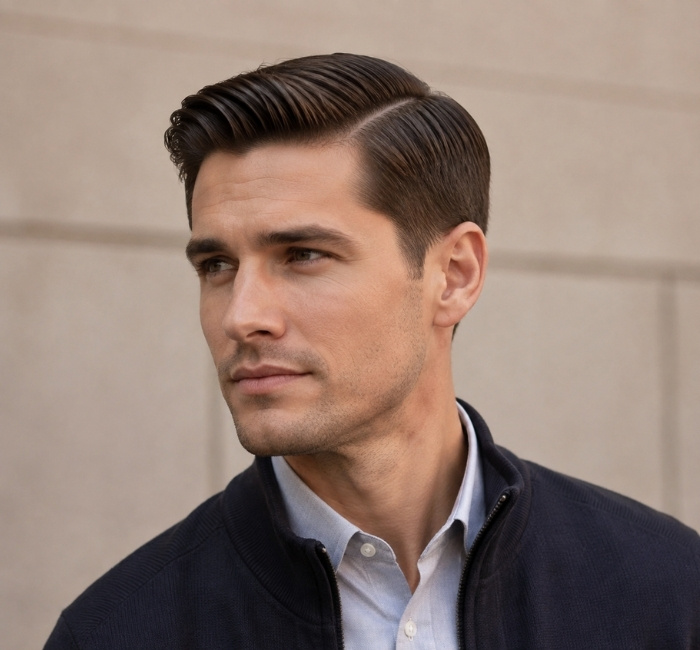
The Ivy League looks like a crew cut but leaves a bit more length on top, usually one to two inches. That extra length lets you comb the hair into a clean side part.
The sides stay short, with a soft taper instead of a hard fade. The back is trimmed close to the neck. The part is cut in by the barber, so it holds its line even without much product.
Best For: Straight or slightly wavy hair, medium to fine.
Ideal Length: 1-2 inches on top long enough to comb, short enough to hold.
Ask Your Barber: “Short to medium length on top, natural taper at the sides and nape, scissors throughout, no hard lines.
How to Style: Comb the top toward the part while your hair is still damp. Use a small amount of light-hold cream, then let it dry in place.
Maintenance: Medium. Book a trim every four to five weeks before the sides get shaggy.
Crew Cut
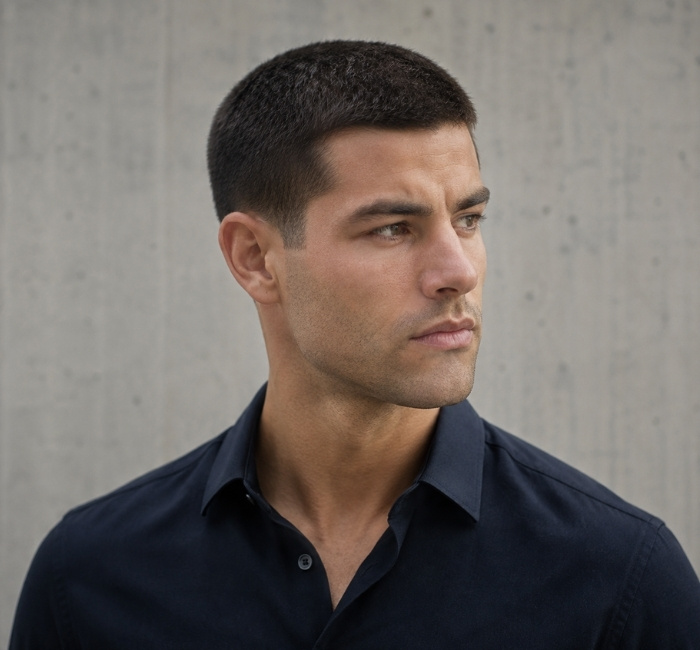
The crew cut is short, even, and easy to look after. It’s a great pick if you want a haircut that needs almost no daily work.
The top is left just a little longer than the sides, usually under an inch for a touch of texture without any real styling.
The sides and back are cut close with clippers, tapering down near the ears and neckline.
Best For: Any hair type, including thick hair that gets heavy and bulky when longer.
Ideal Length: About half an inch to one inch on top.
Ask Your Barber: “Crew cut, number 2 or 3 on top, blended into a short taper on the sides.”
How to Style: Rub a small amount of matte paste through damp hair with your fingers. No comb needed.
Maintenance: Low. Short hair grows out cleanly, so it rarely looks messy.
Caesar Cut
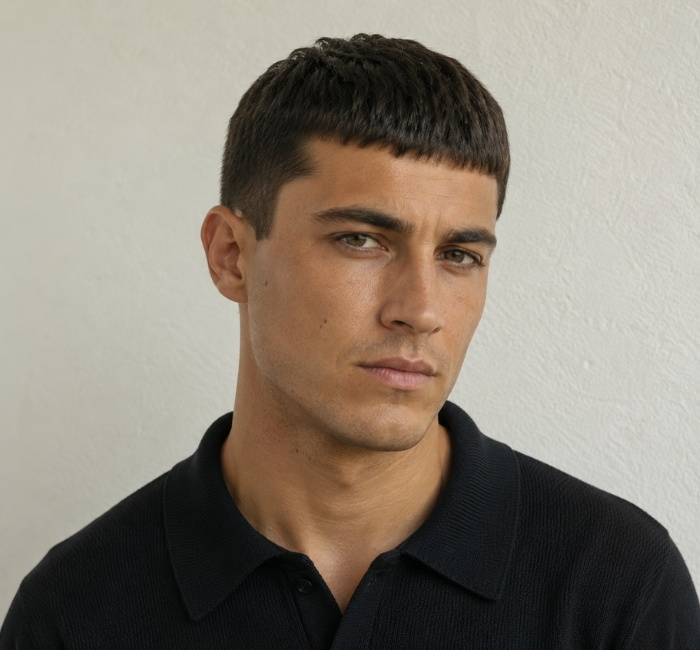
The Caesar cut keeps the whole head at one short, even length, with a straight fringe brushed forward instead of parted to one side.
There’s no part to maintain, which is one reason this cut has stayed popular for so long. Because the fringe sits low on the forehead, it also helps cover a receding hairline.
Best For: Straight or fine hair, and men dealing with early thinning at the temples.
Ideal Length: About one inch all over, slightly longer at the front.
Ask Your Barber: “Caesar cut short and even length, with a straight fringe brushed forward, no part.”
How to Style: Towel-dry your hair, then press the fringe forward with your fingers. Most men skip products entirely.
Maintenance: Low. It keeps its shape well and only needs a trim every four to six weeks.
Pompadour
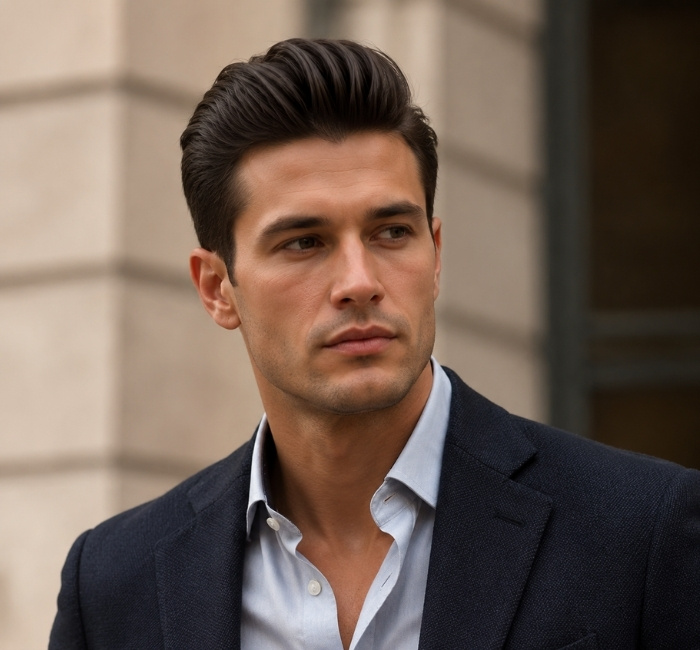
The pompadour uses much more length on top, usually three to five inches at the front built upward and back into a raised wave.
The sides are cut shorter, often tapered or faded, so the height on top has somewhere to go. This is the highest-effort style on this list because it needs daily blow-drying and a strong-hold product to hold its shape.
Best For: Thick, straight, or wavy hair with enough natural body to hold height.
Ideal Length: 3-5 inches on top for a full pompadour. Shorter versions need less daily work.
Ask Your Barber: “Pompadour with a mid or low fade on the sides. Leave 3 to 4 inches on top with lift at the front.”
How to Style: Blow-dry the roots upward and back using a round brush. Once fully dry, set it with a strong-hold pomade.
Maintenance: High. Expect to style it every day, plus a trim every three to four weeks to keep the sides neat.
French Crop

The French crop is a short, textured fringe worn forward, paired with tight or tapered sides. It sits between the Caesar and the crew cut in length.
What sets it apart is the slightly messy, choppy texture on top, instead of one uniform length.
Best For: Straight or wavy hair. It also works well for men going thin on top, since the forward fringe can soften a receding hairline.
Ideal Length: 1.5-2.5 inches on top.
Ask Your Barber: Ask for a low-maintenance French crop that’s meant to sit naturally without much product.
How to Style: Usually worn dry and undone. For more shape, work a small amount of texturizing spray through with your fingers.
Maintenance: Low. It’s forgiving between cuts and doesn’t need daily attention.
Slick Back

The slick back takes medium to long hair on top and combs it straight back off the face. A strong-hold product or pomade gives it a controlled, often glossy finish.
The sides are usually tapered or faded to keep things clean while the top does the work.
Best For: Straight, wavy, or thick hair with enough length to comb back smoothly.
deal Length: 3+ inches on top.
Ask Your Barber: “Slick back with a taper on the sides. Keep the top long enough to comb straight back.”
How to Style: Apply pomade to damp hair and comb it straight back from the hairline, smoothing out any part lines.
Maintenance: Medium to high. It needs daily combing and product to hold its shape.
Classic Taper
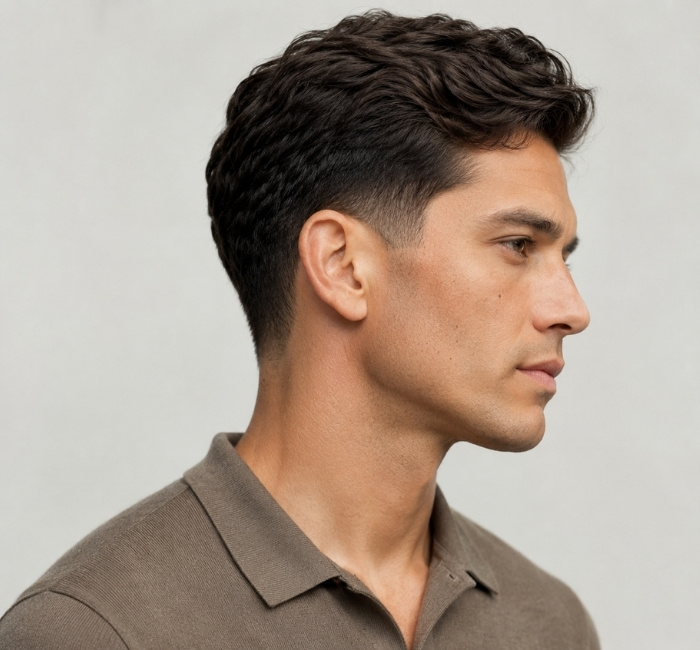
The classic taper isn’t a top style on its own, it’s a way of finishing the sides. It gradually shortens hair from the crown down to the skin near the ears and neckline, without the sharp contrast of a skin fade.
It pairs with almost any top length, from a short crew cut to a longer pompadour.
Best For: Any hair type, since the taper is about the sides, not the top.
Ideal Length: Depends on whatever top style you pair it with.
Ask Your Barber: “Low taper on the sides. Keep it soft and gradually blend, don’t take it down to the skin.”
How to Style: Styling depends entirely on your top length and texture.
Maintenance: Medium. Tapers grow out more gently than fades but still look best with a trim every four to five weeks.
Quiff
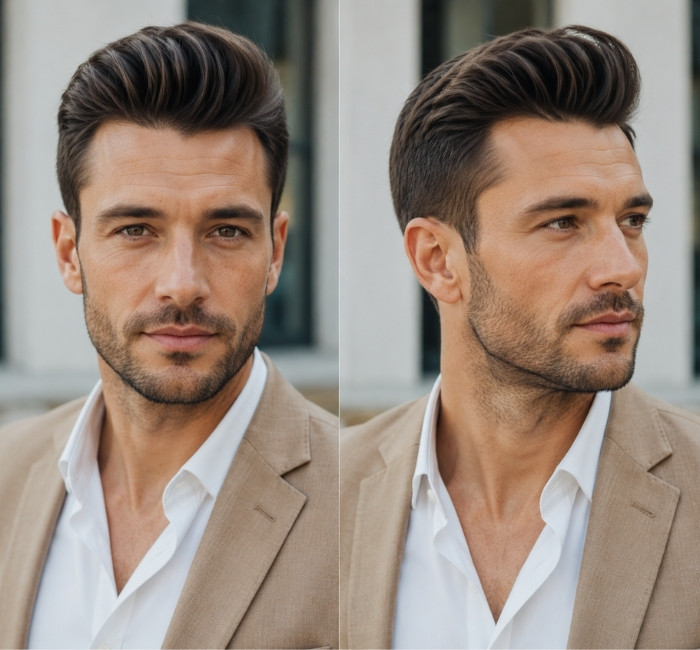
The quiff uses a shorter front section than the pompadour, pushed up and slightly back for lift, without the full sweep of a pompadour. It’s often paired with a taper or fade on the sides for contrast.
Best For: Straight or wavy hair with medium thickness. Thin hair may struggle to hold the lift without product.
Ideal Length: 2-4 inches at the front, shorter toward the crown.
Ask Your Barber: “Quiff on top with a taper fade on the sides. Leave enough length at the front to push up.”
How to Style: Blow-dry the front section upward while brushing it back slightly, then finish with a medium-hold paste.
Maintenance: Medium to high, depending on how sharp you want the lift to stay through the day.
How Hair Type Changes These Cuts
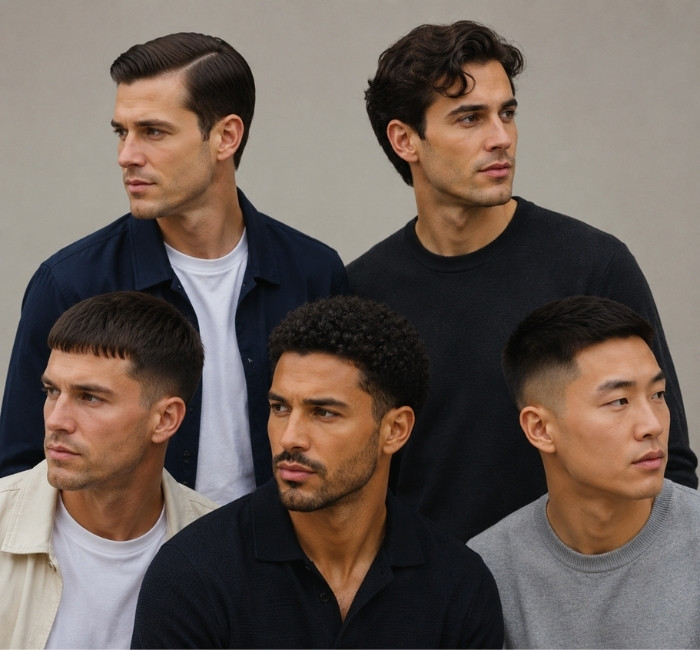
Straight hair takes direction easily and holds a part or slick-back shape with less product than other hair types. That’s why it suits side parts and pompadours so well.
Wavy hair adds natural texture to crops and quiffs without much effort. But it can fight a hard, straight part line. A looser, more textured finish usually looks better than a rigid comb-over.
Curly hair works best with cuts that let the curl show, like a Caesar or a French crop worn a bit longer. Forcing curly hair into a flat slick-back usually means fighting your hair’s natural shape all day.
Thick hair benefits from shorter classic cuts like the crew cut or Caesar, which remove bulk and stop the top from looking heavy. Thick hair styled into a pompadour needs a lightweight clay instead of a heavy pomade, to avoid a “helmet” look.
Fine hair usually looks fuller in shorter classic cuts. Longer lengths on fine hair tend to fall flat and lose the shape your barber cut in.
Face Shape Considerations
Your face shape doesn’t rule any classic cut in or out. It just changes what your barber focuses on and how you style it afterward.
- Round faces often look more balanced with extra height on top. That’s part of why quiffs and pompadours are popular for this shape.
- Square faces can wear almost any classic cut well, since a strong jawline pairs nicely with clean lines like a side part or taper.
- Oblong or long faces usually look best with more width at the sides and less height on top, so a crew cut or a classic taper without much lift tends to balance things out.
- Heart-shaped faces often suit a side part or French crop, since the fringe or side-swept top softens a wider forehead.
- Oval faces are generally the most flexible shape. Most classic cuts on this list will suit an oval face without much adjustment.
The goal isn’t to find the “correct” haircut for your face shape. It’s to decide, with your barber, whether you want more height, more width, or a compact, close-to-the-head look.
Ask Your Barber: How to Talk About a Classic Cut
Classic haircuts depend on clear instructions, because small changes in top length or side finish change the whole look.
A good barber request usually covers five things: length on top, how the sides are finished (taper or fade, and how high), how the top should be textured or layered, whether you want a part and on which side, and the finish you want (matte, natural, or glossy).
Being clear about the finish you want matte, shiny, or textured also helps your barber pick the right technique and product to make it hold through the day.
It’s also worth bringing one or two reference photos, since not every barber uses the exact same words for the same cut.
Sample request: “I’d like an Ivy League with a low taper on the sides, about an inch and a half on top, and a defined part on the left, finished natural rather than glossy.”
Styling Guidance
Most classic cuts are styled on damp hair, not fully dry hair. Damp hair is easier to redirect into a part or comb-back without fighting its natural fall.
Shorter cuts like the crew cut or Caesar are usually styled with your fingers and a small amount of matte paste or clay, spread evenly instead of piled at the front.
Longer, more structured styles the pompadour, quiff, and slick back need more care.
Blow-dry the roots in the direction you want the finished shape to sit, using a round brush for lift or a flat brush for a smoother back-comb. Apply the product only once the hair is fully dry, so the hold sets properly instead of fighting ongoing heat.
Your choice of product depends on the finish you want, not just the hold. Matte clay and paste give texture and a natural look, so they suit crops and crew cuts.
Pomade water-based or oil-based gives shine and stronger hold, so it suits slick backs and pompadours.
A light mousse or cream can add body to fine hair before blow-drying, without weighing it down the way a heavier product would.
Maintenance Realities
Most classic cuts need a trim every four to five weeks. Shorter styles like the crew cut and Caesar can sometimes stretch to six weeks, since there’s less length to lose shape.
Styles with a hard taper or fade on the sides like a pompadour fade or a quiff with a fade usually need more frequent visits, closer to every three weeks, because the contrast at the sides grows out faster than the top.
How often you wash your hair also matters. Washing every day can strip the natural oils that give hair grip and texture.
That matters for cuts like the French crop, which rely on natural movement. Most classic cuts hold their shape better with hair washed every two to three days, with a light rinse or dry shampoo in between if needed.
Common Mistakes
Using too much product. A pea-sized amount is usually enough for short to medium hair. Piling on pomade for a crew cut or Caesar makes short hair look greasy instead of textured.
Choosing the wrong finish for the style. A high-shine pomade on a French crop looks stiff and outdated. A matte paste on a slick back won’t give the hold or shine the style needs. Match the product to the cut, not just to whatever’s on hand.
Letting the sides grow out. Classic cuts rely on contrast between the top and sides. When the sides grow uneven, even a great top cut starts to look shapeless within a couple of weeks.
Bringing an unrealistic reference photo. A photo of a celebrity with much different hair density or texture can lead to a cut that just doesn’t translate to your own hair. Pick references with similar hair to yours where you can, or ask your barber how the style will look different on you.
Ignoring your natural texture. Forcing straight-hair techniques onto wavy or curly hair (or the other way around) usually means more daily work than it should. Working with your hair’s natural fall, instead of against it, usually gives a longer-lasting result.
Frequently Asked Questions
What makes a haircut “classic” instead of trendy? Classic cuts use simple, balanced shapes, like a clean side part or crew cut, instead of sharp fades or heavy texture. They’ve stayed popular for decades because they don’t need a passing trend to look sharp.
Which classic haircut needs the least effort? The crew cut and Caesar cut. Both are short and even, so they don’t need blow-drying or a part to look finished.
Can classic cuts work with curly hair? Yes. Shorter or slightly longer natural-length cuts, like a Caesar or a longer French crop, tend to work better with curls than styles that need you to flatten your hair into a slick back.
How much length do I need for a pompadour? Most barbers ask for three to five inches at the front, to build enough height and lift for a full pompadour. Shorter versions exist if you want less daily styling.
What’s the difference between a taper and a fade? A taper gradually shortens your hair down the sides without reaching bare skin, for a softer look. A fade blends hair all the way down to skin at some point on the head, for sharper contrast.
What styling product works best for a classic cut? It depends on the finish you want. Matte clay or paste suits textured, natural cuts like the crop or crew cut. Pomade suits glossier, more controlled styles like the slick back or pompadour.
How often should I get a classic haircut trimmed? Most classic cuts need a trim every four to five weeks. Styles with a hard taper or fade on the sides may need attention closer to every three weeks to keep the contrast sharp.
Which Classic Cut Should You Choose?
The right classic haircut comes down to how much time you want to spend styling and what your hair naturally holds.
If you want a wash-and-go option, go for a crew cut or Caesar cut instead of a pompadour, which needs daily blow-drying to look right.
Thicker, straighter hair usually handles structured styles like the slick back or pompadour with less effort, while wavy or curly hair often looks more natural in a crop or a Caesar worn a bit longer.
Whichever style you choose, the details you give your barber length, finish, and how you’ll actually style it at home matter more to the final result than the name of the haircut itself.



Leave a Reply