
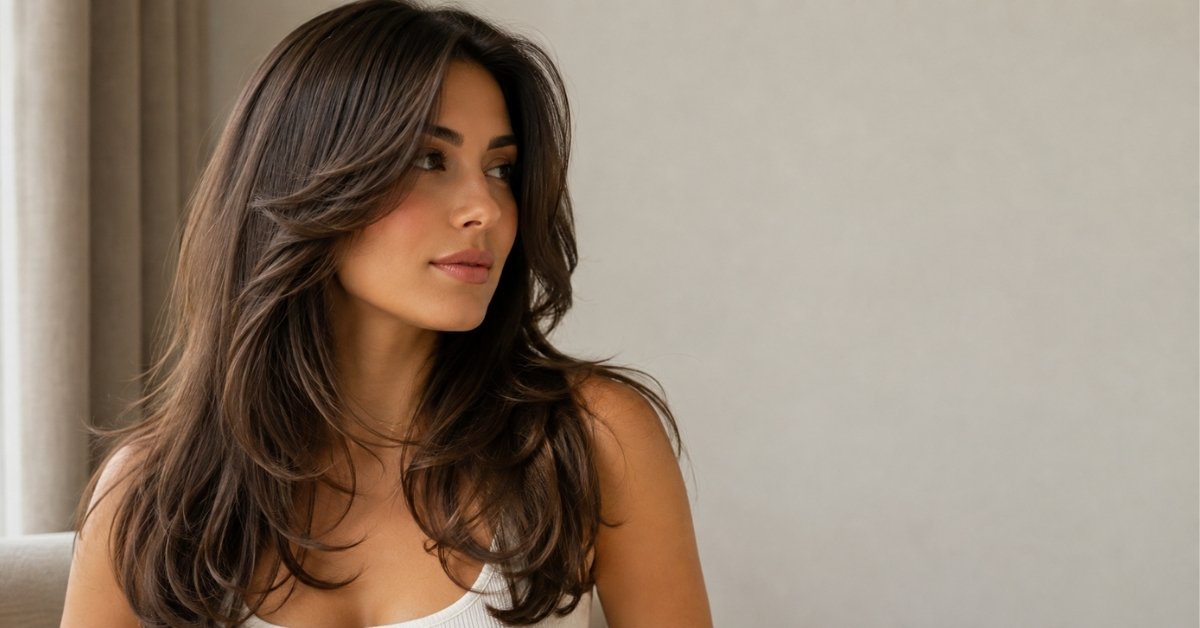
The butterfly haircut is still one of the most recognizable layered hairstyles in 2026, but the version showing up now is more adaptable than the ultra-bouncy social-media blowouts that first made many people notice it.
At its core, the cut combines shorter, face-framing layers with longer lengths underneath. That contrast creates movement around the face while allowing you to keep much of your overall length.
The result can look polished and voluminous when blow-dried, softer when air-dried, or more textured when adapted to waves and curls.
And the trend has not disappeared. L’Oréal Paris published an updated butterfly-cut guide in March 2026, Marie Claire included the cut among its spring and summer 2026 trends, and The Zoe Report featured butterfly layers among the season’s major haircut directions.
The important part, however, is not simply asking for “a butterfly haircut.” Layer placement, density, texture, fringe choice and your normal styling routine all affect whether the finished cut works for you.
Here is what to know before booking your appointment.
What Is a Butterfly Haircut?
A butterfly haircut is a layered cut built around two visually different lengths: shorter pieces around the face and upper sections, with longer layers continuing underneath.
L’Oréal Paris describes the modern version as a wispy layered haircut that uses shorter face-framing sections with longer layers through the rest of the hair.
The shorter pieces create lift and movement around the face, while the longer sections allow you to retain length.
John Frieda’s guide similarly emphasizes face-framing layers around the cheekbone-to-jaw area combined with longer lengths below the shoulders in the classic version.
When the front sections are blow-dried away from the face, the layers fan outward and create the soft, feathered shape associated with the butterfly name.
But that dramatic blowout is only one way to wear the cut.
A modern butterfly haircut can be:
- soft or heavily layered;
- shoulder-length or long;
- paired with curtain bangs or worn without bangs;
- adapted to straight, wavy or curly hair;
- styled with a polished blowout or allowed to follow natural texture.
That flexibility is one reason the cut has lasted beyond its initial viral phase.
Why Is the Butterfly Haircut Still Popular in 2026?
The butterfly haircut fits several current hair trends at once: movement, visible shape, face-framing layers and the return of polished volume.
Marie Claire named the butterfly cut among its spring 2026 haircut trends, with hairstylist Mia Santiago Douglass describing its appeal as adding drama and movement to long hair while maintaining length.
The publication included butterfly-inspired layering again in its summer 2026 trend coverage.
The Zoe Report also identified butterfly cuts as a notable summer 2026 direction. Its stylist interviews particularly highlighted the cut’s ability to remove weight and create shape in medium-to-thick hair.
Even the shorter interpretation is having a moment. Byrdie covered the butterfly bob in January 2026, while Grazia described the butterfly bob as a major summer 2026 bob trend.
So the butterfly trend has not simply remained unchanged. It has expanded from one long, heavily styled haircut into a family of layered shapes.
15 Butterfly Haircut Ideas for 2026
1. Classic Long Butterfly Haircut
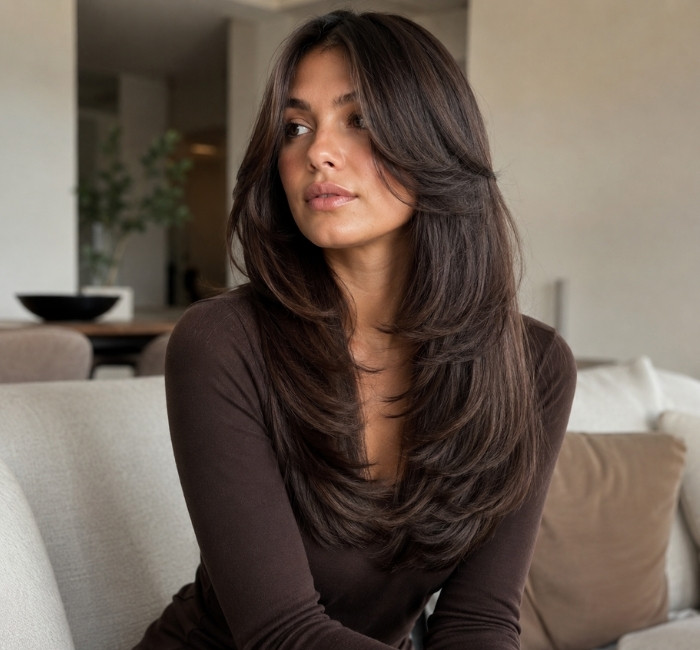
This is the version to save if you want the haircut to look unmistakably “butterfly.”
The shortest layers usually frame the face while longer cascading layers preserve the length through the back.
When the front is styled away from the face, the difference between the shorter and longer sections becomes much more visible.
Long hair gives the stylist enough space to create separation without making the ends feel abruptly disconnected.
L’Oréal also notes that longer versions can begin their layers farther down, around the chin, when maintaining a flowing overall shape is important.
Best for: Medium-to-thick hair and anyone who wants noticeable movement without losing much length.
Ask for: Long cascading layers, face-framing pieces and soft blending through the perimeter.
2. Medium-Length Butterfly Haircut
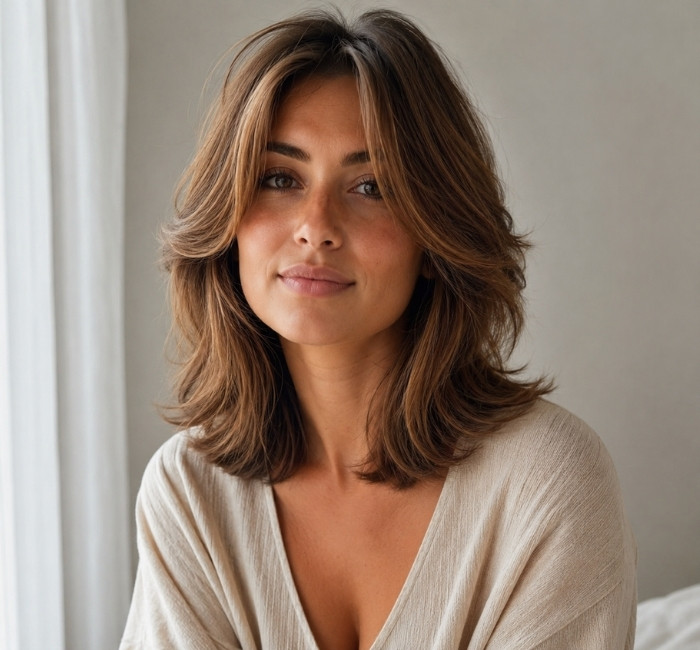
You do not need waist-length hair to create the butterfly effect.
On medium hair, the layers are compressed into a smaller area, giving the haircut a lighter and slightly more compact appearance.
Collarbone-length hair can still provide enough room for short framing pieces to transition into longer sections.
John Frieda considers shoulder-length or longer hair the easiest starting point for achieving the traditional contrast between the two layer lengths, although shorter adaptations are possible.
Best for: Someone who wants visible layers but does not want very long hair.
Ask for: Face-framing pieces that connect gradually into shoulder- or collarbone-length layers rather than creating a harsh step.
3. Butterfly Haircut With Curtain Bangs
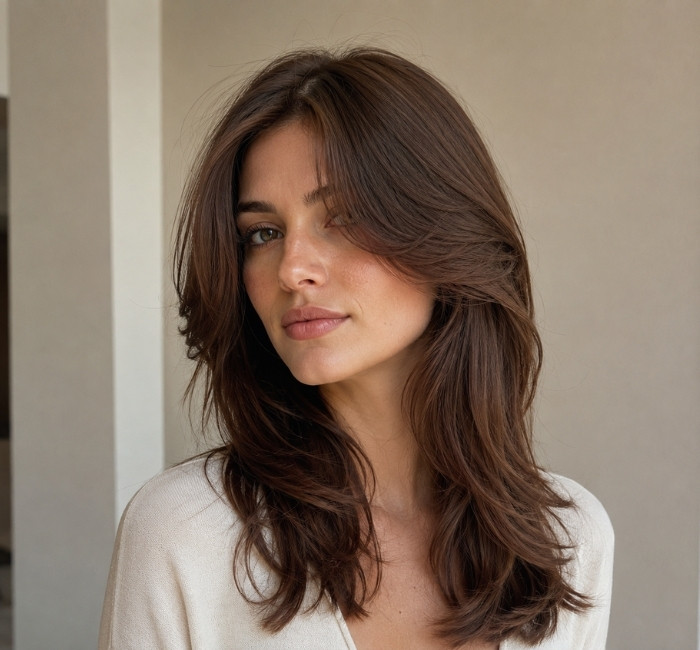
Curtain bangs and butterfly layers work together naturally because both rely on sections that move away from the center of the face.
Instead of looking like a separate fringe, longer curtain bangs can become the first level of the haircut.
They can then transition into cheekbone, jaw and shoulder-length pieces.
This version is particularly effective when you want more interest around the front without committing to a short, blunt fringe.
Best for: People who regularly wear a center or slightly off-center part.
Ask for: A curtain fringe long enough to blend directly into the first face-framing layer.
4. Butterfly Haircut Without Bangs
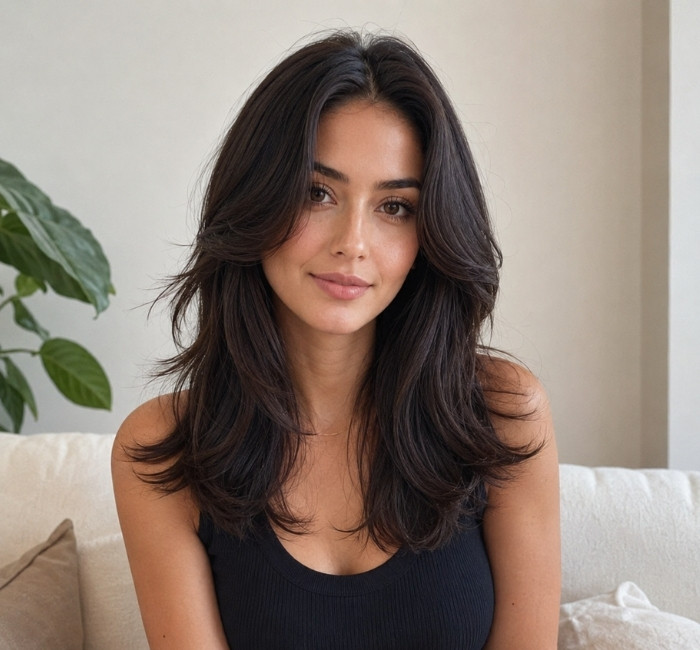
Bangs are not necessary to create a butterfly cut.
For a more open front, the shortest pieces can begin around the cheekbone, jaw or chin instead of crossing the forehead.
This keeps the defining shorter-to-longer transition while removing the maintenance associated with a fringe.
It is also a useful option if you frequently change your part or prefer being able to pull the front sections back.
Best for: Anyone who wants the butterfly shape with less fringe maintenance.
Ask for: Long face-framing pieces instead of a separate bang section.
5. Soft Butterfly Cut for Fine Hair
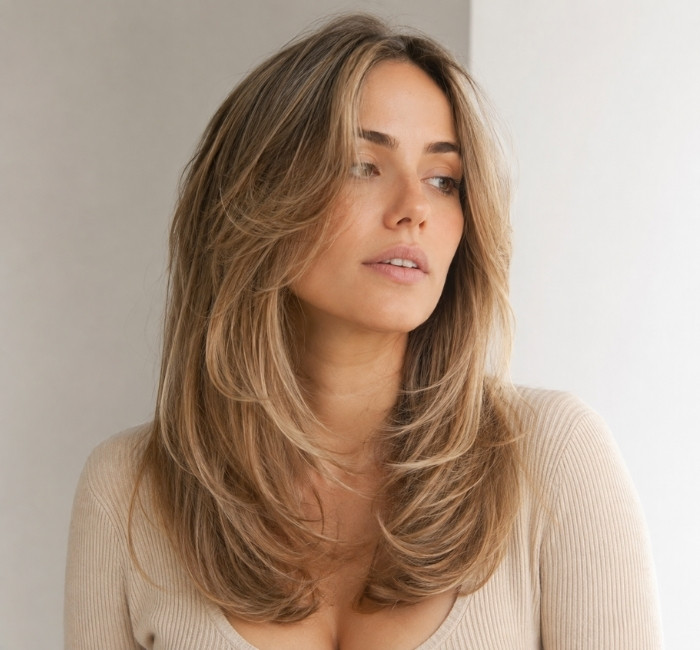
Fine hair is where customization becomes especially important.
There is some genuine disagreement among stylists about butterfly cuts on fine hair. Experts quoted by The Zoe Report have cautioned that extensive layering can leave thin or low-density hair looking more sparse.
L’Oréal, however, notes that the style can still be adapted successfully by reducing the amount of layering and keeping the ends fuller.
The safest approach is therefore not simply asking for “lots of butterfly layers.”
A softer version keeps much of the perimeter dense while concentrating movement around the face.
Best for: Fine hair when maintaining fullness through the ends matters.
Ask for: Minimal internal layering, longer face-framing pieces and a fuller perimeter rather than heavily thinned ends.
6. Butterfly Cut for Thick Hair
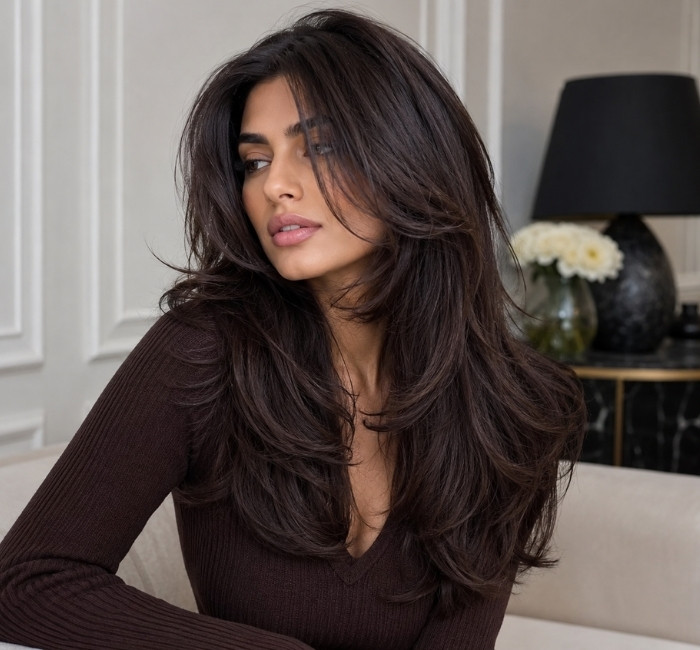
Thick hair gives a stylist more material to work with, which can make the layered structure especially noticeable.
Strategically placed layers can reduce some of the heaviness that causes thick hair to fall into one solid shape.
L’Oréal and stylists interviewed by The Zoe Report both point to weight removal as one of the benefits of butterfly-style layering on thicker hair.
That does not mean removing as much hair as possible. Over-layering can create unwanted puffiness or make the lower sections look disconnected.
Best for: Dense hair that feels heavy or lacks movement.
Ask for: Controlled weight removal through the interior while preserving enough fullness at the ends.
7. Butterfly Haircut for Straight Hair
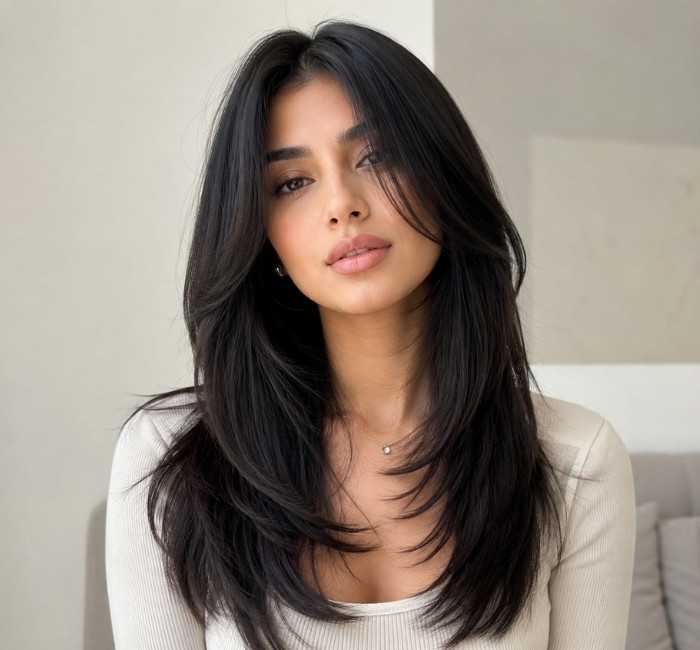
Straight hair makes the architecture of the haircut easy to see.
Because there is less natural bend disguising the layer placement, each level can appear more defined.
A sleek finish emphasizes the graduation, while slightly curved ends make the separation between layers more obvious.
L’Oréal specifically recommends butterfly layering as a way to introduce movement and dimension into straight hair that otherwise tends to fall flat.
If your hair is very fine as well as straight, keep the layering relatively conservative.
Best for: Straight hair that feels heavy or visually flat.
Ask for: Clean face-framing layers with enough blending that the haircut still looks intentional when worn straight.
8. Wavy Butterfly Haircut
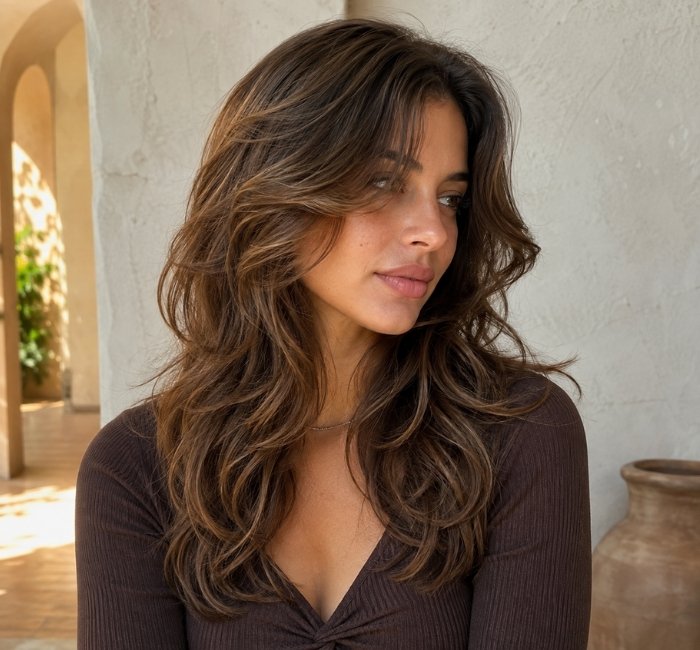
Natural waves already provide movement, so a good butterfly cut should support the existing pattern rather than fight it.
Layering can remove excess weight from wavy hair and allow different sections to move more independently.
L’Oréal and John Frieda both describe butterfly layering as adaptable to naturally wavy textures.
The important part is showing your stylist how your hair behaves before it has been stretched straight by heat styling.
Best for: Naturally wavy hair that becomes triangular, heavy or shapeless when kept at one length.
Ask for: Layers positioned around your natural wave pattern rather than a haircut designed only for a smooth blowout.
9. Curly Butterfly Haircut
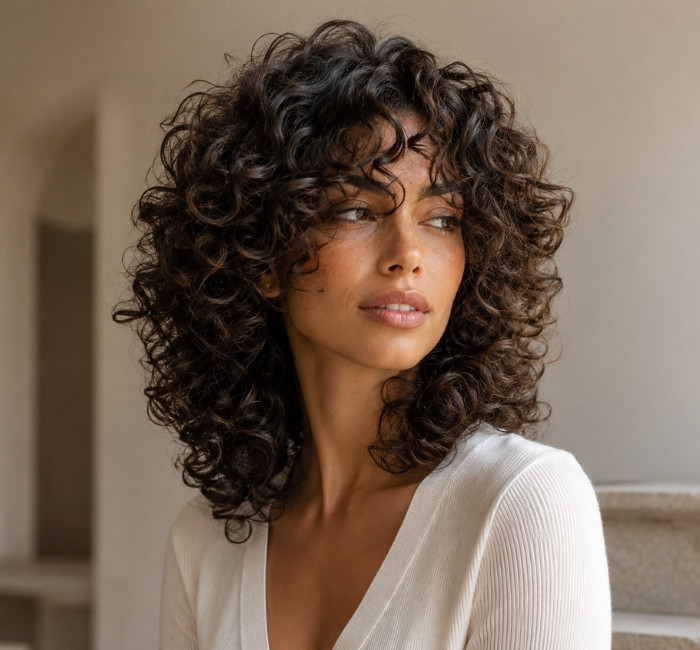
A butterfly haircut can work on curly hair, but curl pattern and shrinkage make precision especially important.
Removing strategic weight may give curls more room to spring and create a rounder, more dimensional shape.
L’Oréal recommends accounting for shrinkage and suggests that curly clients may want to discuss dry-cutting with their stylist so the final position of each layer is easier to predict.
Not every stylist agrees that the traditional butterfly structure is ideal for every curl pattern. The Zoe Report’s 2026 coverage, for example, includes professional caution around tighter curls and coils.
That is exactly why reference photos should match your actual texture whenever possible.
Best for: Curly hair when the cut is adapted specifically to the curl pattern.
Ask for: Curl-aware face framing with layer placement evaluated when the curls are in their natural state.
10. The Butterfly Bob
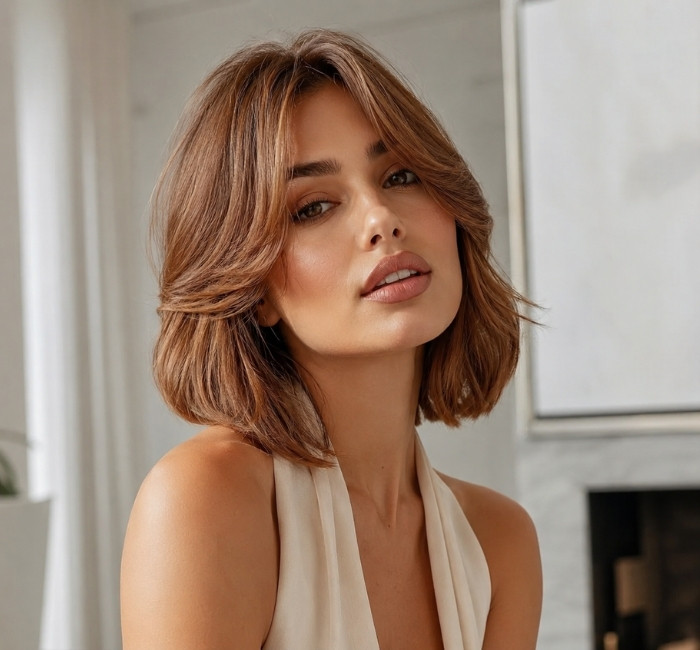
The butterfly bob is one of the most important updates to the trend in 2026.
Instead of maintaining long lengths through the back, it applies the airy movement and face-framing idea of the butterfly cut to a bob or lob.
Byrdie highlighted the butterfly bob in January 2026, with hairstylist Sarah Potempa advising against excessive layering on shorter hair because removing too much can reduce the appearance of fullness.
Grazia also featured the butterfly bob as a major summer 2026 haircut direction.
This means the short version should not simply be a miniature copy of the long butterfly cut.
Best for: Someone who wants bob length without a rigid, blunt silhouette.
Ask for: A bob or lob with controlled movement, face framing and fullness preserved through the perimeter.
11. Shoulder-Length Butterfly Cut
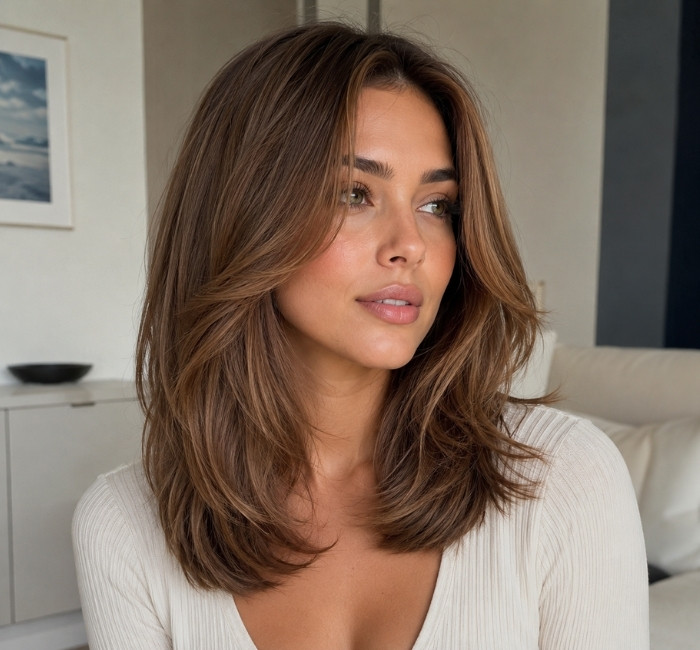
Shoulder length sits between the classic long butterfly and the newer butterfly bob.
Because there is less distance between the shortest and longest sections, every layer matters. Too much contrast can make the cut look disconnected; too little may make it look like ordinary shoulder-length layers.
The strongest versions use a clearly defined front section while allowing the remaining layers to blend more gradually.
Best for: Someone growing out a bob or cutting long hair to a more manageable length.
Ask for: A visible face frame with softer layering through the back.
12. Dramatic ’90s-Inspired Butterfly Hair
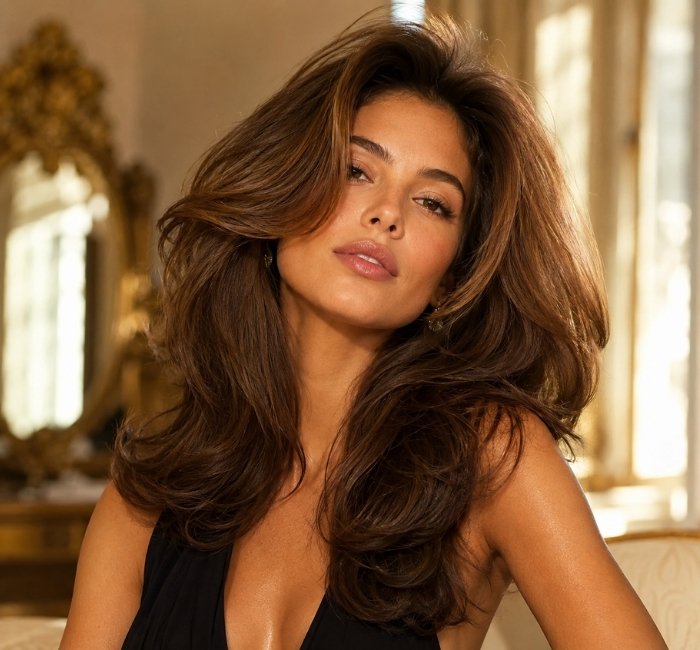
If your reference photos show large, rounded sections sweeping away from the face, you are probably looking at the most styling-dependent version of the cut.
The haircut provides the framework, but the finish usually comes from root lift, a round brush, rollers or another volume-building technique.
The connection with ’90s-style volume is not just social-media shorthand. Current Marie Claire and Byrdie coverage both connect the butterfly silhouette with the return of polished, layered, supermodel-inspired hair.
Best for: Anyone happy to spend time styling the layers.
Ask for: Visible graduation around the face and crown with enough length left underneath to preserve the cascading effect.
13. Subtle Butterfly Layers
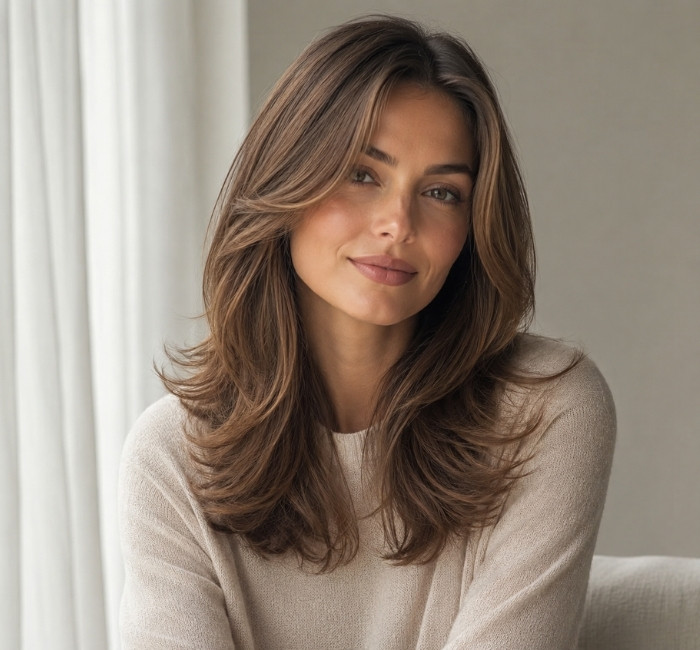
You can borrow the butterfly concept without asking for an extreme transformation.
Here, the shortest pieces remain relatively long and the graduation between sections is deliberately smooth.
You still get movement around the face, but the haircut does not depend on dramatic separation.
This is also one of the easier versions to grow out because there is less distance between the individual layers.
Best for: First-time layer clients or anyone nervous about removing too much hair.
Ask for: Long, blended face-framing layers with minimal disconnection.
14. Side-Part Butterfly Haircut
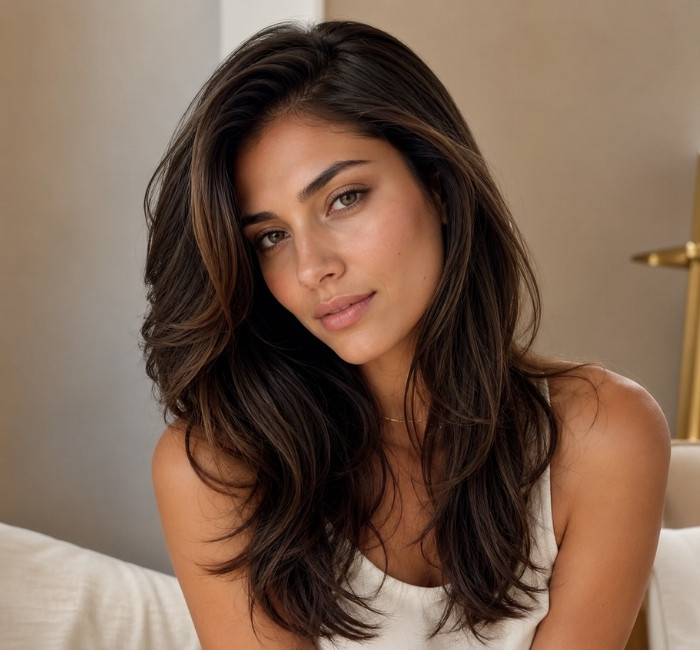
The butterfly cut is often photographed with a center part, but the haircut does not require one.
A side part shifts more weight to one side, immediately changing the balance of the shorter layers and creating extra lift around the front.
Marie Claire’s broader 2026 haircut coverage also notes a renewed interest in side parts, making this a useful way to update butterfly layers without changing the entire haircut.
If you regularly move your part, tell your stylist before the cut. Layering created exclusively around a precise center part may sit differently when flipped.
Best for: Anyone who prefers asymmetrical volume or frequently wears a side part.
Ask for: Face-framing layers that remain balanced when the part moves.
15. Natural-Texture Butterfly Cut
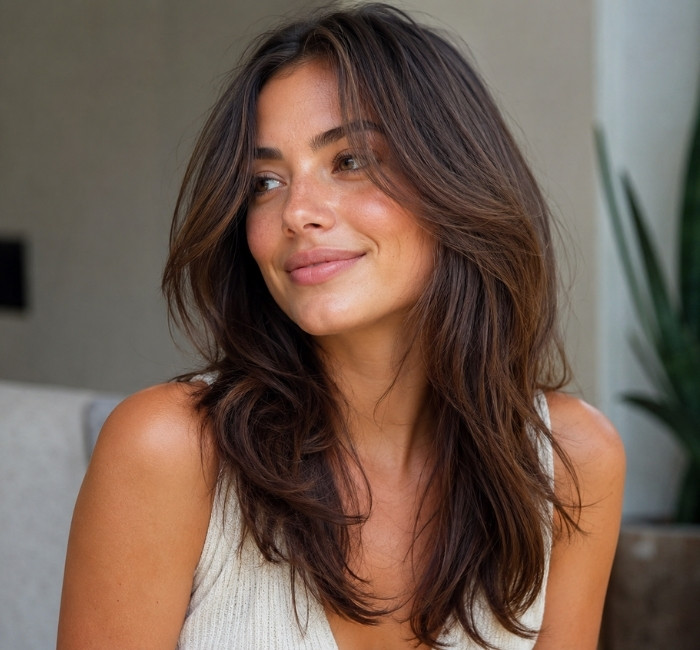
The easiest butterfly haircut to live with is often the one designed around how your hair behaves on an ordinary day.
If you rarely blow-dry your hair, bringing references that only show heavily styled salon blowouts can create unrealistic expectations.
Your stylist needs to know whether your normal finish is straight, wavy, curly, diffused or air-dried.
Current professional guides repeatedly stress customization based on texture rather than treating butterfly layering as a fixed cutting formula.
Best for: Anyone who wants the haircut to work without daily heat styling.
Ask for: Layers positioned according to your natural fall, density and texture.
Butterfly Haircut vs Regular Layers
A butterfly haircut is a type of layered haircut, but not every layered haircut is a butterfly cut.
Traditional layering can be distributed almost anywhere throughout the hair. Layers may be long, short, internal, blended or concentrated through the ends depending on the shape being created.
A butterfly cut is more specific.
Its identity comes from deliberately combining shorter face-framing or upper layers with longer hair underneath.
L’Oréal describes the contrast as more pronounced than conventional evenly distributed layering, producing greater movement around the face while preserving overall length.
If you simply ask for “layers,” you may therefore leave the salon with something much softer than the butterfly shape you had in mind.
Butterfly Haircut vs Wolf Cut
Both haircuts use layers, but they create different silhouettes.
A butterfly cut generally aims for a softer, more polished shape with face-framing pieces and feathered movement. The longer lengths remain an important part of the finished look.
The wolf cut usually draws more heavily from shag and mullet-inspired cutting, with choppier texture and stronger contrast between the upper and lower sections.
L’Oréal and John Frieda both make this distinction in their current haircut guides: butterfly layers are generally softer and more blended, while wolf cuts lean deliberately shaggy and separated.
If your saved photos show flowing, rounded layers and a polished blowout, look toward butterfly references. If they show obvious shag texture and piecey separation, you may actually prefer a wolf cut.
Who Should Be Careful With a Butterfly Haircut?
The butterfly haircut is versatile, but describing it as universally suitable oversimplifies the decision.
Very fine or low-density hair can lose too much visual fullness if the stylist creates excessive layers. L’Oréal recommends a softer approach for fine hair, while hairstylists quoted by The Zoe Report have expressed stronger caution about using the classic layered structure on very thin hair.
Tightly curled and coily textures also deserve individualized consultation rather than a one-size-fits-all recommendation.
The cut can be adapted, but shrinkage, density and how each curl grouping sits will affect the final shape.
Current sources differ somewhat on how broadly they recommend the style for these textures.
That disagreement is useful.
It means the right question is not, “Does a butterfly haircut work on my hair type?”
It is:
“What version of butterfly layering will preserve the qualities I like about my hair?”
What Should You Ask Your Hairstylist For?
Do not rely on the words “butterfly haircut” alone.
Bring two or three reference images showing hair reasonably similar to your own length, density and texture.
Current professional guidance from L’Oréal, John Frieda and Byrdie all emphasizes the value of visual references because haircut terminology can be interpreted differently from one stylist to another.
Then discuss five things specifically:
1. Your final length
Explain how much hair you are actually comfortable losing.
2. Your shortest layer
Decide whether you want the first layer around the cheekbone, jaw or chin.
3. How dramatic the layering should be
Show whether you prefer obvious separation or a soft, blended result.
4. Bangs or no bangs
Curtain bangs create a different front shape from long face-framing pieces.
5. How you style your hair at home
Tell the stylist whether you usually blow-dry, straighten, diffuse or air-dry.
That last point matters more than many people realize. A cut designed to produce maximum movement during a round-brush blowout may behave very differently when left to dry naturally.
How to Style a Butterfly Haircut
For the Classic Bouncy Finish
Start by creating lift through the roots and directing the shorter sections away from the face.
A large round brush or blow-dry brush can help form the curved shape. Large rollers are another option for setting the upper layers after drying.
John Frieda’s styling guide recommends working through sections, lifting at the roots and directing the face-framing layers outward.
Marie Claire’s 2026 stylist advice also points to rollers as a way to emphasize the layers.
Let the hair cool in its finished shape before breaking up the sections if you want the volume to last longer.
For Straight Hair
You do not need to curl every layer.
A smooth finish with the ends slightly curved can reveal the graduation without producing a full ’90s blowout.
For Wavy Hair
Work with your natural wave rather than forcing every section into the same curl.
A lightweight styling product can help define the existing texture while allowing the layers to move independently.
For Curly Hair
Curl definition matters more than recreating the traditional blowout.
L’Oréal recommends using curl-focused leave-in styling and either air-drying or diffusing depending on the amount of root lift you want.
Whenever you use heated tools, apply an appropriate heat protectant and follow the manufacturer’s temperature and safety guidance.
How Much Maintenance Does a Butterfly Haircut Need?
Maintenance depends on how precise you want the shape to remain.
If the shortest layers frame your face quite closely, you will notice their growth sooner than someone wearing a subtle, long-layered version.
Professional recommendations also vary. L’Oréal’s current guide suggests trims roughly every six to eight weeks to maintain the structure, while stylists interviewed by Byrdie describe a broader window of around eight to twelve weeks.
Neither should be treated as a strict rule.
If you like a softer, grown-out look and your ends remain healthy, you may not need the haircut reshaped as frequently as someone trying to maintain sharp layer placement.
Is the Butterfly Haircut Worth Trying?
The butterfly haircut is worth considering when you want your hair to move more without immediately sacrificing most of your length.
Its biggest strength is customization.
The same basic idea can become a dramatic long layered cut, a restrained version for finer hair, a curl-aware shape, a shoulder-length style or even a butterfly bob.
But the haircut works best when you choose a variation based on your actual hair rather than trying to duplicate a reference image exactly.
Consider your density, natural texture, current length, willingness to style and the amount of layering you actually want.
Then take those decisions to your stylist.
That approach is far more likely to give you a butterfly haircut that still looks good after the salon blowout disappears.
Frequently Asked Questions
Is the butterfly haircut still in style in 2026?
Yes. The butterfly haircut continues to appear in 2026 trend coverage from publications including Marie Claire and The Zoe Report, while L’Oréal Paris released an updated dedicated guide in March 2026. The butterfly bob has also emerged as a shorter variation of the trend.
What length is best for a butterfly haircut?
Shoulder-length and longer hair provides the easiest canvas for the classic butterfly effect because there is enough distance to separate shorter face-framing sections from longer layers. Shorter butterfly-inspired bobs and lobs are also possible.
Is a butterfly haircut good for fine hair?
It can be, but fine hair generally needs more conservative layering. Keeping the perimeter fuller and concentrating movement around the face can reduce the risk of making the ends appear sparse. Some stylists are more cautious about recommending the cut for very thin hair, so density should be assessed individually.
Can curly hair have a butterfly cut?
Yes, butterfly-style layering can be adapted to curls, but the stylist should account for curl pattern, density and shrinkage. Bringing reference photos with a texture similar to your own is particularly useful.
Does a butterfly haircut need curtain bangs?
No. Curtain bangs are a popular pairing, but longer face-framing pieces beginning around the cheekbones, jaw or chin can create the layered butterfly shape without a separate fringe.
Can you wear a butterfly haircut without a blowout?
Yes. Blow-drying makes the separation between layers more obvious, but straight, wavy, curly and air-dried versions can all work. The haircut should ideally be planned around how you normally style your hair rather than depending on one salon finish.
What should I tell my stylist when asking for a butterfly haircut?
Show reference photos and discuss your desired overall length, where you want the shortest layer to begin, whether you want bangs, how dramatic you want the layering to be, your natural texture and how you normally style your hair. Professional haircut guides consistently recommend visual references rather than relying on the haircut name alone.
What is the difference between a butterfly cut and a wolf cut?
A butterfly cut generally uses softer face-framing layers and keeps a polished, flowing shape through the longer sections. A wolf cut usually has choppier shag-inspired layers and a more deliberately separated silhouette.
Final Thoughts
The butterfly haircut remains relevant in 2026 because it is no longer just one viral hairstyle.
It has become a flexible layering technique that can be interpreted differently depending on length, texture, density and styling preference.
The best version is not necessarily the one with the most dramatic layers or biggest blowout. It is the version that still works when you style your own hair at home.
Bring realistic reference photos, be specific about how much length and fullness you want to keep, and talk honestly with your stylist about your everyday routine.
That is what turns a trending haircut into one you will actually enjoy wearing.


Leave a Reply