
Short hair can simplify your daily routine without limiting your style. For women over 60, options range from a textured pixie to a classic bob, a short shag or a cut designed for natural curls. The right choice depends on hair density, texture, face shape and how much time you want to spend styling.
Gray hair, thinning at the crown and glasses can also influence which cut works best. Before choosing a style, consider how it will look with your natural texture and how much maintenance it needs between salon appointments. Short Haircuts for Women Over 60 offer a range of options for different hair types and styling needs.
This guide compares 10 short haircuts, including approximate lengths, styling times, trim schedules and practical advice for different needs.
Quick Comparison: 10 Short Haircuts
The lengths below are estimates of strand length from the scalp to the ends of the longest section, not the distance the hair falls on the head. Actual measurements vary with head shape, texture and shrinkage.
| Haircut | Best suited to | Approximate strand length | Styling time | Typical trim interval |
| Shaggy bob | Fine to medium hair | 6–8 in (15–20 cm) at the front | 5–10 min | 6–8 weeks |
| Angled bob | Straight or slightly wavy hair | 6–8 in (15–20 cm) at the front | 5–10 min | 5–7 weeks |
| Blunt bob | Fine to medium hair | 6–8 in (15–20 cm) | 5–10 min | 5–7 weeks |
| Textured pixie | Fine or thinning hair | 2–4 in (5–10 cm) on top | 3–7 min | 4–6 weeks |
| Tapered gray pixie | Gray or silver hair | 2–4 in (5–10 cm) on top | 3–7 min | 4–6 weeks |
| Short shag | Straight or wavy hair | 3–5 in (8–13 cm) in longer sections | 5–8 min | 6–8 weeks |
| French bob | Straight, wavy or thick hair | 6–8 in (15–20 cm) at the front | 5–10 min | 5–7 weeks |
| Side-swept crop | Fine to medium hair | 3–5 in (8–13 cm) at the fringe | 3–7 min | 5–7 weeks |
| Natural-texture crop | Wavy, curly or coily hair | 3–6 in (8–15 cm), stretched | 3–8 min | 6–8 weeks |
| Soft undercut | Medium to thick hair | 3–5 in (8–13 cm) on top | 3–7 min | 3–6 weeks |
Styling times assume a simple everyday routine, while trim intervals are general estimates rather than fixed salon rules.
1. Shaggy Bob With Soft Bangs

A shaggy bob combines a familiar bob outline with blended layers and textured ends. Soft bangs frame the forehead, creating a relaxed finish without making the cut look unstructured.
This style can suit fine to medium hair that tends to look flat in a one-length cut. However, excessive layering can leave fine ends looking sparse.
Styling: Apply lightweight mousse to damp hair and blow-dry with a round brush. If your hair has a natural wave, air-drying may be enough. A small amount of texturizing spray can separate the ends without requiring elaborate styling.
Ask for blended layers that preserve fullness around the perimeter. If you wear glasses, consider whether the fringe will sit comfortably above your frames.
2. Short Angled Bob With Face-Framing Layers

An angled bob features a shorter back and longer front.The diagonal outline creates definition around the jaw, while face-framing layers soften the shape around the cheeks.
A subtle angle creates a classic appearance, while a sharper one gives the cut a more contemporary finish.
Who might prefer a different style?If your hair develops considerable bulk at the nape, a pronounced angle may need extra shaping. A softer bob or a short pixie could be easier to maintain.
To style it, use a paddle brush while blow-drying and direct the ends slightly inward. A little smoothing serum can control flyaways.
Face shape can help guide your decision. Longer front sections may appeal to someone who wants a more elongated outline, but natural texture and styling preferences matter just as much.
3. Blunt Bob for a Fuller-Looking Outline

A blunt bob has a relatively even line at the ends, with minimal visible layering. It generally sits around the chin or jaw and creates a clean, polished silhouette.
For fine hair, keeping the ends together can make the outline appear denser. It does not increase actual hair thickness, but it may create a fuller-looking finish than heavily layered ends.
Styling: Blow-dry with a paddle brush. If you prefer a straighter result, use a flat iron on dry hair with heat protectant and an appropriate temperature.
Thick hair may need internal shaping to prevent excessive width. Naturally curly hair may require a different cutting approach to achieve the intended outline.
Choose a blunt bob if you prefer a defined shape over a heavily textured finish. Unlike a shaggy bob, it relies on a clean perimeter rather than visible layers.
4. Textured Pixie for Fine or Thinning Hair

A textured pixie keeps the sides relatively short while leaving selected pieces longer on top. Those layers create separation and can help the style look less flat.
For fine or thinning hair, the placement of the layers matters more than the number of them. Excessive thinning can make sparse areas more noticeable, particularly around the crown.
Styling: Work a little volumizing mousse through damp hair. Lift the roots with your fingers while blow-drying, then apply a small amount of styling paste to selected pieces.
If your crown is thinning, discuss where to retain length before the cut. A softer fringe or carefully placed top layers may provide more coverage than a sharply separated crown.
A pixie usually takes little time to style, but its shape can change as it grows. Plan for trims every four to six weeks if you want to maintain a defined outline.
5. Tapered Pixie for Gray or Silver Hair

A tapered pixie keeps the sides and nape short while leaving more length on top. Its neat outline works with natural gray, silver and salt-and-pepper hair without requiring a dramatic color treatment.
This is a useful option if you want to embrace your natural color while keeping your styling routine straightforward. The top can be worn softly textured or brushed to one side.
Styling: Apply a lightweight styling cream to the longer sections and arrange them with your fingers. A little lift at the crown can add dimension, while the shorter sides may need very little attention.
Gray hair can have a different texture from previously colored hair. If your strands feel coarse or dry, a moisturizing conditioner and gentle handling may help.
Purple shampoo is optional. It may help reduce yellow tones in some silver hair, but it is not necessary for everyone.
A closely tapered nape usually needs regular maintenance. If you prefer a softer grow-out, ask for a less pronounced taper.
6. Short Shag With Choppy Crown Layers
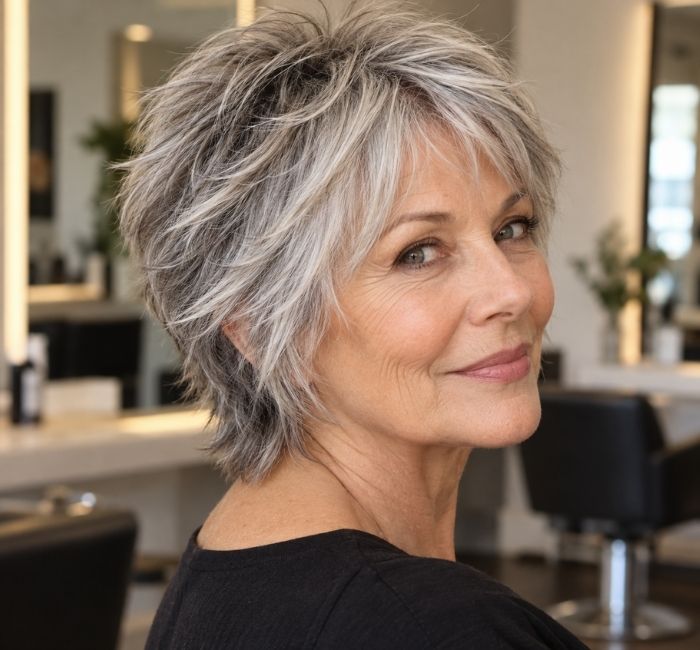
A short shag has a more irregular silhouette than a traditional bob. Shorter crown layers create texture, while the sides and back retain enough length for movement.
This style suits women who prefer a casual finish and do not want every strand to sit perfectly in place. Natural waves can make it especially easy to wear.
Styling: Apply a small amount of texturizing spray or lightweight styling cream. Let the hair air-dry or use a diffuser on a low setting, then separate a few sections with your fingers.
Fine hair may need fewer, carefully placed layers to preserve fullness. Thicker hair can often support more texture.
Compared with a shaggy bob, a short shag has a less defined perimeter and more visible layering around the crown. Choose it if movement matters more to you than a precise bob outline.
7. French Bob With a Soft Fringe

A French bob usually sits around the jaw or chin and often includes bangs. Its shorter proportions and face-framing shape distinguish it from a longer, straight bob.
The fringe can be blunt, wispy or slightly longer at the sides. A softer fringe may be easier to manage if your hair has a natural wave or a strong parting.
Styling: Use a small round brush to guide the fringe and ends into place. If you prefer a relaxed appearance, allow some natural movement instead of straightening every section.
This cut works well for women who enjoy a defined shape and are comfortable maintaining their bangs. Short fringes may need attention before the rest of the haircut.
If you wear glasses, check that the fringe does not sit awkwardly against the top of the frames or interfere with your vision.
8. Side-Swept Ear-Length Crop
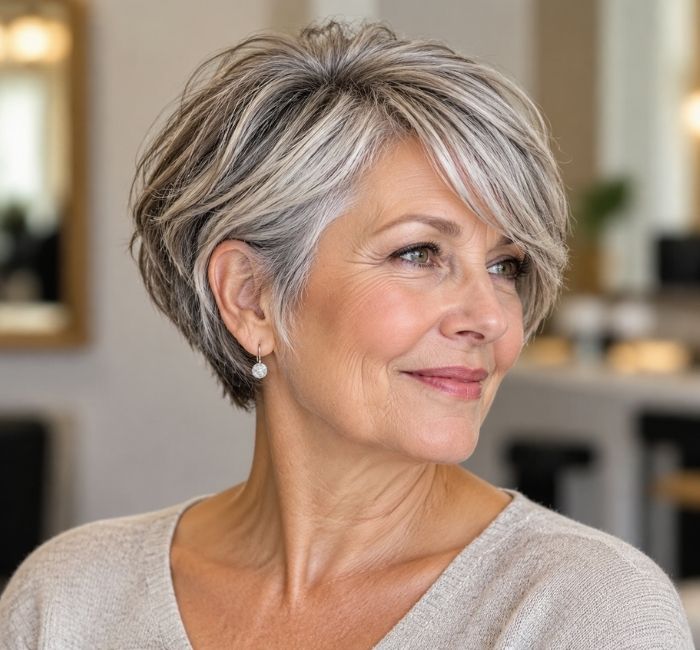
This crop keeps the sides around ear level and leaves a longer fringe that sweeps across the forehead. It offers more softness than a very short pixie without the length of a bob.
The fringe can be adjusted to suit your natural parting. It may also be a practical choice if you want some face-framing hair without adding bulk around the temples.
Styling: Apply a little mousse to damp hair and guide the fringe sideways with your fingers while drying. If your hair naturally falls into a side part, you may not need a brush.
For a lower-effort routine, ask for a fringe that falls into place naturally instead of one that requires repeated heat styling.
9. Natural-Texture Crop for Wavy or Curly Hair

A natural-texture crop leaves enough length for waves or curls to form while keeping the overall shape short. The cutting technique should account for how your hair behaves when dry.
Curly hair can shrink considerably after washing, so a measurement taken while wet may not reflect the finished length.
Styling: For waves, use a lightweight texturizing product. For curls, a curl cream or leave-in conditioner may help define the natural pattern. Start with a small amount to avoid weighing down shorter hair.
Air-drying can reduce the need for heat. If you use a diffuser, choose a low setting and avoid repeatedly handling the curls while they dry.
Bring a reference photo with a similar curl pattern. A cut designed for loose waves may behave very differently on tightly coiled hair.
10. Soft Undercut With a Longer Top
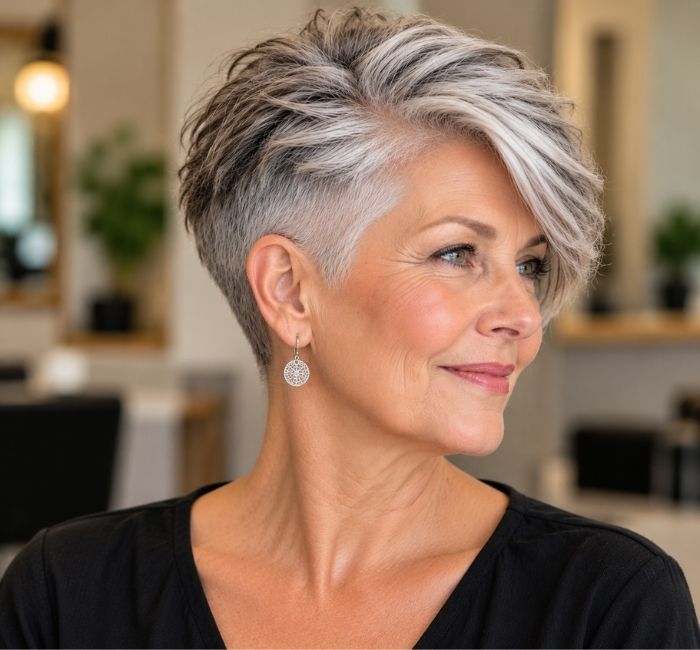
An undercut keeps the lower sides and back noticeably shorter while leaving extra length on top. The contrast gives the style a more defined appearance than a conventional pixie.
It can suit medium to thick hair, especially when the sides tend to feel bulky. The top can be swept back, parted to one side or styled with texture.
Styling: Work a small amount of styling cream through the top and arrange it with your fingers. Finishing spray can help hold the shape in place.
Choose this cut if you want a contemporary look with a clear contrast between the top and sides. If you prefer a softer shape that grows out less noticeably, a textured pixie may be a better option.
Choosing a Cut for Your Face Shape and Glasses
Face shape can help narrow your options, but it should not be treated as a strict set of rules.
- Round face: A side part or some height at the crown can create a more elongated visual line.
- Square face: Soft layers and waves can soften the appearance of angular features.
- Long face: A fringe or some width at the sides can create visual balance.
- Heart-shaped face: Chin-length sections or side-swept bangs can draw attention toward the lower half of the face.
- Oval face: Many lengths and silhouettes can work, leaving more room to consider texture and maintenance.
Glasses matter, too. Oversized frames may feel crowded by thick hair around the temples, while smaller frames can leave more room for a fringe. Bring your glasses to the appointment and check how the finished cut sits around the arms of the frames.
What to Do if Your Crown Is Thinning
A haircut can change the appearance of fullness, but it cannot treat the underlying cause of hair loss.
For mild thinning, consider a cut that preserves some length over the crown and works with your natural parting. Lightweight products may help prevent the hair from looking weighed down.
The American Academy of Dermatology’s hair-loss guidance recommends gentle hair care, including using a gentle shampoo, conditioning after washing, limiting heat styling and avoiding hairstyles that pull tightly on the scalp. It also recommends seeing a board-certified dermatologist to investigate hair loss.
If thinning is new, sudden or patchy, seek medical advice rather than relying on a haircut alone.
Low-Effort Styling When Your Hands Feel Stiff
When stiff or painful hands make brushing, blow-drying, or gripping styling tools difficult, a short cut suited to your natural texture may be easier to manage without using heat styling every single day.
A few adjustments can make grooming easier:
- Choose a simple cut: Consider a pixie, short crop or bob that needs minimal styling.
- Use a lightweight brush: A lightweight or long-handled brush may be easier to manage than a heavy styling brush.
- Reduce the need to hold a dryer: A suitable hairdryer holder may help if gripping a dryer for long periods is difficult.
- Simplify your routine: Air-dry when practical and use fewer styling products and tools.
- Make washing easier: Pump-action shampoo bottles or dry shampoo may help when squeezing bottles or washing your hair feels tiring.
Arthritis UK’s guidance on managing everyday tasks includes advice from occupational therapist Christina MacLeod on easy hairstyles, lightweight or long-handled combs and brushes, hairdryer holders and alternatives for people who find hair washing difficult.
Choose equipment that feels comfortable and safe to use. If hand pain or stiffness continues to interfere with daily activities, an occupational therapist can recommend suitable adaptations.
Frequently Asked Questions
What is the easiest short haircut for women over 60?
A textured pixie, tapered pixie or simple bob can be manageable, depending on your hair texture and routine. A pixie may take only a few minutes to style but usually needs more frequent trims. A bob can last longer between appointments, although blow-drying may take more time. Choose based on both daily styling and salon maintenance.
Which short haircut makes fine hair look fuller?
A blunt bob can create a denser-looking outline because the ends remain relatively even. A carefully shaped pixie can add visual lift around the crown. Heavy layering is not always helpful: removing too much hair can make fine strands look sparse. The best haircut depends on where your hair is thinning and how much density remains.
What is a good short haircut for women over 60 who wear glasses?
A side-swept crop, textured pixie or bob that can be tucked behind the ears may work well. Consider how the hair sits around the temples and the arms of your frames. Bring your glasses to the salon so the stylist can check the fringe length and side sections before finishing the cut.
Which short haircut works well with gray hair?
A tapered pixie is a strong option for women who want to embrace natural gray or silver hair. A blunt bob, short shag or French bob can work just as well, depending on your preferred shape. Gray hair does not require a particular haircut; texture, density and styling preferences should guide the choice.
How often should short hair be trimmed?
A pixie or closely tapered cut may need attention every four to six weeks, while many bobs can go five to eight weeks between trims. These figures serve as a general guide and may vary from person to person.Hair growth, fringe length and how precisely you want the shape maintained will affect the schedule.
Can a short haircut hide thinning at the crown?
A carefully shaped cut may make thinning less noticeable by changing the way hair falls and where volume sits. A lightweight styling product and a different parting can create the appearance of fuller hair, but neither a new haircut nor styling techniques can restore hair that has been lost.If thinning is new, sudden or patchy, consult a dermatologist to identify the cause.
Final Thoughts
The most suitable short haircut is one that works with your hair, frames your features the way you prefer and fits your daily routine. A blunt bob offers a clean outline, a short shag adds movement, and a tapered pixie can complement natural gray hair.
Use the comparison table to narrow your options, then consider face shape, glasses, crown density and maintenance. A clear conversation with your stylist can help you choose a cut that suits your needs.



Leave a Reply