
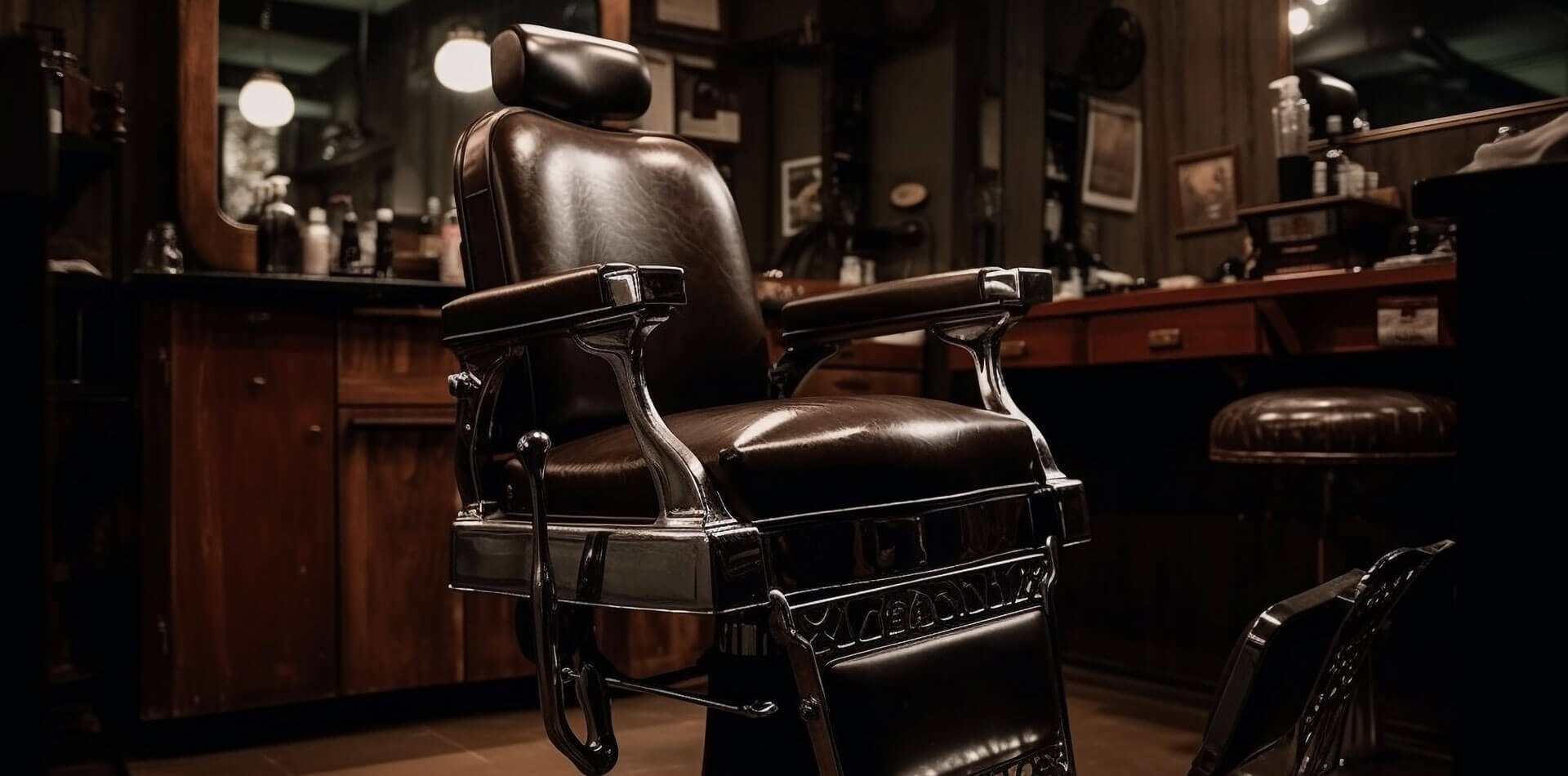
A middle part can look effortlessly stylish when it suits your hair texture, face shape, and personal style. From soft curtains and textured finishes to sharp fades and longer layers, there are plenty of ways to wear this classic look. This guide covers 10 men’s middle part hairstyles, how to choose the right cut, practical styling techniques, and what to discuss with your barber.
My advice is to start with your natural hair texture and daily routine, then choose a middle part that fits both.
What Makes a Men’s Middle Part Different or Important?
A middle part separates the hair around the center of the head, allowing it to fall toward both sides of the face. Depending on the length, the front sections can frame the eyebrows, temples, or cheekbones. Unlike a heavily structured side part, this style often looks relaxed and works particularly well with natural movement.
One of its biggest advantages is versatility. You can combine a center part with a taper, fade, undercut, textured layers, or longer curtains. These variations create noticeably different appearances while keeping the same basic parting. A classic curtain cut can look casual, while shorter sides and a carefully styled top create a cleaner, more polished finish.
However, a middle part is not automatically flattering on everyone. Hair density, growth direction, forehead proportions, and natural texture all affect the result. A strong cowlick at the front, for example, might push the hair away from the center or create an unwanted gap. Fine hair may need a little extra volume, while thick hair often benefits from layers that reduce bulk.
The hairstyle also changes as your hair grows. A middle part that looks balanced immediately after a haircut might become difficult to manage when the front sections get longer or the sides lose their shape. Choosing the right length from the beginning makes everyday styling much easier.
My take: The best middle part is not necessarily the sharpest or most symmetrical one. A little natural movement usually makes the hairstyle look more relaxed, believable, and easier to maintain.
How to Choose the Right Middle Part for Your Hair Type
Consider what your hair naturally does after washing before choosing a particular style. Your barber can adjust the length, layers, and sides to make the parting easier to maintain.
- Straight hair: Try classic curtains, a textured middle part, or a taper. Lightweight styling cream controls flyaways without making hair greasy.
- Wavy hair: Soft curtains and layered middle parts complement natural movement. Leave-in conditioner or curl cream can reduce frizz while helping waves retain their shape.
- Curly hair: Keep enough length for the curls to form naturally, and choose a center part that works with your curls’ growth pattern. Ask your barber to consider shrinkage before deciding how much to cut.
- Thick hair: Layers and a suitable taper can remove excess bulk. Matte paste helps separate sections without making the hairstyle stiff.
- Fine or thin hair: A shorter, textured middle part may create a fuller appearance. Avoid heavy products that separate strands and make the scalp more visible.
- Hair with a strong cowlick: Ask your barber to assess your growth direction. A slightly off-center part may be easier to maintain than forcing the hair into a perfectly straight line.
Face shape can also guide your decision. Oval faces generally work with a wide range of middle-part styles. Round faces may benefit from some height at the front, while longer curtains can help frame the sides of a longer face. For square faces, softer layers can complement a defined jawline without making the overall appearance too severe.
Your forehead and hairline matter, too. If you have a high forehead, longer front sections may provide the coverage you prefer. If your hairline is uneven, a softer part can look more natural than a sharply defined center line.
These are starting points rather than strict rules. Your hairline, personal preferences, and the amount of styling you are willing to do matter just as much as your face shape.
10 Men’s Middle Part Hairstyles Worth Considering
1. Classic Curtain Middle Part

The classic curtain middle part features a central separation with longer front sections falling toward either side. The hair usually reaches the eyebrows, temples, or ears, creating a relaxed appearance without requiring an extremely precise finish.
Best for: Men with straight or slightly wavy hair who want a versatile, recognizable style.
Watch out for: Excessive front length can make the hair look flat or fall into your eyes.
What to ask your barber: Request a center part with soft, face-framing layers and enough length for natural curtains.
Practical tip: Blow-dry the front away from the center using your fingers. Finish with a small amount of lightweight cream if the ends need control, rather than applying heavy product at the roots.
2. Textured Middle Part

A textured middle part adds separation and movement instead of forming two smooth sections. Suitable layering and matte products help individual strands retain their shape without making the hairstyle look overly structured.
Best for: Men with straight or thick hair who prefer a casual finish.
Watch out for: Excessive thinning can leave the ends looking wispy, particularly on fine hair.
What to ask your barber: Request a textured center part with soft layers that preserve enough weight to frame your face.
Practical tip: Work a pea-sized amount of matte cream through nearly dry hair, then separate a few sections with your fingertips. Start with less product than you think you need; adding more is easier than correcting greasy, weighed-down hair.
3. Middle Part with Taper Fade
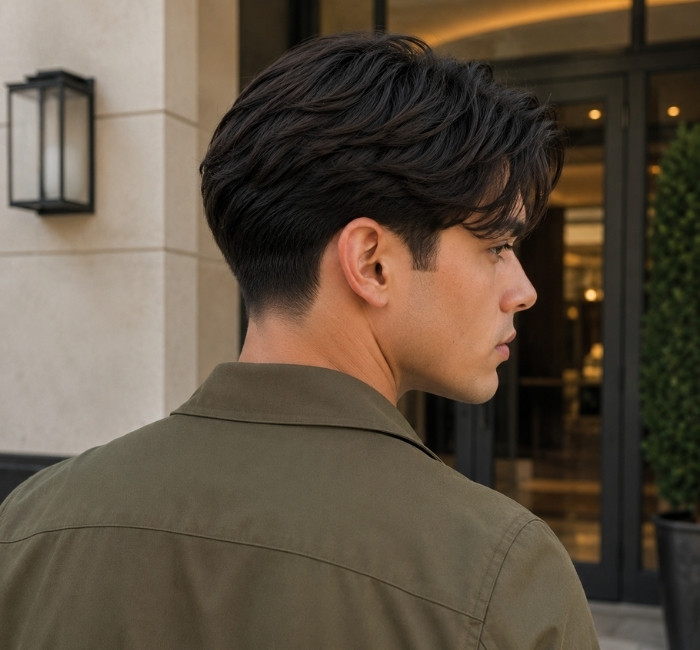
This style combines a center-parted top with a gradual taper around the sideburns and neckline. The longer upper hair creates curtains, while the cleaner edges provide a polished appearance.
Best for: Men who want a balance between a traditional middle part and a modern haircut.
Watch out for: A taper that removes too much hair around the temples can make the top look disconnected.
What to ask your barber: Request a low or subtle taper while preserving enough length at the front.
Practical tip: Bring a reference photo showing both the front and side profile so your barber understands the shape you want. This is especially helpful when you want the sides neat without making the overall haircut look too aggressive.
4. Middle Part with Low Fade
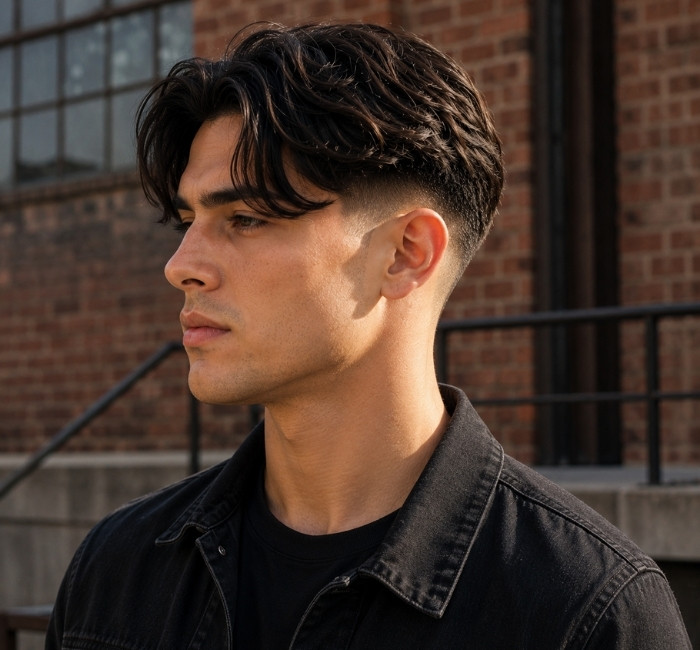
A low fade gradually shortens the hair near the ears and neckline, creating a sharper outline beneath the longer top. It offers more contrast than a traditional taper while keeping the center-parted hair as the main feature.
Best for: Men with thick, straight, or slightly wavy hair who prefer a contemporary finish.
Watch out for: A very tight fade requires frequent maintenance and may look too sharp for someone who prefers a softer style.
What to ask your barber: Request a low fade that stays below the temples, leaving enough length on top for visible curtains.
Practical tip: Decide whether you want a subtle blend or noticeable contrast before the haircut begins. If you are unsure, start with a conservative fade because you can always go shorter at your next appointment.
5. Middle Part with Undercut
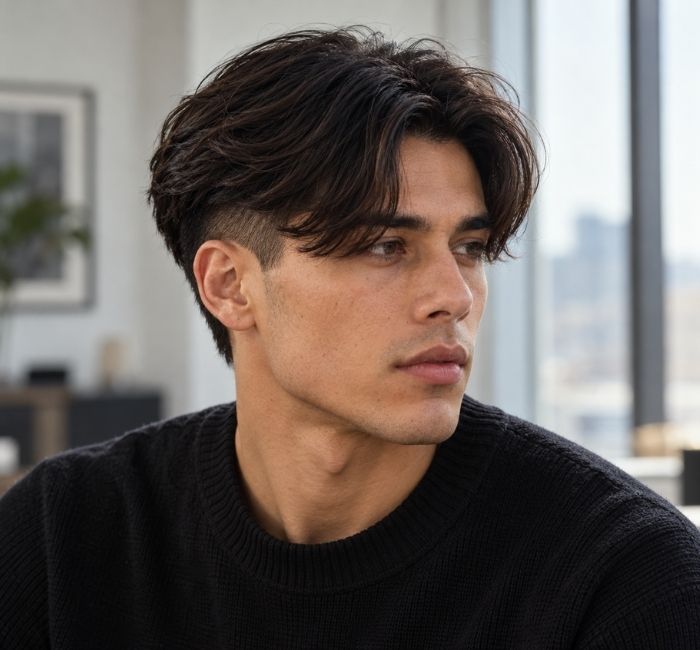
An undercut pairs a longer center-parted top with significantly shorter sides. The contrast makes the upper hair stand out and creates a bold silhouette.
Best for: Men with medium-length or thick hair who enjoy a defined, fashion-focused appearance.
Watch out for: The difference in length can make the haircut harder to maintain as it grows out.
What to ask your barber: Explain whether you want the undercut hidden beneath the top or clearly visible. A reference photo will help communicate how much contrast you prefer.
Practical tip: Keep the front long enough to fall naturally on both sides and preserve the curtain effect. Remember that the sides may need trimming before the longer top requires another cut.
6. Wavy Middle Part

A wavy middle part uses the hair’s natural bends to create volume and movement. Layers help the waves fall around the face without requiring a perfectly smooth finish.
Best for: Men with naturally wavy hair who want a relaxed appearance.
Watch out for: Cutting the hair too short can cause the waves to spring up and change the intended shape.
What to ask your barber: Request a layered center part that follows your natural wave pattern without adding unnecessary bulk.
Practical tip: Apply a little curl cream to damp hair and air-dry or use a diffuser on a gentle setting. Avoid brushing the hair repeatedly while it dries, as this can disrupt the waves and increase frizz.
7. Curly Middle Part

The curly middle part uses natural curls to frame the face from a central separation. Depending on your curl pattern, the result can look soft and rounded or fuller and more dramatic.
Best for: Men with loose curls or defined ringlets who want to embrace their natural texture.
Watch out for: Shrinkage can make hair appear much shorter when dry, so cutting based on wet length alone can be misleading.
What to ask your barber: Discuss how your curls sit when dry and request a shape that preserves definition around the forehead and temples.
Practical tip: Use conditioner and a modest amount of curl cream. Allow the curls to dry without repeatedly touching them, and check the shape when dry before deciding whether you need more length or volume.
8. Long Layered Middle Part

A long layered middle part allows the hair to fall past the ears, sometimes reaching the jawline or shoulders. Layers add movement and prevent the hair from forming one heavy curtain.
Best for: Men willing to grow their hair and maintain a longer style.
Watch out for: Dry or tangled ends can make long hair difficult to manage, while frequent trimming that removes too much length can slow your progress.
What to ask your barber: Request long, face-framing layers that preserve the overall length rather than adding a short fringe.
Practical tip: Use conditioner regularly and detangle gently, starting near the ends. The American Academy of Dermatology’s hair-care advice explains how limiting excessive heat and handling wet hair carefully can help prevent damage.
9. Short Middle Part
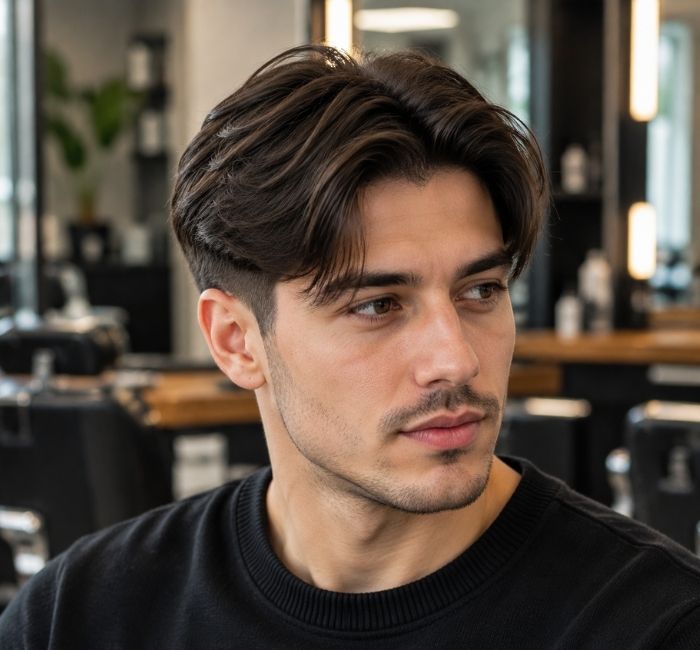
A short middle part keeps the top compact while maintaining a visible central separation. Depending on your hairline, the front can sit above the eyebrows or remain slightly longer.
Best for: Men who prefer a low-maintenance haircut or find longer curtains inconvenient.
Watch out for: Cutting the top too short can leave insufficient length for the hair to separate naturally.
What to ask your barber: Request a short center part with enough length at the front to create two sections and neatly shaped sides.
Practical tip: Try damp fingers and a little lightweight cream before investing in several styling products. A short middle part should be quick to manage, so avoid adding unnecessary steps to your morning routine.
10. Korean-Inspired Soft Middle Part
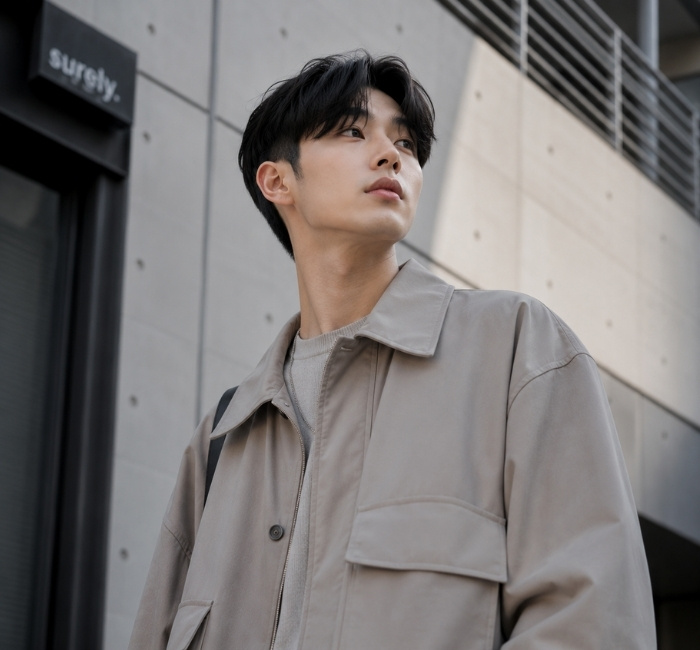
This style features a gentle center separation, soft volume, and front sections that curve around the forehead. The finish looks polished while retaining natural movement.
Best for: Men with straight or lightly wavy hair who prefer a youthful appearance.
Watch out for: A precise finish may require daily blow-drying if your hair naturally grows forward or toward one side.
What to ask your barber: Show a reference image and request soft curtains, subtle layers, and a shape that follows your natural hairline.
Practical tip: Blow-dry the front away from the center on low or medium heat, then finish with a lightweight cream. If the hair falls flat during the day, try adjusting the drying technique before switching to a stronger styling product.
Quick Comparison Table
Use this table to compare the styles before choosing a reference photo. Styling times are approximate and depend on your hair texture and experience.
| Hairstyle | Ideal hair type | Suggested top length | Daily styling time | Typical upkeep |
| Classic curtain middle part | Straight, wavy | 3–6 in (8–15 cm) | 5–8 minutes | Trim every 6–8 weeks |
| Textured middle part | Straight, thick | 3–5 in (7–12 cm) | 3–6 minutes | Trim every 5–7 weeks |
| Middle part with taper fade | Straight, wavy | 3–5.5 in (8–14 cm) | 4–7 minutes | Taper every 3–5 weeks |
| Middle part with low fade | Thick, straight | 3–5.5 in (8–14 cm) | 4–7 minutes | Fade every 2–4 weeks |
| Middle part with undercut | Thick, straight | 4–6.5 in (10–16 cm) | 5–10 minutes | Sides every 2–4 weeks |
| Wavy middle part | Wavy | 3–6 in (8–15 cm) | 3–7 minutes | Trim every 6–8 weeks |
| Curly middle part | Curly | 3–6 in (8–15 cm) | 5–10 minutes | Shape every 6–10 weeks |
| Long layered middle part | Straight, wavy | 6–10 in (15–25 cm) | 5–10 minutes | Trim every 8–12 weeks |
| Short middle part | Straight, fine | 2–3.5 in (5–9 cm) | 2–5 minutes | Trim every 4–6 weeks |
| Korean-inspired soft middle part | Straight, lightly wavy | 3–5.5 in (8–14 cm) | 5–10 minutes | Trim every 5–7 weeks |
These lengths are estimates rather than strict requirements. Curl shrinkage, hair density, and natural growth patterns can change the length needed. Maintenance also varies: a fade may need refreshing sooner than a longer layered style, even when the top still looks good.
What to Discuss Before Your Barber Appointment
A little preparation helps prevent ending up with a haircut that looks different from your reference photo.
1. Decide how you want the sides to look. Explain whether you prefer natural sides, a taper, a low fade, or an undercut. If you want a softer appearance, say so before your barber starts cutting.
2. Explain your everyday routine. If you only have three minutes in the morning, choose a style that does not require extensive blow-drying. Mention whether you use styling products or prefer to leave your hair mostly natural.
3. Discuss your hair’s natural behavior. Mention cowlicks, flat roots, frizz, or uneven growth so your barber can adjust the cut. Explain if one side naturally falls differently, as this can affect how the center part sits.
4. Bring realistic reference pictures. Choose images showing the front, sides, and overall length. Similar hair texture and density make comparisons more useful, and multiple angles help your barber understand the intended shape.
5. Agree on the amount to cut. Ask your barber to preserve length if you are growing your hair. Explain how much of your forehead you want covered and whether you prefer a loose or defined part.
6. Ask about maintenance. Find out how often the sides need trimming and which products are actually necessary. This helps you avoid choosing a style that looks good in the barbershop but becomes inconvenient at home.
I’d recommend discussing the styling routine before committing to a dramatic fade or longer curtain cut. If it requires products or techniques you dislike, choose a more practical variation.
Common Mistakes to Avoid
Forcing a Perfect Center Line
A perfectly straight part is not essential. If your hair naturally separates slightly off-center, forcing it into a rigid line can make it difficult to control. Start where your hair naturally falls and adjust the part gradually if you want a more centered appearance.
Cutting the Front Too Short
The front sections create much of the curtain effect. Removing too much length can leave you with a conventional short haircut instead. Explain your preferred length before the barber starts cutting, especially if you want the front to reach your eyebrows.
Using Too Much Product
Heavy waxes, oils, or strong gels can weigh down fine hair and make the center part look greasy. Start with a small amount and add more only when necessary. The right product should help the hair move and hold its shape without making it stiff.
Ignoring Your Natural Texture
Forcing curls or waves into a smooth shape adds work and exposes hair to excess heat. Choose a cut that complements your texture, and avoid unnecessary repeated passes with heated tools. Your styling routine will generally be easier when the haircut follows your natural growth pattern.
Expecting a Fade to Stay Fresh Indefinitely
Short sides grow out quickly, so a fade loses its definition sooner than a longer, tapered cut. Consider the cost and frequency of barber visits before choosing a tight finish. If you prefer fewer appointments, a classic taper may be more convenient.
Frequently Asked Questions
1. Is a Middle Part Attractive on Men?
A middle part can be flattering because it frames the face and offers plenty of styling flexibility. The result depends on your hair texture, haircut proportions, and natural growth pattern. If you are unsure whether it suits you, start with a softer, medium-length version before trying a dramatic cut.
2. How Long Does My Hair Need to Be for a Middle Part?
Some styles work with approximately 2–3.5 inches (5–9 cm) of top length, while longer curtains often need 3–6 inches (8–15 cm) or more. Wavy and curly hair may require additional length because the strands bend or shrink as they dry. Your barber can recommend a suitable starting length based on the look you want.
3. Can Men with Thin Hair Wear a Middle Part?
Yes. A shorter, textured version can work well with fine hair because it avoids excessive weight and can create the appearance of more volume. Ask your barber to preserve density rather than removing too much hair through aggressive thinning. At home, use a lightweight styling cream or volumizing product, and avoid heavy oils that separate the strands and make the scalp more visible.
4. How Do I Train My Hair to Stay in the Middle?
Create the part with damp hair, then blow-dry the front sections away from the center using your fingers or a comb. Repeat the process consistently and finish with a small amount of lightweight product if needed. Strong cowlicks may resist a precise part, so a softer or slightly off-center separation could produce a better result.
5. Is a Middle Part Better Than a Side Part?
Neither is universally better. A middle part creates balanced framing, while a side part adds directional movement and a traditional appearance. A middle part may suit someone who likes relaxed curtains, whereas a side part can be easier for hair that naturally falls in one direction. Try both before committing to a particular style.
6. Which Products Work Best for a Men’s Middle Part?
Lightweight styling cream suits many straight or wavy hairstyles because it provides control without making the hair feel stiff. Matte paste adds texture and separation, while curl cream helps define naturally curly hair and manage frizz. Fine hair generally benefits from lightweight formulas, whereas thick hair may need a little more hold. Start with a small amount and apply it evenly, concentrating on the lengths rather than loading the roots with product.
Conclusion
My biggest takeaway is that the best men’s middle part works with your natural hair, suits your preferred appearance, and fits your daily routine. You do not need extremely long curtains, a dramatic fade, or expensive products to make it look good.
Start with a classic or textured middle part for versatility. Choose a taper or low fade for a cleaner outline, or explore longer layers if you prefer a flowing style. Bring reference pictures to your barber and discuss your maintenance preferences.



Leave a Reply