
If you’re exploring korean haircut styles men can wear confidently, consider your natural hair texture, preferred length, and daily routine. A good haircut should look attractive and remain manageable after leaving the barber.
Korean-inspired grooming offers plenty of variety, from structured two-block cuts to relaxed curtain fringes, textured crops, and layered styles. Some suit naturally straight hair, while others work well with longer hair or added waves.
One detail worth remembering is that a haircut can look different from the front and side. The fringe, temples, and connection between the top and back all affect the final shape. Considering these details before choosing a reference photograph can help you avoid an unwanted result.
My advice is simple: choose a haircut that works on an ordinary morning, not just one that looks great after professional styling.
This guide covers 12 hairstyles, explains their differences, and offers practical advice for choosing a cut that fits your hair and lifestyle.
What Makes Korean-Inspired Men’s Haircuts Different?
Many Korean men’s haircuts combine shorter sides with a longer top that allows movement. The fringe often defines the look: it can fall forward, separate in the middle, sweep sideways, or curve across the forehead.
Texture matters, too. Some cuts work with naturally straight or wavy hair, while others use professional perms to introduce movement. A perm isn’t essential; the right cut and blow-drying technique may achieve the finish you want.
These hairstyles aren’t one-size-fits-all. A photograph showing thick, straight hair may not translate directly to fine or curly hair. Adapting the shape to your natural growth pattern is usually more practical than trying to reproduce every detail of a reference image.
How to Choose Korean Haircut Styles Men Can Maintain
Before choosing a cut, think about your hair texture, available styling time, and how often you’re willing to visit the barber.
- Straight hair: Works well with defined parts, two-block cuts, and smooth fringes. Thick, straight hair may need a little weight removed around the temples.
- Fine hair: Benefits from preserving fullness around the front and crown. Excessive thinning can leave the ends looking sparse.
- Thick hair: Often needs careful layering to control bulk without making the top too thin.
- Wavy or curly hair: Can work with textured and layered cuts when the barber accounts for natural movement and shrinkage.
Your preferred appearance matters as well. A forward fringe offers more forehead coverage, while a middle part creates a different frame around the face. These are useful considerations, not strict rules.
Think about your morning routine before deciding. If you don’t want to blow-dry your hair every day, a short crop may be more practical than a long fringe that needs careful shaping.
12 Korean Haircut Styles Men Can Ask a Barber For
1. Classic Two-Block Haircut
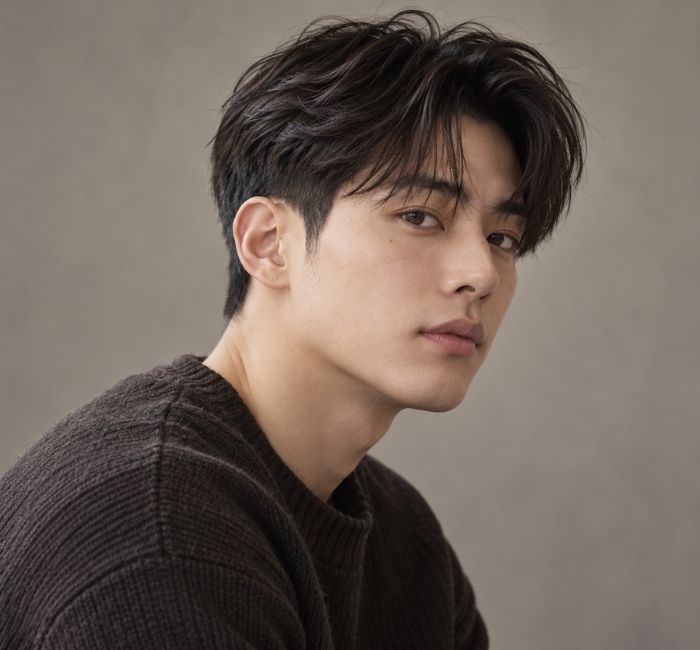
The classic two-block cut features shorter sides and back with a longer top. You can brush the top forward, sweep it sideways, or grow the fringe into a middle part.
The main consideration is bulk around the temples. Thick hair can push outward as it grows, so your barber may need to remove some weight without cutting the sides excessively short.
Decide how much contrast you want before the appointment. A dramatic difference creates a bolder look, while a softer transition produces a more understated finish.
What to tell your barber: Ask for shorter sides and back while keeping enough length on top to experiment with different styles.
For everyday styling, blow-dry the top in your preferred direction and finish with a little lightweight cream. If the sides begin sticking out after a few weeks, ask whether the shape needs adjusting.
If I were helping someone narrow down these options, I’d put the two-block cut near the top of the list because its longer top allows several different styling choices.
2. Comma Hair
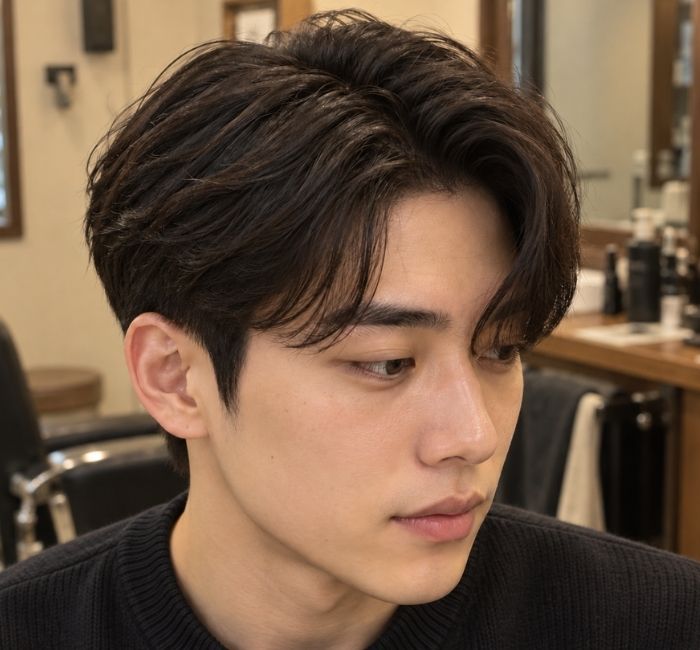
Comma hair features a curved fringe that bends inward across part of the forehead. That distinctive curve creates a polished appearance without requiring an elaborate cut throughout the head.
The front needs enough length to form the shape. If your hair naturally falls in the wrong direction, ask your barber to adapt the fringe rather than relying entirely on styling products.
Think about how much upkeep the curved fringe will need. If the fringe repeatedly falls forward, you may need to spend a few extra minutes styling it each morning.
Use a blow-dryer to guide the front section into position, then apply a little styling cream if necessary. Too much product can make the fringe look greasy.
My take: comma hair is a strong option if you want a more polished appearance without committing to a dramatic haircut.
3. Middle-Part Curtain Hair
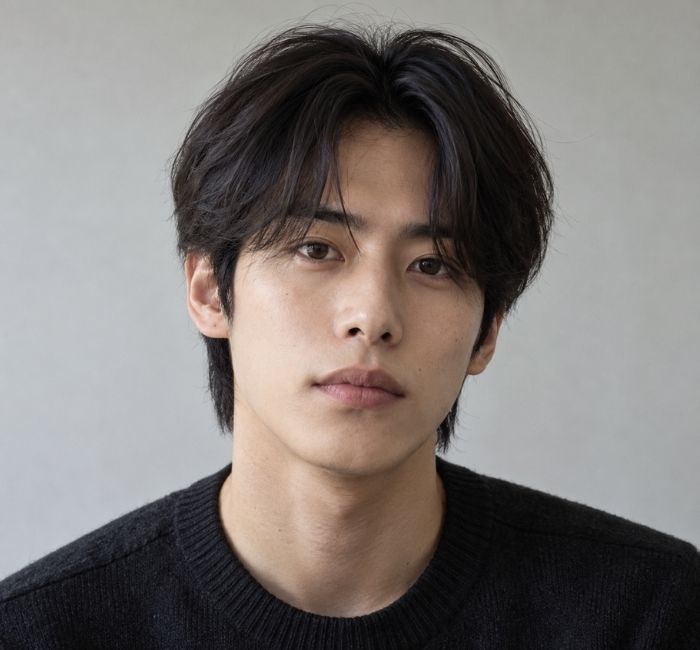
Curtain hair has a centre or slightly off-centre part, with the front sections falling to either side. Depending on the length, it can look neat and understated or relaxed and flowing.
It’s suitable for men who want some length around the forehead and temples. However, the fringe needs enough length to separate comfortably without falling into your eyes.
A common mistake is requesting curtain hair before growing the front long enough. Very short hair may not fall into the desired part naturally.
Ask for a centre or slightly off-centre part with face-framing layers. Blow-dry the front away from the part, or consider a shorter fringe if it repeatedly covers your eyes.
Styling tip: Direct each front section away from the centre part while blow-drying, then use a little lightweight cream to control flyaways if needed.
4. Textured Fringe
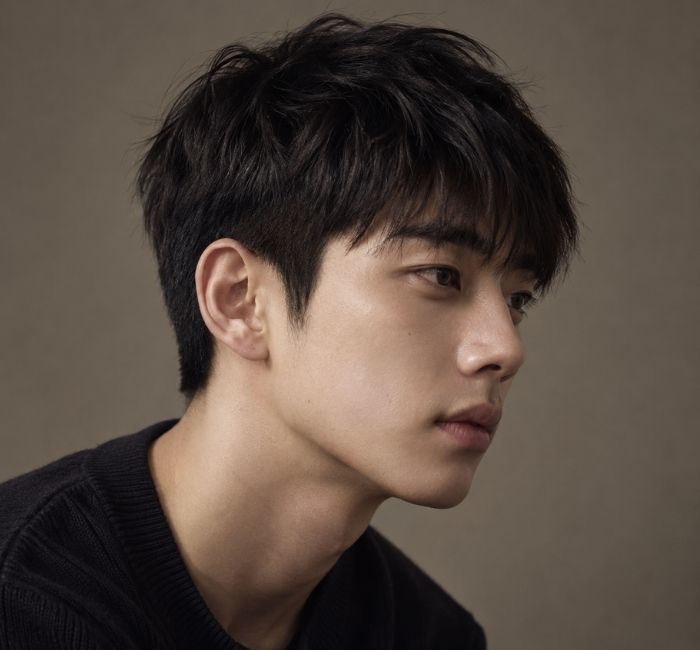
A textured fringe directs hair forward without creating the solid appearance of a blunt fringe. Small variations in length give it separation and movement.
Fine hair needs enough fullness at the front, while thick hair may benefit from selective weight removal. Excessive thinning can leave the ends looking sparse.
Bring your barber a reference photo that shows the texture you’re aiming for. Explain whether you prefer a soft, natural fringe or more noticeable separation, as these finishes may require different cutting techniques.
To style it, guide the fringe forward with your fingers and add a little matte paste if it needs definition. Start with a small amount to avoid weighing the fringe down.
5. Gentleman Side Part
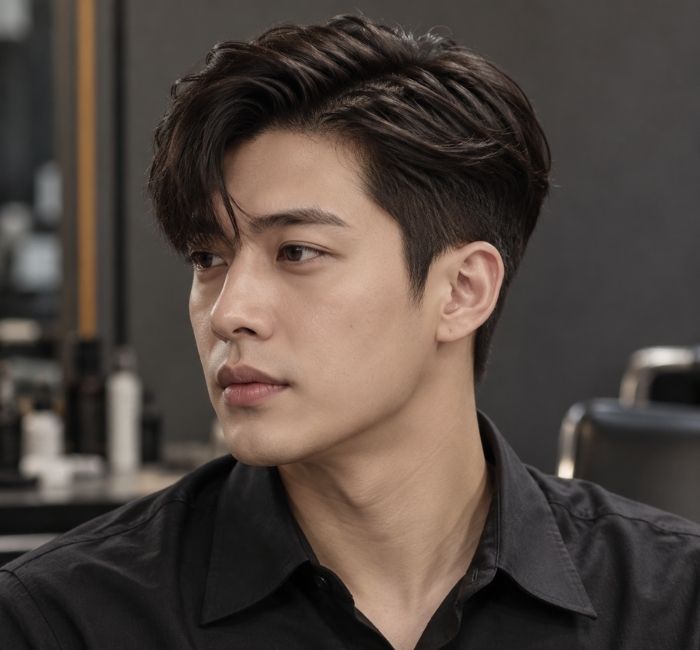
The gentleman side part directs hair to one side, creating a tidy appearance suitable for professional settings and formal occasions.
The part doesn’t need to be sharply carved into the scalp. A softer separation often looks more natural and allows flexibility when styling. If your hair resists the part, ask your barber to adjust the shape.
Consider how the style behaves without a product. If the hair immediately falls across the part, a different length or a small adjustment to the cut may work better.
Use lightweight cream or low-shine pomade to hold the shape. If your hair falls flat, blow-dry it into position first.
6. Shadow Perm
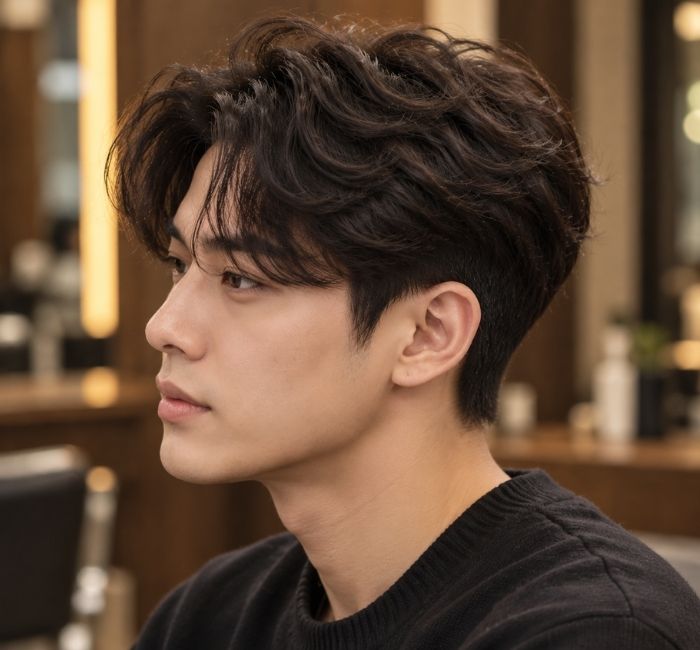
A shadow perm adds soft movement and volume rather than sharply defined curls. It can help straight hair develop a fuller-looking shape and make the top easier to style.
The result depends on hair length, condition, and the technique used. If your hair already holds its shape, a suitable cut and blow-drying may be enough without chemical treatment.
Before booking, discuss the desired wave strength and your hair’s condition with the stylist. Previously coloured, bleached, or damaged hair may need additional assessment.
Consider the upkeep as well. A perm may make a particular texture easier to create, but it still requires appropriate hair care. Follow your stylist’s aftercare advice and avoid unnecessary heat.
7. C-Curl Perm
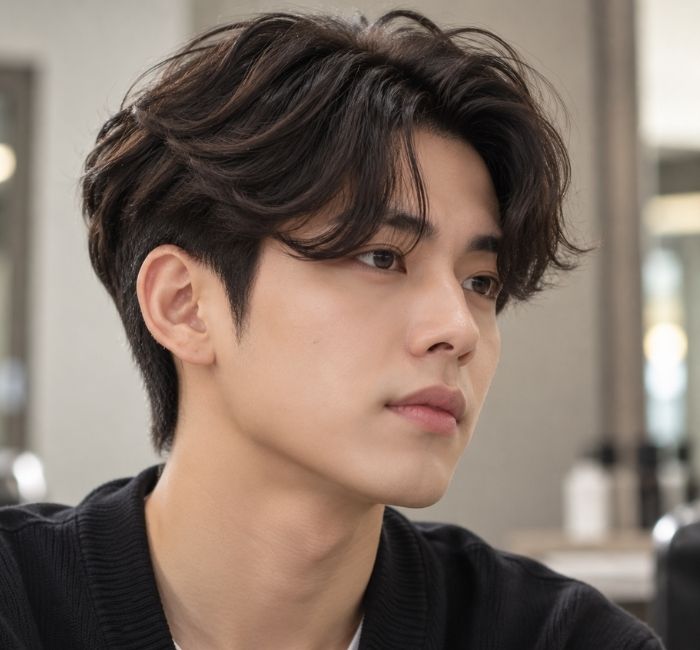
A C-curl perm creates a gentle bend at the ends of selected sections. Rather than producing waves throughout the head, it gives the ends a rounded shape.
This curl can give straight hair a softer shape, especially at the front. The placement and direction of the bends influence the final appearance.
Decide where you want the curve before treatment. A bend around the fringe creates a different effect from one concentrated at the sides, and your stylist can explain what your current length will allow.
Ask how noticeable the bends will be. Afterwards, dry the hair gently and avoid flattening the curved sections with excessive heat.
8. S-Curl Wave Perm
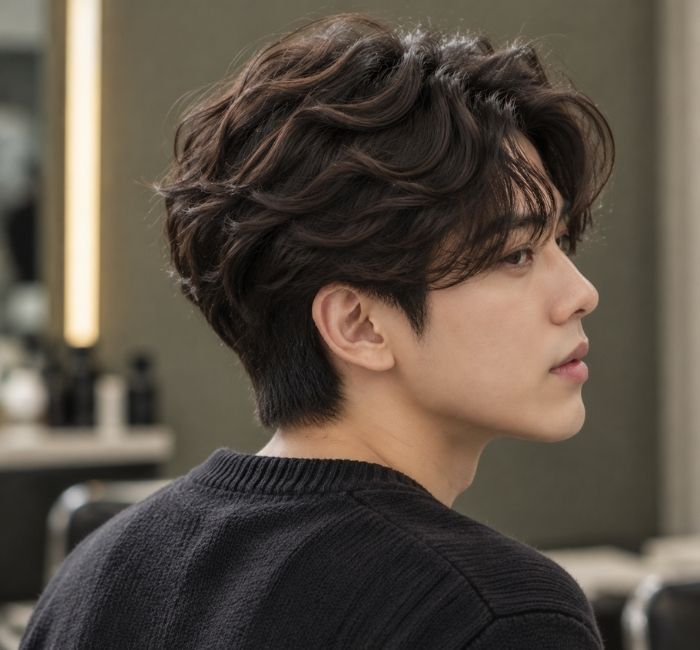
An S-curl perm creates flowing waves rather than a single rounded bend. It suits men who want noticeable texture without tight curls.
Medium-length hair gives the wave pattern more room to develop, while thick hair may need shaping to control volume.
Consider how the waves will fit into your usual styling routine. If you prefer loose, relaxed waves, explain that to your stylist rather than requesting a perm by name alone.
Discuss aftercare before choosing the treatment. When drying your hair, avoid repeatedly brushing through the waves, as this can disrupt their shape.
9. Leaf Cut
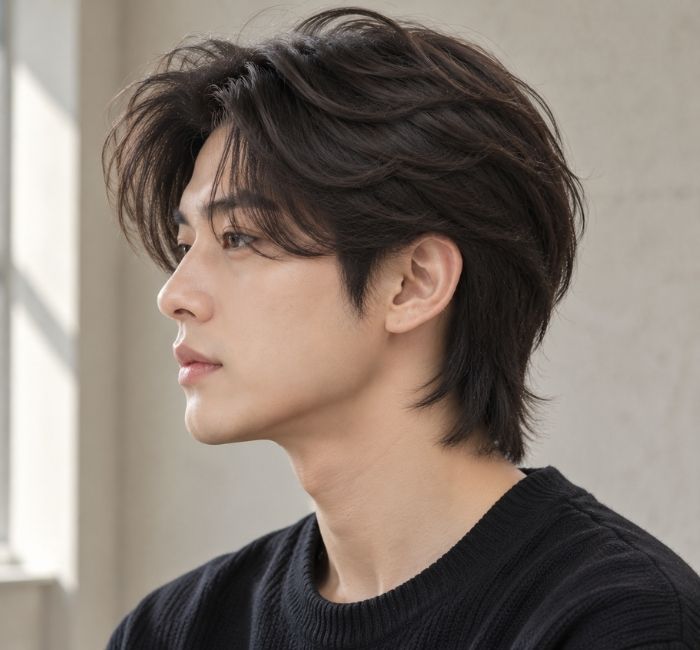
The leaf cut uses longer, feathered layers that move away from the face. Its flowing outline distinguishes it from shorter, more structured styles.
Consider it if you enjoy medium-length hair but prefer a softer look than a wolf cut. The fringe, sides, and back should connect naturally rather than forming separate, bulky sections.
Length matters here. If the front is too short, it may not fall away from the face; excess weight around the temples can also create bulk.
Ask for feathered layers, a centre or off-centre part, and ends that move away from the face. A lightweight cream can control flyaways without removing movement.
Practical tip: If the layers lose their shape as your hair grows, a small trim around the front can restore movement without removing much length.
10. Korean Wolf Cut
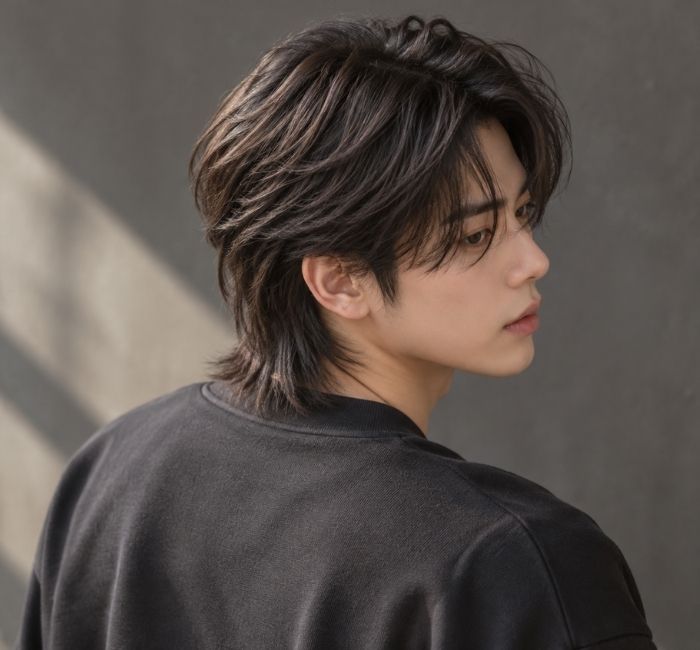
The wolf cut combines shorter, textured crown layers with longer sections toward the back. This creates a more expressive shape than a classic two-block cut.
The contrast can be subtle or dramatic. Thick hair needs enough shaping to control bulk, while fine hair requires careful layering to preserve fullness.
Decide how much difference you want between the crown and back. Heavier layers can look striking but may require more styling than a softer version.
Explain your preferred shape to the barber. A little texturising product can enhance separation, but the haircut should provide most of the structure.
Practical tip: If you want less daily styling, ask for softer crown layers and a less dramatic difference between the top and back.
11. Soft Korean Crop
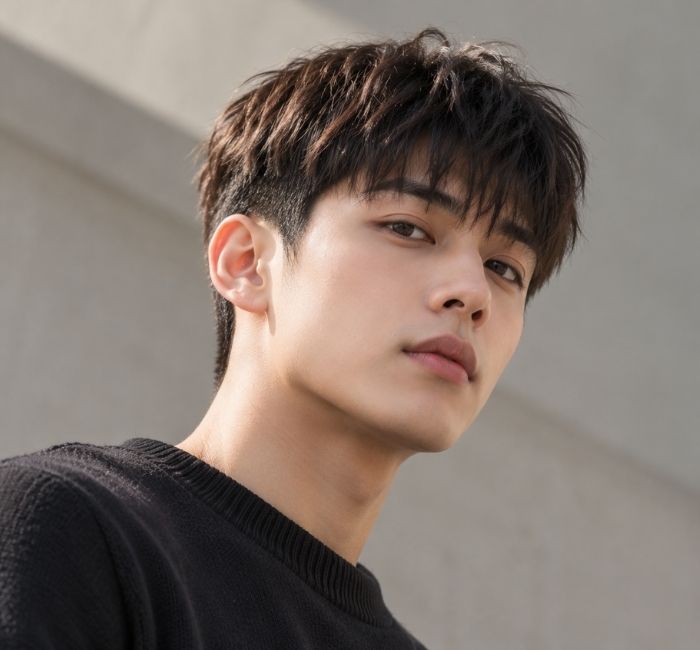
The soft crop keeps the top relatively short and uses a natural fringe instead of a heavy, straight line. It’s practical for men who want a modern appearance with less daily styling.
Your hairline and crown should influence the length. Cutting the fringe too short may expose more of your forehead than intended.
This style suits men who prefer not to arrange individual sections every morning. However, cutting everything too short can remove the texture that gives the crop its shape.
Ask for a short textured top, soft forward fringe, and suitable sides. After washing, arrange the fringe with your fingers and add a little matte product if needed.
12. Taper Fade with a Textured Top
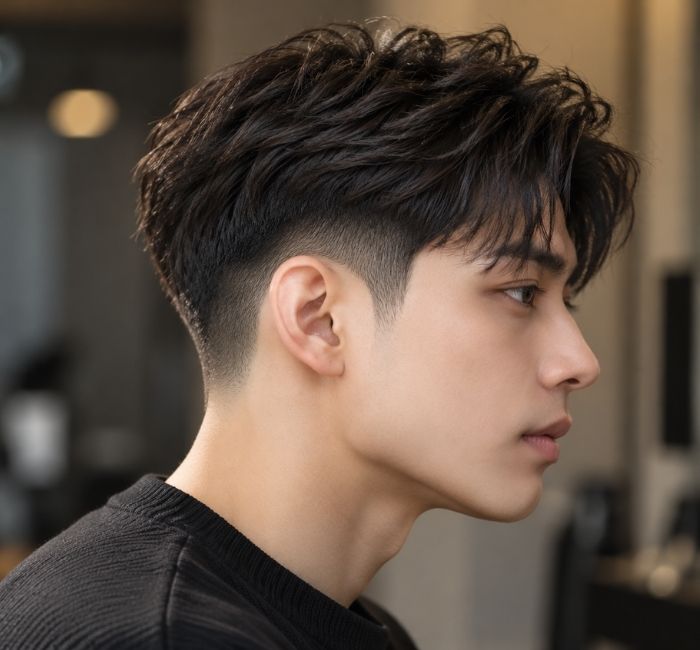
A taper fade gradually shortens the hair around the temples and neckline while keeping more length above. A textured top adds flexibility without making the whole cut short.
A low taper keeps more hair around the sides, while a higher fade creates stronger contrast. You can brush the top forward, sweep it sideways, or wear a loose part.
Consider maintenance before choosing a sharp fade. The sides may lose their crisp appearance as your hair grows, even when the top still looks good.
Choose a low or medium taper and explain your preferred contrast. Regular trims help maintain a defined fade, while the top can often be maintained separately.
Which Korean Haircut Styles Men Should Consider for Everyday Routine
When comparing options, start with your preferred result rather than picking a haircut name at random.
| Your priority | Styles to consider | Main consideration |
| Less daily styling | Soft crop, two-block | Keep the length manageable |
| Professional appearance | Side part, taper fade | Choose the right contrast |
| Face-framing fringe | Curtain hair, comma hair | Allow enough front length |
| Noticeable texture | Textured fringe, wolf cut | Match layers to hair density |
| Additional movement | Shadow, C-curl, S-curl perm | Consider cost and aftercare |
| Longer, flowing hair | Leaf cut, curtain hair | Allow time for shaping |
Use this table as a guide, not a strict set of rules. Someone with thick hair who dislikes blow-drying, for example, may prefer a short textured cut over a longer style that needs daily shaping.
What to Discuss Before Your Barber Starts Cutting
A reference photograph helps, but it doesn’t tell the barber everything. Bring front and side views: the front shows the fringe, while the side reveals the temple length and connection between the top and back.
I’d recommend choosing reference photographs that show the haircut from more than one angle, because the side profile can change the overall result just as much as the fringe.
Explain what you like and want to change. You might prefer curtain hair with a fringe above your eyes, or a tidy taper that doesn’t expose too much of the sides.
If you’re unsure about the length, ask your barber to start conservatively. Hair can be shortened during the appointment, but a fringe cut too short may take several weeks to grow back.
Ask how the haircut will look as it grows. A good style should remain manageable between appointments, not just on the day you leave the barbershop.
Common Haircut Mistakes to Avoid
Ignoring Your Natural Hair Texture
Ask your barber to adapt the cut to your hair texture and growth pattern. For example, a cut that suits thick, straight hair may need changes for fine or curly hair.
Cutting the Sides Too Short
Discuss the contrast between the top and sides before cutting begins. This matters particularly when choosing between a two-block cut and a taper fade.
Getting a Perm Without Checking Hair Condition
Tell your stylist about previous chemical treatments, including bleaching and colouring. Discuss whether your hair is suitable for another treatment and what aftercare it needs.
Using Too Much Styling Product
Too much product can leave the fringe oily and weigh fine hair down. Begin with a little, then add more only if needed.
Neglecting the Grow-Out Phase
Ask how the fringe, sides, and back will change as your hair grows. That way, you can choose a cut that’s still manageable as it grows.
Frequently Asked Questions
What Is the Simplest Korean Hairstyle for Men?
The soft crop is a practical starting point because it requires less length and is easy to manage. A basic two-block cut is another option that’s relatively easy to maintain.
Can Men With Thin Hair Wear These Haircuts?
Yes. A carefully cut fringe or subtle layers can make fine hair appear fuller. Ask your barber to preserve density and avoid excessive thinning.
Can These Hairstyles Be Achieved Without a Perm?
Yes. Many styles can be created with the right haircut, blow-drying, and a little styling product. A perm is optional.
How Often Should I Get My Haircut Trimmed?
Closely tapered sides may need trimming every three to five weeks. Longer cuts can last longer between appointments, depending on growth and personal preference.
Can Men With Naturally Curly Hair Choose These Styles?
Yes. A barber can adapt the length and layers to suit natural curls. Reference photographs showing similar hair textures can help communicate your preferred result.
Conclusion
My biggest takeaway is that the best haircut isn’t necessarily the trendiest one; it’s the one that suits your natural hair, preferences, and daily routine.
A classic two-block or soft crop may suit everyday life, while curtain hair, comma hair, and layered styles offer more opportunities for personal expression.
Choose a reference photograph, discuss the details with your barber, and consider how much maintenance you’re willing to manage. A good haircut should work as your hair grows, not just look attractive after a salon visit.



Leave a Reply