
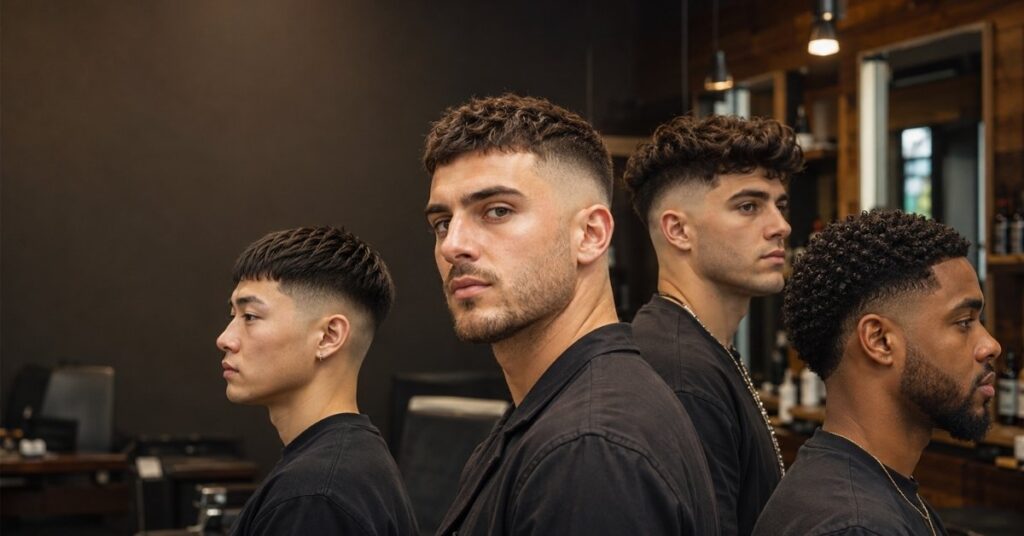
A fade haircuts isn’t really a hairstyle on its own, it’s the foundation underneath almost every men’s cut trending right now. Textured crops, pompadours, mullets, buzz cuts, even curly tops all sit on top of some version of a fade.
That’s exactly why the keyword refuses to slow down: guys aren’t just searching for “a fade,” they’re trying to figure out which fade works with their hair, their face, and their budget before they sit in the chair.
This guide breaks down every fade type, which top styles pair with each one, how to pick based on your face shape and hair texture together, what it actually costs, how long it lasts, and how to avoid the most common reason guys walk out of the barbershop disappointed: asking for the wrong thing.
What Is a Fade Haircut?
A fade is a haircut technique where the hair gradually shortens from longer at the top to little or no hair at the bottom, blending smoothly instead of cutting off in a hard line like a traditional taper. The “fade” refers to how gradual that transition is the smoother the blend, the sharper the cut looks.
Where the fade starts on your head (near the hairline, at the temple, or higher up near the crown) is what separates a low fade from a mid fade from a high fade.
Why Fades Are Still Dominating Barbershops in 2026
A few things are keeping fades on top this year instead of fading out (pun intended):
- They pair with everything. Whether the top is slicked back, messy and textured, or growing into a mullet, a fade underneath keeps the whole cut looking intentional instead of just unkempt.
- The low taper fade has become the default ask. It’s softer than a full skin fade and sharper than a basic taper, which makes it low-risk for guys who want to look put-together at work and still have an edge outside it.
- High fades are riding a nostalgia wave. Spiky tops, messy forward fringe, and Y2K-inspired styling are back, and a high fade is what makes those looks read as deliberate rather than dated.
- 2026 grooming overall is leaning natural. Matte finishes and texture have replaced the glossy, heavily-styled look of a few years ago, and fades work well with that because the sides stay clean while the top can be as messy as you want.
Fade Types, Compared
Before picking a style, it helps to see the core fade types side by side. This is the part most guides skip; they’ll mention maintenance in one paragraph and face shape three sections later. Here it is in one place.
| Fade Type | Where It Starts | Contrast Level | Touch-Up Frequency | Best For |
| Low Fade | About an inch above the hairline | Subtle | Every 4–5 weeks | First-timers, office/formal settings |
| Mid Fade | At the temple | Moderate | Every 3–4 weeks | Most face shapes, everyday versatility |
| High Fade | 2–3 inches above the ear | Sharp, dramatic | Every 2–3 weeks | Statement looks, thicker top styles |
| Low Skin Fade | Near the hairline, fading to bare skin | Sharp but low on the head | Every 2–3 weeks | Guys who want contrast without height |
| Mid Skin Fade | At the temple, fading to bare skin | Sharp, balanced | Every 2 weeks | The most requested skin fade variation |
| High Skin Fade | High on the head, fading to bare skin | Maximum | Every 2 weeks | Bold looks, thick or voluminous tops |
| Low Taper Fade | Follows the hairline, minimal contrast | Very subtle | Every 4–6 weeks | Corporate settings, first fade ever |
| Mid Taper Fade | Temple area, soft blend | Subtle to moderate | Every 4 weeks | Everyday wear, easy to grow out |
| High Taper Fade | High on the head, soft blend (no bare skin) | Moderate | Every 3 weeks | Guys who want height without a hard skin line |
| Drop Fade | Curves downward behind the ear | Moderate to sharp | Every 3 weeks | Mullets, mohawk-adjacent styles |
| Burst Fade | Curves around the ear only, leaving length elsewhere | Localized contrast | Every 3–4 weeks | Curly tops, mullets, undercuts |
| Temple Fade | Only around the temples, rest stays longer | Subtle, localized | Every 4–5 weeks | Guys who don’t want a full fade commitment |
| Shadow Fade | Anywhere on the head, never goes fully bare | Very soft, almost blurred | Every 4–5 weeks | A subtle look for conservative workplaces |
| Bald Fade | Any height, but drops to true bare skin with a razor finish | Maximum | Every 2 weeks | Sharpest possible line, special occasions |
| Frisco Fade | High on the sides, flat top | Sharp | Every 2–3 weeks | Guys who want a flat top with clean sides |
| Ivy League Fade | Low to mid, paired with a side part | Subtle to moderate | Every 3–4 weeks | Classic, professional styling |
| Afro Fade | Low or mid, blending into natural afro texture on top | Moderate | Every 3–4 weeks | Coily and thick natural hair |
| Blowout Fade | Low, blending into a rounded blown-out top | Moderate | Every 2–3 weeks | Voluminous top styles |
| Undercut Fade | High and disconnected-looking, but blended | Sharp | Every 3–4 weeks | Slicked-back or textured long tops |
| V-Shape Fade | Nape only, shaped into a V | Localized | Every 4 weeks | Longer hair at the back, tidy nape |
| Razor Fade | Any height, finished with a straight razor | Extra crisp | Every 2 weeks | The cleanest possible edge |
| Line Up (Edge-Up) Fade | Paired with any fade, sharpens the front hairline | Sharp along the edge | Every 1–2 weeks | Keeping the hairline crisp between full cuts |
Every Fade Type, Explained
Low Fade
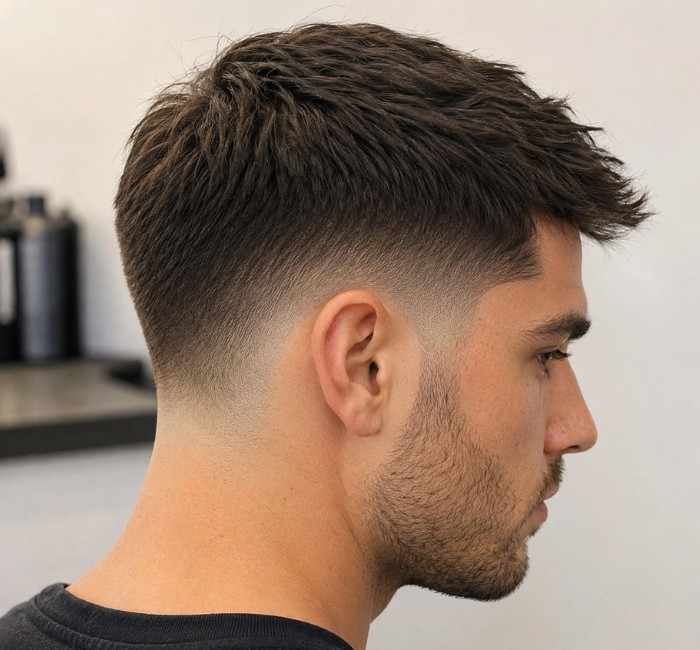
The safest entry point if you’ve never had a fade before. It starts about an inch above your natural hairline, so the contrast is soft and it grows out without looking patchy in between visits. Works with almost any hair type and holds up well in professional settings.
Mid Fade
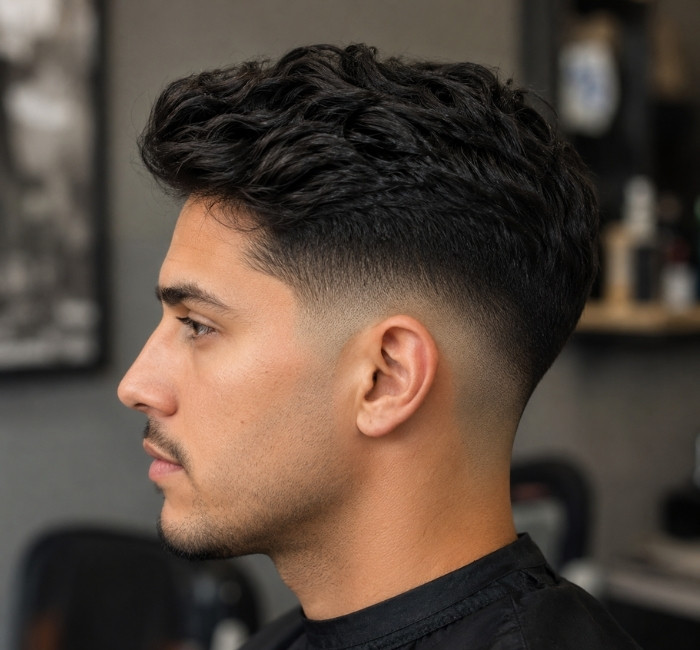
Starts right at the temple and gives more visible contrast than a low fade without going dramatic. This is the middle ground barbers usually recommend if you’re not sure which direction to go, sharp enough to look intentional, subtle enough to wear anywhere.
High Fade
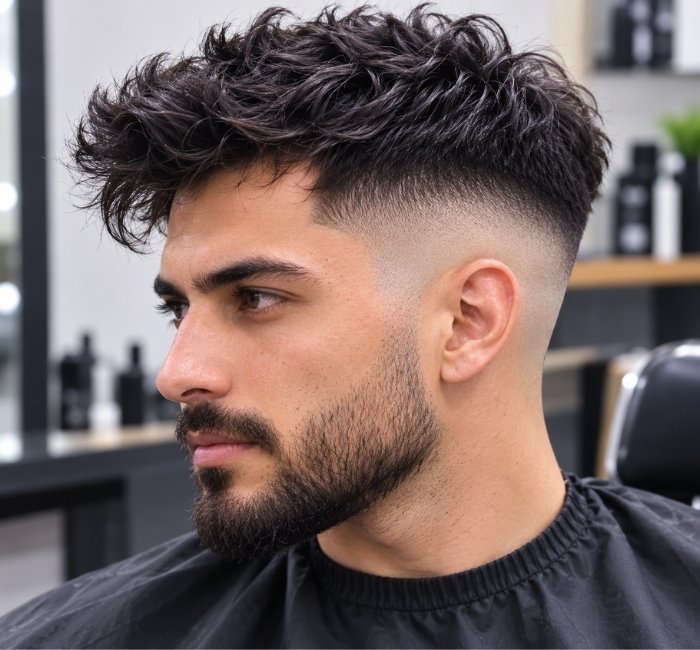
Starts two to three inches above the ear, so the transition from skin to hair happens fast and high on the head. It’s the go-to for guys pairing it with a longer, textured top. The height of the fade is what makes a messy fringe or spiky top look styled instead of just long.
Low Skin Fade
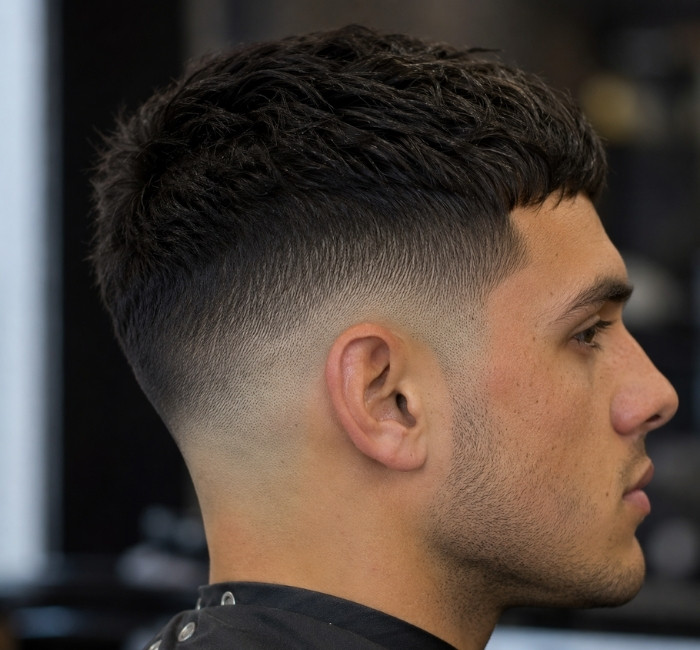
A low fade that drops all the way to bare skin near the hairline instead of stopping at short hair. It keeps the sharpness of a skin fade while staying close to the head, so it’s a good middle ground for guys who want contrast but not too much of it on display.
Mid Skin Fade
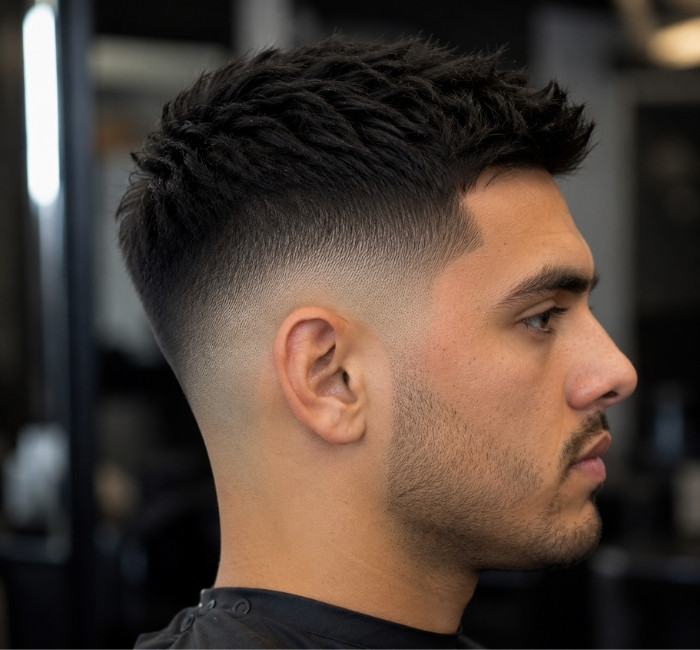
The most commonly requested skin fade. Starting at the temple and dropping to bare skin, it balances noticeable contrast with a shape that suits nearly every face. Barbers often default here when a client just says “skin fade” without more detail.
High Skin Fade
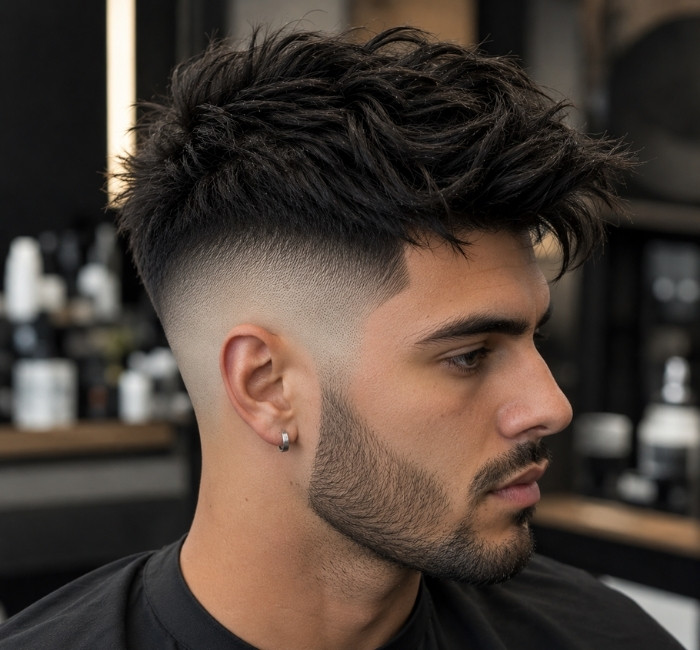
The boldest version bare skin starting high on the head, leaving a hard line just below where the longer top begins. Best paired with volume or texture on top, since the contrast alone can look unfinished without something happening up there.
Low Taper Fade
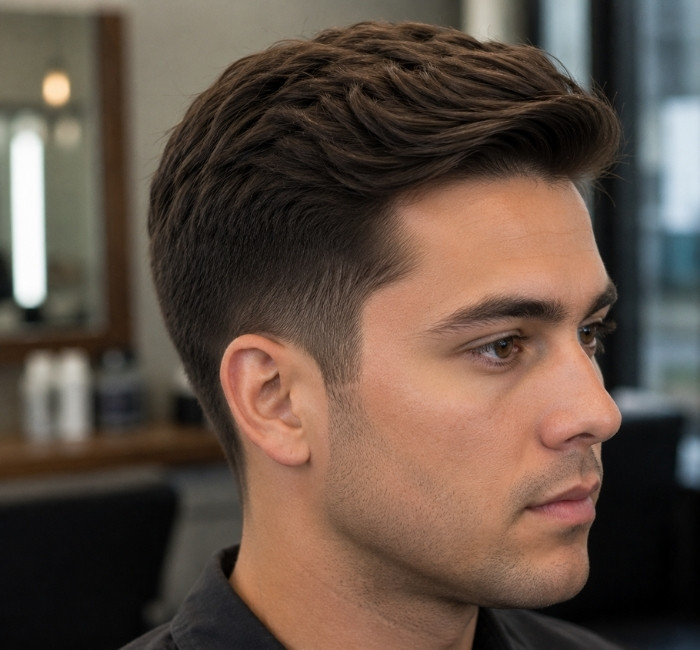
Follows the hairline closely with almost no visible hard line, making it the easiest fade to get approved in strict dress codes. It’s often confused with a low fade, but a taper blends more gradually and never drops to bare skin.
Mid Taper Fade
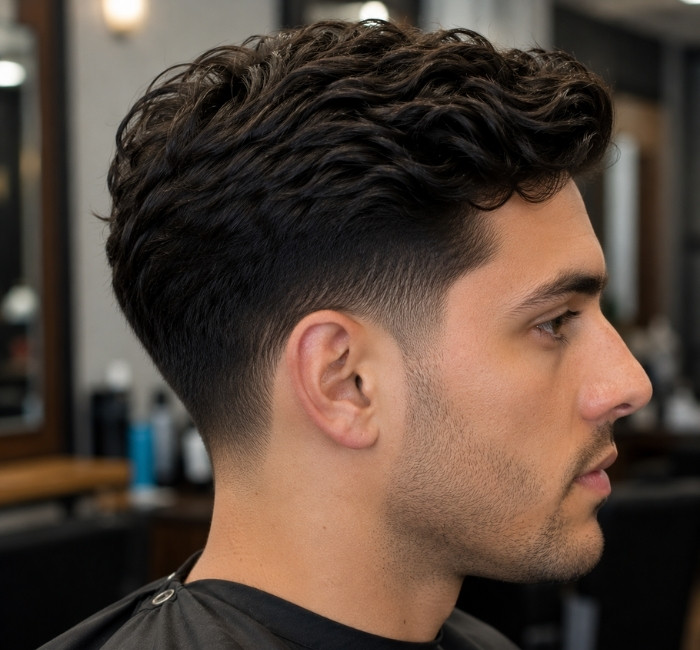
A step up in contrast from the low taper without crossing into “fade” territory, still no bare skin, just a smoother, more visible blend starting at the temple. Popular for guys who want structure without commitment to upkeep.
High Taper Fade
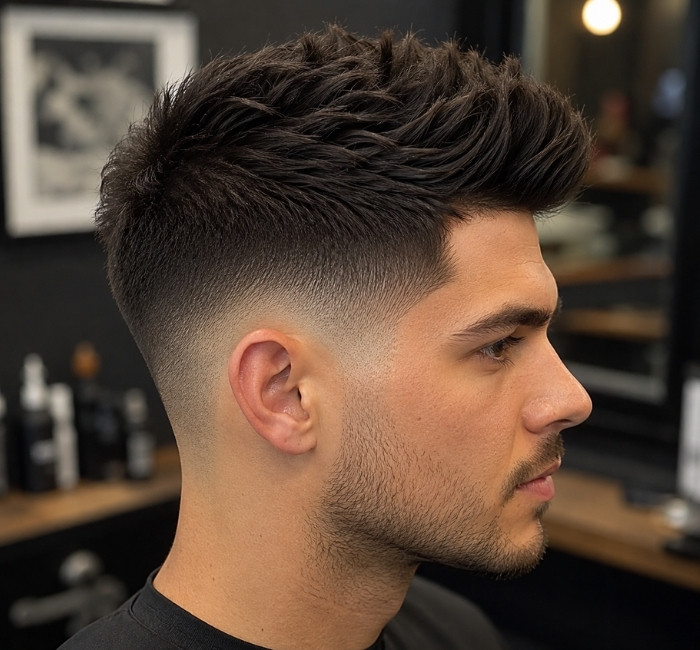
Height and contrast without the maintenance of a skin fade, since it never fades to bare skin. This gives the visual impact of a high fade with a slightly longer growing-out window between cuts.
Drop Fade
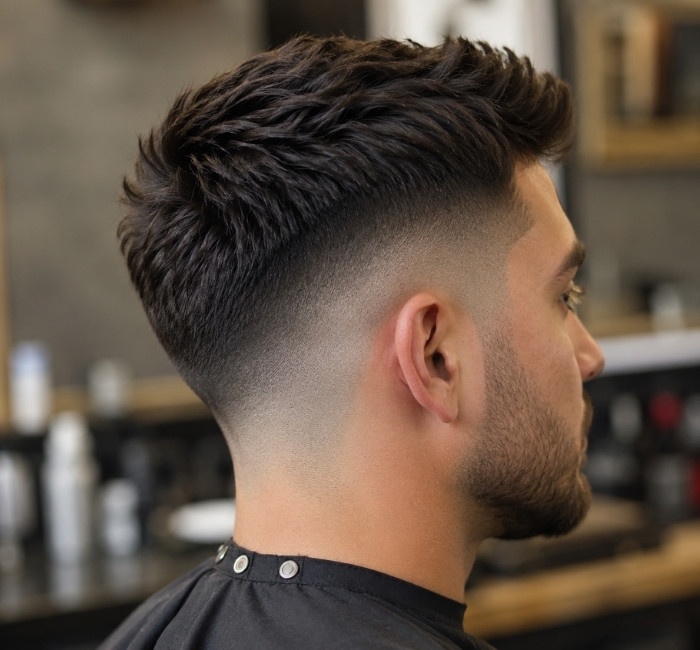
The fade line curves downward behind the ear instead of running straight across the head. It pairs especially well with mullets and longer top styles because the drop shape adds movement instead of a stiff, straight cut.
Burst Fade
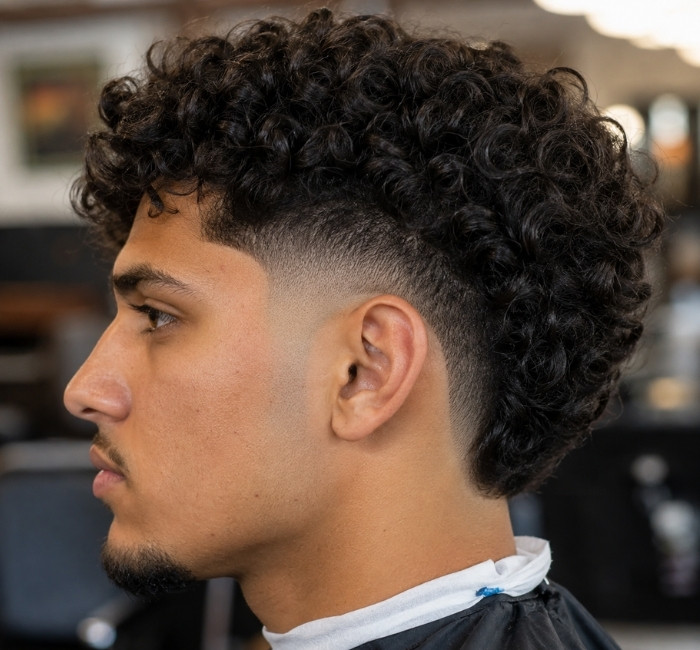
Instead of running across the whole side of the head, a burst fade curves in a semicircle around just the ear, leaving the rest of the hair longer. It’s a popular choice for curly hair and mullet-adjacent cuts because it doesn’t force short sides all the way around.
Temple Fade
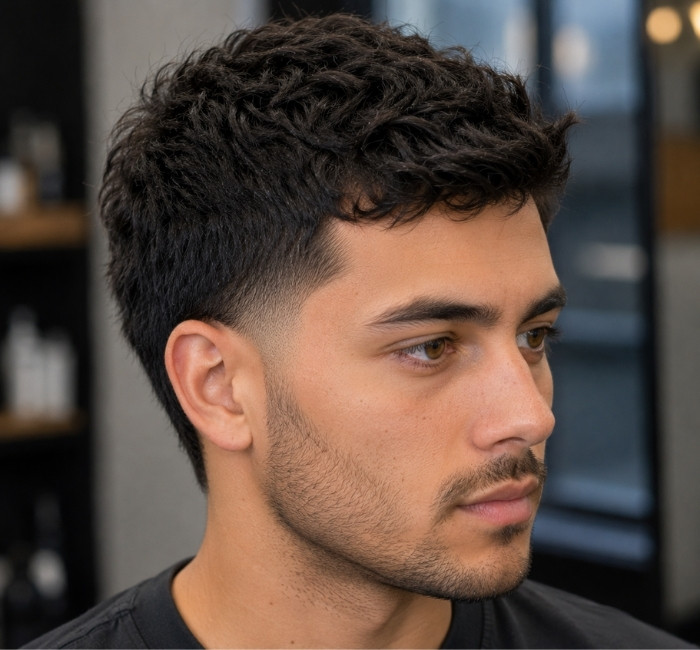
A subtle fade confined to just the temple area while the rest of the hair stays at its natural length. It’s the option for guys who want a cleaner hairline without committing to a full fade down the sides and back.
Shadow Fade
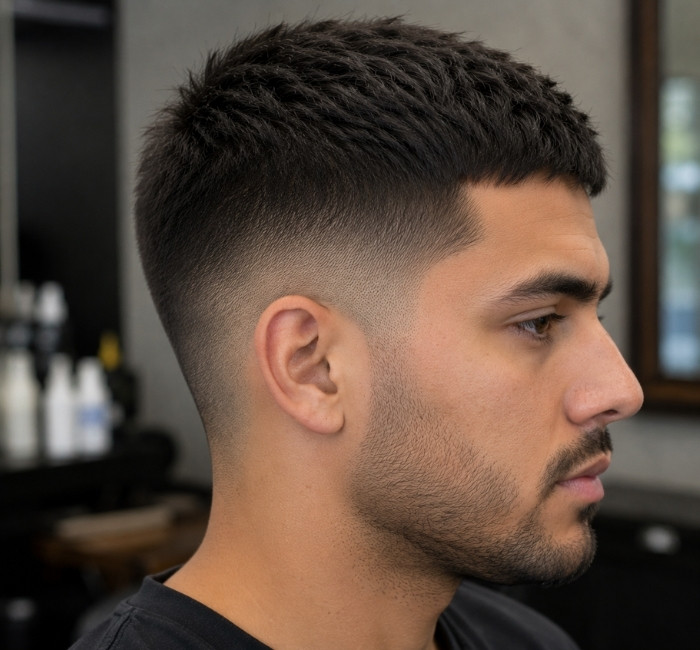
A softer alternative to a skin fade that never actually reaches bare skin instead uses very short clipper guards to create a blurred, shadow-like blend.
It reads as clean and deliberate without the stark contrast, which makes it a safer choice for conservative workplaces.
Bald Fade
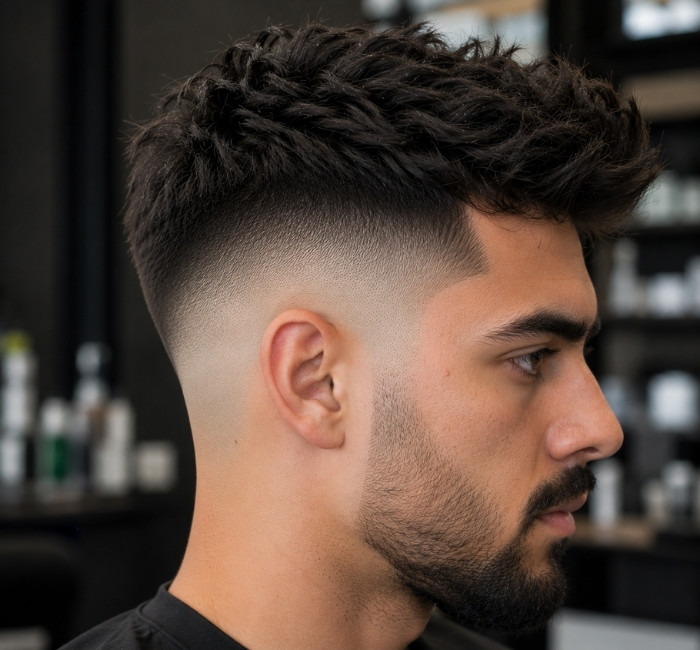
Often used interchangeably with skin fade, but technically the most extreme version: a razor is used to make the base completely bald rather than just clipper-short, leaving zero shadow at all. It’s the sharpest look available and also the fastest to need a touch-up.
Frisco Fade
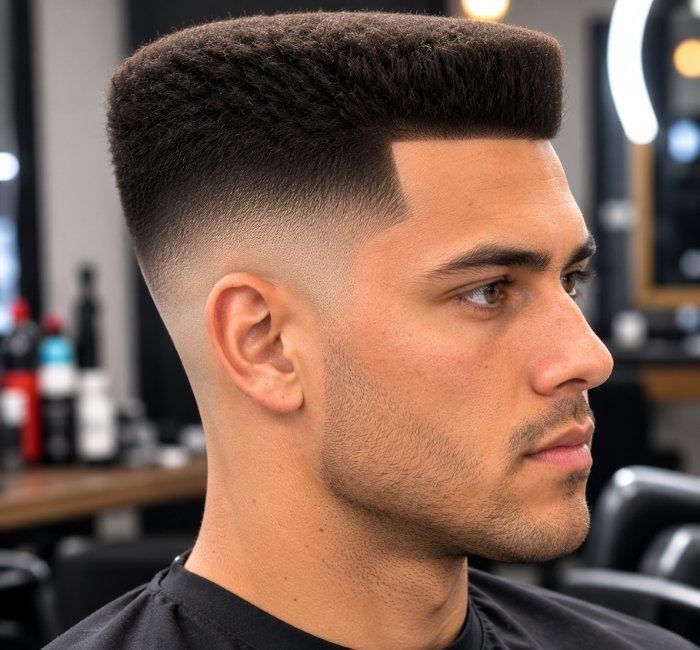
Pairs a high, sharp fade on the sides with a flat top, creating a strong geometric contrast between the flat plane on top and the tapered sides. It’s a bolder, more structured take than most fade-and-top combinations.
Ivy League Fade
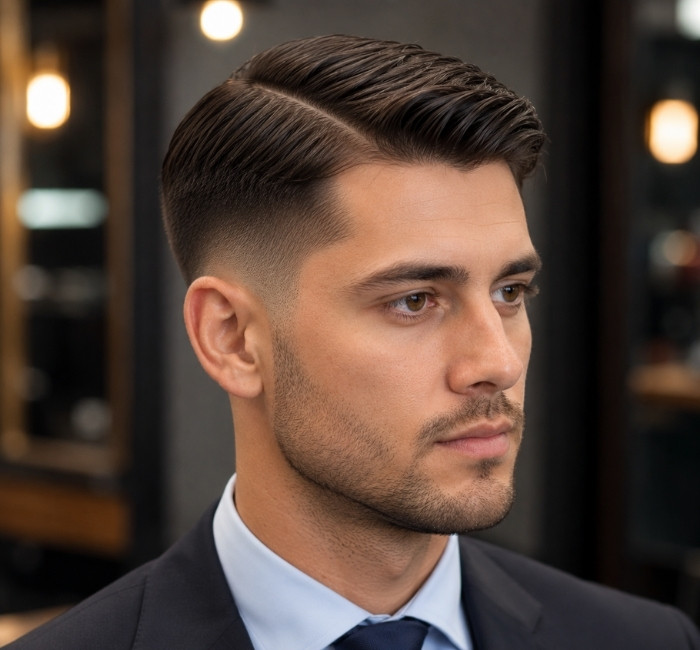
A low-to-mid fade paired with a classic side part on top, rooted in the traditional Ivy League cut. It reads as polished and professional, making it a favorite for corporate environments that still want a fade underneath.
Afro Fade
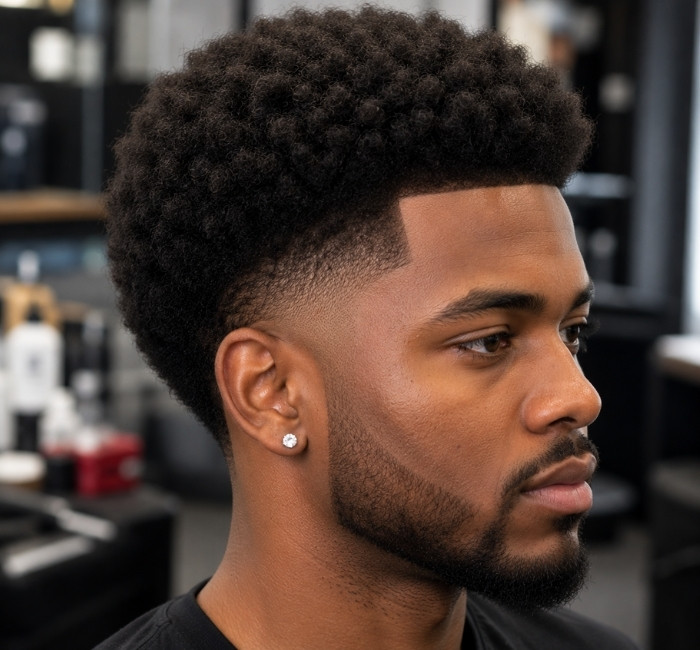
A low or mid fade on the sides that blends into a natural afro texture on top, keeping the sides clean while letting coily or thick hair keep its natural volume and shape up top.
Blowout Fade
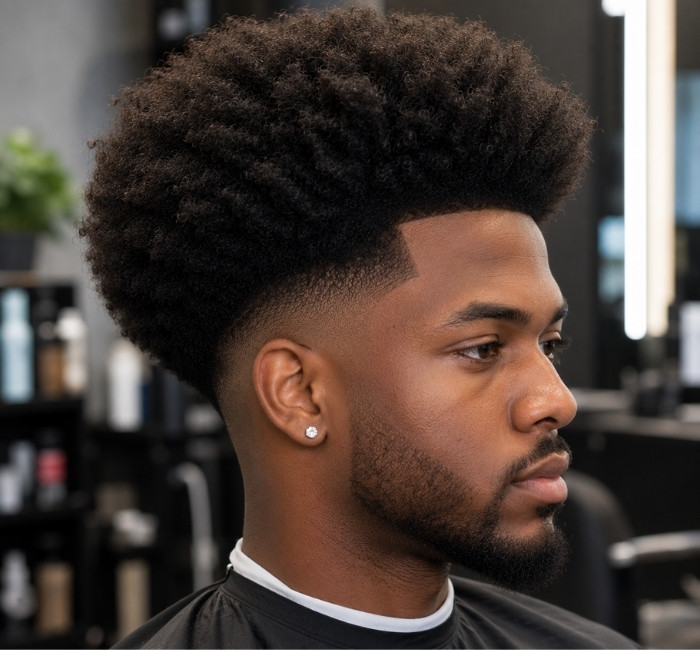
A low fade that blends into a rounded, blown-out top for extra height and volume. Common in Black hairstyling, it needs a blow dryer and round brush to maintain the rounded shape on top.
Undercut Fade
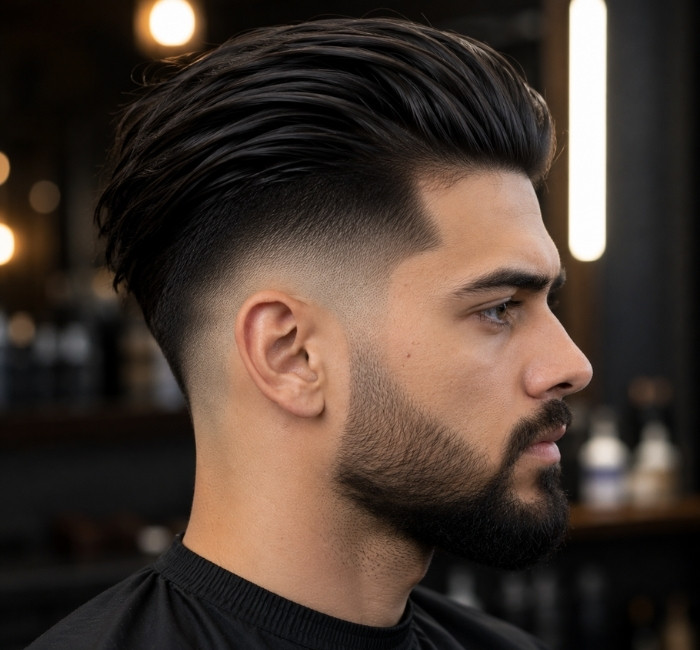
Looks disconnected at first glance but is actually blended, giving the sharp, high-contrast look of an undercut with a smoother transition than a true hard-part undercut. Works especially well under slicked-back or heavily textured long tops.
V-Shape Fade
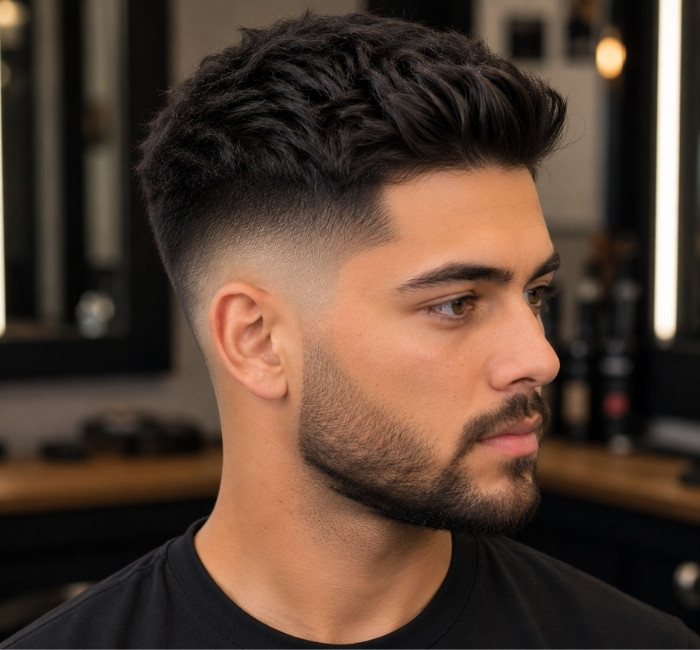
A fade shaped into a V at the nape of the neck rather than following a straight or curved line, common with longer hair at the back. It keeps the neckline tidy without affecting the fade on the sides.
Razor Fade
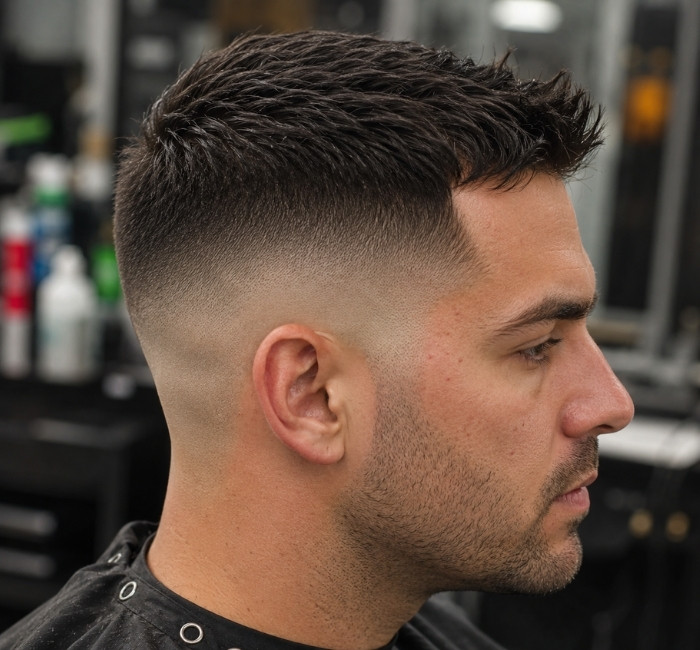
Any fade low, mid, or high finished with a straight razor instead of clippers for the crispest possible edge. It looks sharper for longer at the line itself, though the surrounding fade still grows out at the normal rate.
Line Up (Edge-Up) Fade
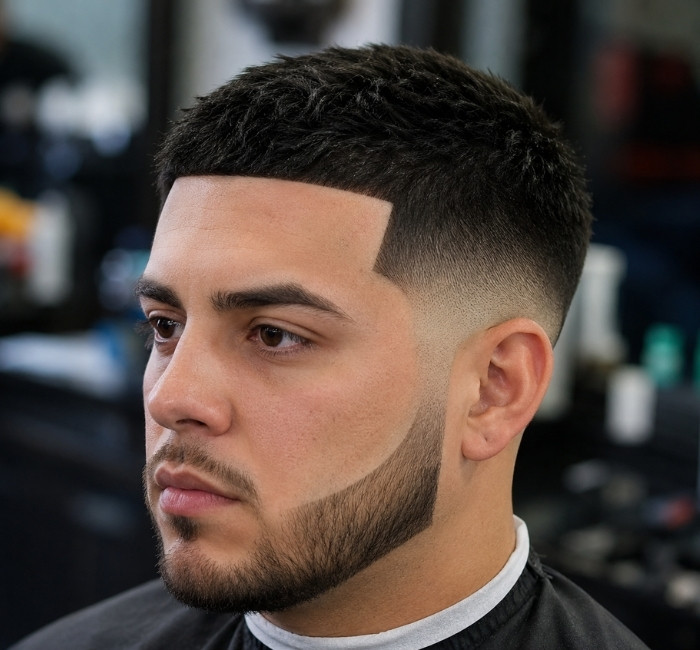
Not a fade on its own, but a sharpening of the front hairline that pairs with any fade type. Getting a line-up between full haircuts is a common way to keep a fade looking fresh without a full rebook.
Best Fade + Top Combos for 2026
Since a fade is really the base layer, here’s what’s actually pairing with it right now:
- Textured Crop Fade short, choppy layers on top with a mid or low fade underneath. Low-maintenance and works for straight or wavy hair.
- Pompadour Fade 3–4 inches on top with a strong front lift, paired with a mid or high fade for contrast.
- Mullet Fade a drop or burst fade on the sides with length left at the back. The fade keeps it from reading as sloppy.
- Curly Top Fade a burst or low fade that lets natural curl pattern do the work on top without competing with a heavy fade underneath.
- Slicked-Back Fade mid or high fade with the top combed straight back using a strong-hold pomade.
- Spiky Fade high fade with 2–3 inches on top, worked into points with matte clay.
- Buzz Cut Fade an overgrown buzz on top blended into a low or mid fade for a softer transition than a straight buzz.
- Faux Hawk Fade high fade on the sides with length built up in the center using clippers and a razor to define the shape.
Which Fade Fits Your Face and Hair Type
Most guides tell you face shape rules in one section and hair type rules in another, which means you’re stuck reconciling two different lists yourself. Here’s both together:
- Round face + straight or wavy hair: A high fade with height on top elongates the face. Avoid low fades with flat tops; they add width you don’t need.
- Round face + curly or coily hair: A burst fade paired with volume on top does the same elongating job while working with your natural texture instead of against it.
- Square face + any hair type: Mid fades soften strong jawlines without competing with them. Skin fades can look too harsh here unless paired with textured length on top.
- Oval face: The most flexible shape low, mid, or high all work. Let hair type and maintenance tolerance decide instead.
- Heart-shaped face: Low or temple fades keep width at the bottom of the face, balancing a narrower jaw and wider forehead.
- Fine or thin hair: Low or taper fades reduce the contrast between “faded” and “not faded,” which hides thinning better than a sharp skin fade would.
- Thick or coarse hair: Higher fades and skin fades handle thick hair well since there’s more length up top to offset the contrast.
How Much Does a Fade Haircut Cost in 2026?
Pricing depends heavily on the barbershop tier and city, but here’s a realistic range:
- Basic barbershop/chain (Great Clips-style): $20–$35
- Standalone local barbershop: $30–$50
- Premium/specialty barbershop: $45–$75+
- Add-ons that raise the price: line-up/edge-up (+$5–$15), beard trim (+$10–$20), design/pattern shaved into the fade (+$10–$25)
Skin fades and high fades usually cost slightly more than low fades or tapers since they take longer to execute cleanly.
How Long a Fade Lasts and When to Rebook
- Week 1: Sharpest fade will ever look. This is the reference point for how you want it to look at every future cut.
- Week 2–3: The line starts to soften as hair grows in. Skin and high fades notice this first since they have the most contrast to lose.
- Week 4: Low fades and tapers still look intentional. Skin and high fades usually look grown-out and need a rebook.
- Rule of thumb: rebook every 2 weeks for skin/high fades, every 3–4 weeks for mid fades, every 4–6 weeks for low fades and tapers.
Can You Fade Your Own Hair at Home?
It’s possible with the right clippers and patience, but it’s the one part of a fade genuinely worth leaving to a professional the first few times. If you want to try:
- Use clippers with adjustable guard lengths (0.5mm increments matter for a smooth blend).
- Start with your longest guard at the top of where you want the fade to begin.
- Work upward, flicking motions never straight down and drop one guard size as you move down.
- Blend the lines with a lever-adjustable clipper on a low setting, going over the transition points repeatedly.
- Use a mirror setup (front and back) and take it slow; you can always take more off, not put it back.
Realistically, this works best for touch-ups on a low fade or taper between barber visits, not for skin fades or high-contrast fades where a bad blend line is obvious.
How to Ask Your Barber for the Right Fade
The single biggest reason guys leave unhappy with a fade isn’t the barber’s skill, it’s a vague request. “Just fade it” gives a barber no information about where to start the fade or how sharp to make it. Instead:
- Name the type specifically: “low fade,” “mid fade,” “high skin fade,” etc.
- Say where you want it to start: “start the fade an inch above my ear.”
- Bring a reference photo barbers work from images faster and more accurately than descriptions.
- Mention your face shape or any past cuts you didn’t like, so the barber can adjust instead of repeating the same mismatch.
- If you plan to touch it up at home between visits, say so some barbers will leave a slightly longer blend zone to make that easier.
FAQ
What’s the difference between a fade and a taper? A taper follows your natural hairline closely with subtle contrast. A fade creates a more dramatic gradual blend and can start well above the hairline.
Which fade is the lowest maintenance? Low fades and taper fades need touch-ups every 4–6 weeks, the longest gap of any fade type.
Can any hair type get a fade? Yes. Straight, wavy, curly, and coily hair can all take a fade; the type of fade (burst vs. skin vs. low) just needs to match your texture.
Is a skin fade the same as a bald fade? Yes, both terms describe a fade that tapers all the way down to bare skin rather than stopping at short hair.
How do I stop my fade from growing out unevenly? Rebook based on your fade type’s maintenance window, and consider a light at-home touch-up with clippers between visits if you have a low fade or taper.
Do fades work for receding hairlines? Yes low fades and temple fades in particular can actually soften the look of a receding hairline better than longer, undefined styles.



Leave a Reply