

The men’s middle part has moved far beyond the soft curtain hairstyle associated with the 1990s. Today, it can be worn short and textured, paired with a taper fade, shaped into a Korean two-block cut or grown into a relaxed flow hairstyle.
The real challenge is not finding a picture of the haircut. It is knowing which version will work with your face shape, hairline, natural texture and daily routine.
A good middle part should create movement around the face without looking flat, greasy or uneven. That depends on the right haircut, enough length at the front and a styling method that works with your natural growth pattern.
This guide explains the best middle-part variations, what to ask your barber, how to style the cut and how to fix common problems such as flat roots, visible scalp and uneven curtains.
What Is a Men’s Middle Part Haircut?
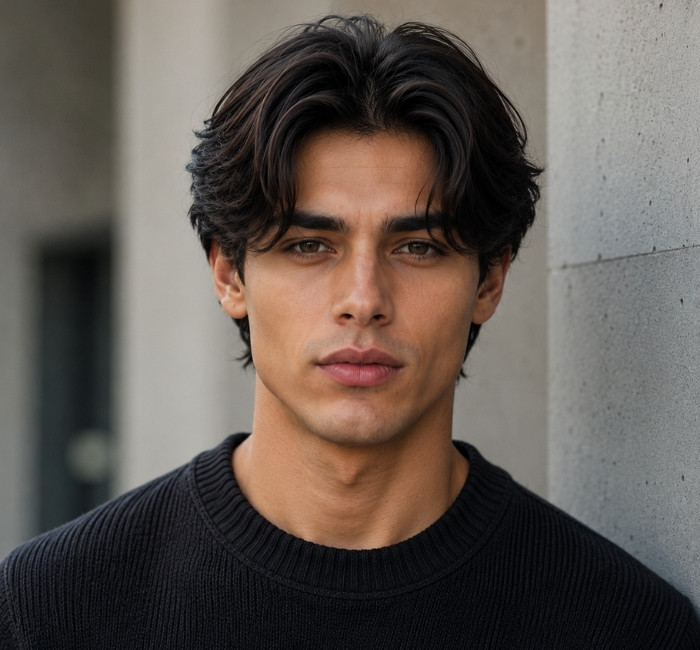
A middle part is a hairstyle in which the hair is divided near the centre of the head and directed towards both sides of the face. In longer versions, the front sections fall around the forehead like curtains. Shorter versions use texture, layering or tapered sides to create a cleaner and more modern shape.
The middle part is sometimes called curtain hair, but the two terms are not always identical. A centre part simply describes the position of the parting.
Curtain hair normally includes longer front pieces that curve away from the face. A man can therefore have a short centre part without wearing traditional curtains.
Modern versions also borrow elements from fades, layered cuts and Korean hairstyles. For example, a two block haircut keeps the sides and back shorter while leaving enough length on top to form a soft centre part.
Men who are still comparing different styles can also explore the wider guide to the best men’s haircuts before deciding whether a centre part fits their overall look.
How Long Does Your Hair Need to Be?
Most men need approximately four to six inches of length at the front to create a noticeable curtain effect. However, the required length depends on the result you want.
| Front hair length | Result you can expect |
| 2–3 inches | Short, textured centre part |
| 3–4 inches | Neat middle part with a taper |
| 4–6 inches | Classic curtain shape |
| 6 inches or longer | Flowing or pushed-back middle part |
Hair length alone is not enough. The cut also needs suitable layers. One-length hair can become heavy and fall flat, especially if it is thick. Carefully placed layers remove unnecessary bulk and help the front sections bend away from the face.
Will a Middle Part Suit Your Face and Hair Type?
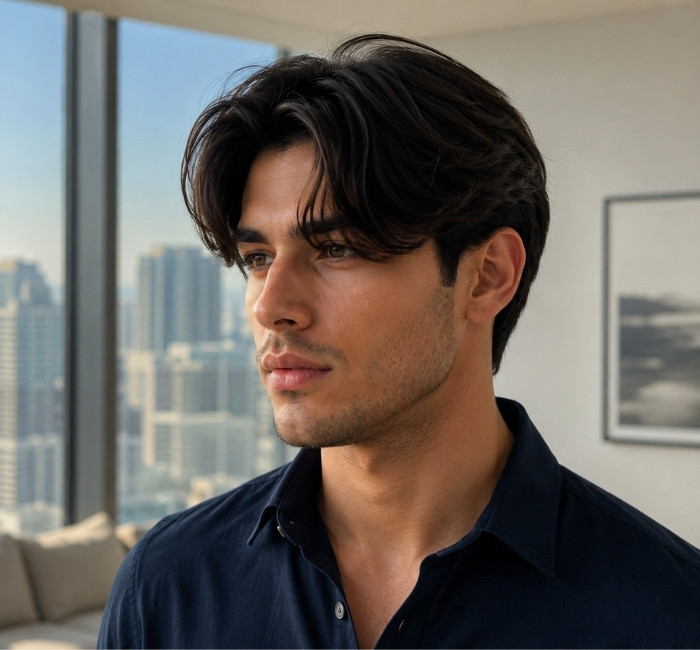
A middle part can work for many men, but it should be adjusted rather than copied exactly from a photograph. Face shape, forehead size, hair density and natural growth direction all affect the final result.
Oval Face
Oval faces can usually wear most middle-part variations. Classic curtains, short centre parts, long flow styles and low tapers can all work because the face already has balanced proportions.
Avoid adding excessive height if your face is already long. A softer style that creates some width around the temples may look more balanced.
Round Face
A round face normally benefits from volume at the roots and slightly tighter sides. This creates vertical movement and prevents the hairstyle from adding too much width around the cheeks.
A middle part with a low or mid taper can work particularly well. Keep the front lifted rather than allowing both sides to sit completely flat against the face.
Square Face
Square faces have a strong jawline and defined angles. Soft curtains, waves and feathered layers can reduce some of that sharpness without hiding the facial structure.
Avoid an extremely straight, rigid centre line with equally rigid sides. A slightly relaxed part and natural movement usually create a more flattering result.
Long or Rectangular Face
A long face needs width rather than excessive height. Keep some fullness at the sides and avoid a tall, puffed-up top.
Medium-length curtains that fall around the temples can create better proportions. A high skin fade may make the face appear even longer, so a taper or scissor-cut side is often a safer option.
Heart-Shaped Face
Heart-shaped faces are wider at the forehead and narrower around the chin. Face-framing curtains can soften the forehead, while some fullness near the ears can balance the narrower lower face.
Medium-length, layered versions are particularly useful. MangroomHub’s guide to layered haircuts for men explains how layers can remove weight from thick hair or create extra movement in finer hair.
Does It Work With a Large Forehead?
Yes, but the front sections should fall slightly across the upper corners of the forehead instead of being pushed completely backwards. A soft, curved curtain can reduce the appearance of forehead width.
A high-volume style that exposes the entire hairline may have the opposite effect. Ask for longer face-framing pieces and avoid cutting the fringe too short.
Does It Work With a Receding Hairline?
It depends on the location and level of recession. Longer curtains may soften slightly receding corners if there is still enough density at the front. However, a perfectly straight centre line can expose thinning near the middle of the scalp.
An off-centre part, loose texture or forward-curving fringe may provide better coverage. Men with clearly progressing hair loss should speak to a qualified dermatologist rather than relying only on a haircut to conceal it.
Best Men’s Middle Part Haircuts
The right variation should match your natural texture and the amount of time you are prepared to spend styling it. These are the most practical options rather than minor variations created only to make a longer hairstyle list.
1. Classic Curtain Haircut

The classic curtain haircut uses a clear centre part with medium-length front sections that fall on both sides of the forehead. It has a soft, relaxed shape and works especially well with straight or slightly wavy hair.
Ask for layered length through the top, with enough weight removed to prevent the front from hanging like two solid panels. A scissor-cut taper around the ears keeps the haircut neat without making it look disconnected.
2. Short Textured Middle Part
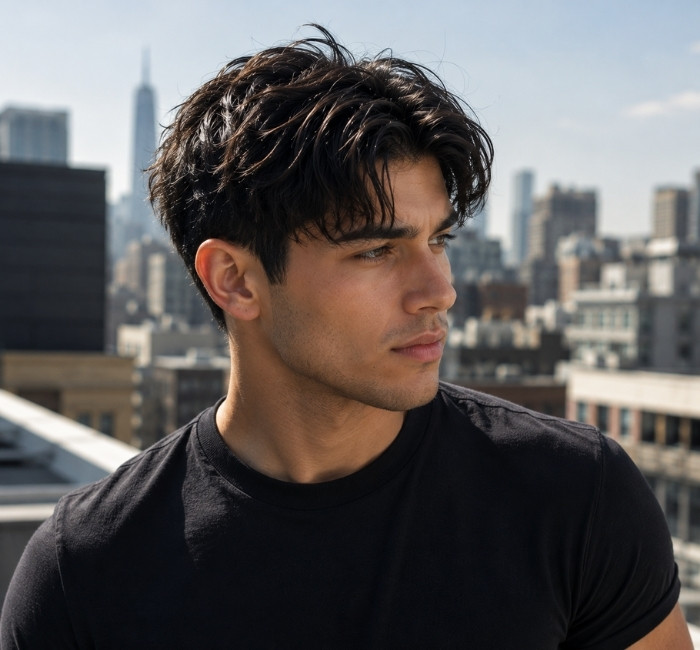
A short middle part keeps approximately three inches of length at the front and uses choppy layers to create separation.
It is easier to maintain than traditional curtains and works well for men who want a subtle version of the trend.
This style usually looks best with a low taper rather than a severe skin fade. Apply a small amount of texture powder or matte paste after blow-drying to keep the finish light.
3. Middle Part With Low Taper
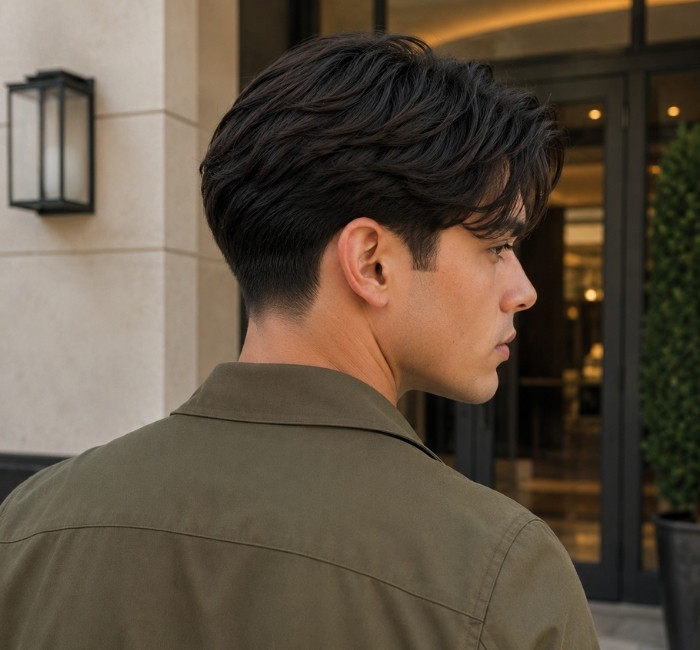
A low taper cleans the sideburns, around the ears and the neckline while preserving fullness through the upper sides. This creates a smooth transition into the longer hair on top.
It is a useful choice for professional settings because the haircut remains tidy even when the top is worn naturally. It also grows out more softly than a high fade.
4. Middle Part Fade
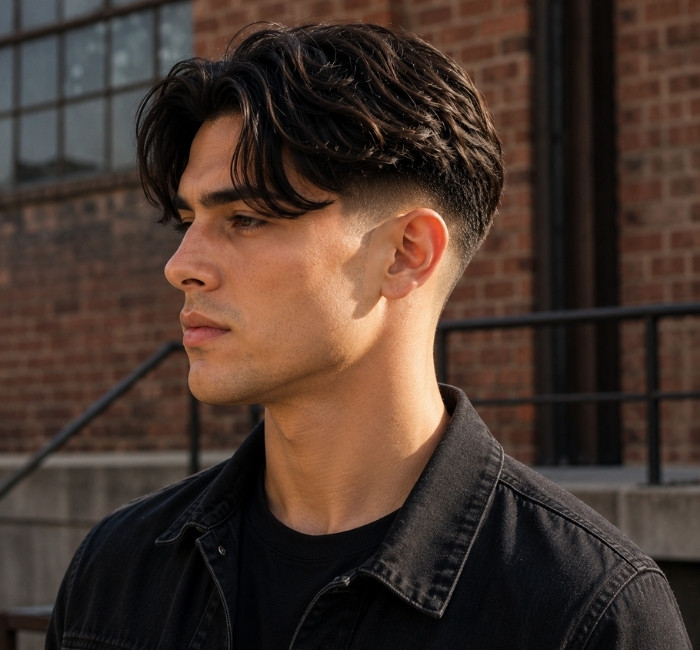
The middle part fade creates stronger contrast between the longer top and the shorter sides. A low or mid fade is usually easier to balance with curtain hair than a high fade.
This version suits men who prefer a sharper barbershop finish. However, it needs more frequent maintenance because the clean fade loses its definition as the sides grow.
5. Wavy Middle Part

Natural waves give the hairstyle movement without requiring heavy products. The barber should cut the hair according to the wave pattern rather than forcing every section to sit at the same length.
Use a lightweight curl cream or styling cream on damp hair. Scrunch the front sections gently and let the waves form instead of repeatedly combing through them.
6. Curly Middle Part

Curly hair creates a fuller and more expressive version of the middle part. The parting does not need to be perfectly straight; a natural centre separation often looks better.
The barber should shape the haircut curl by curl and avoid removing too much weight near the temples. A diffuser can help preserve definition, but excessive heat can increase dryness and frizz.
7. Korean Two-Block Middle Part
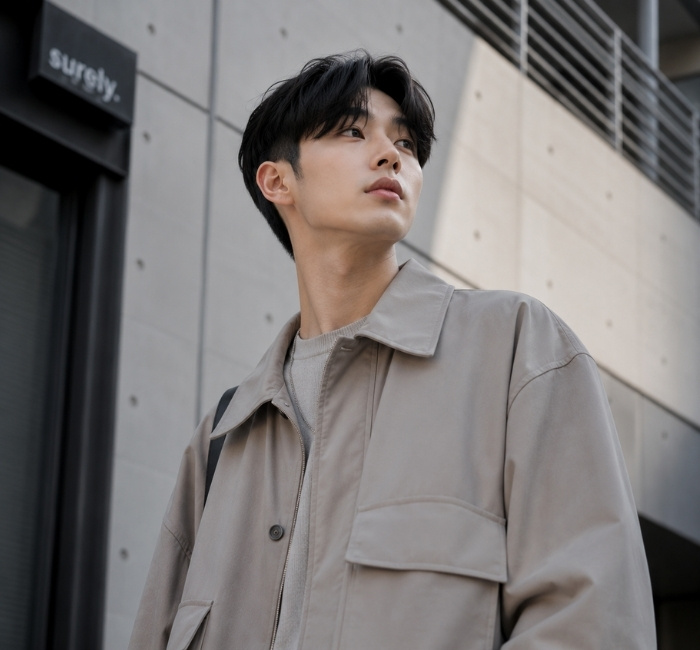
The Korean two-block version keeps the lower sides and back short while leaving the upper section noticeably longer. The top is then divided through the centre and styled with soft volume.
It works particularly well with dense, straight hair that tends to stick out around the sides. Men interested in this look can compare it with other Korean haircuts for men to decide whether they prefer curtains, comma hair or a softer layered fringe.
8. Messy Middle Part

A messy centre part uses irregular texture and a less-defined parting line. It is suitable for men who want a casual hairstyle that does not look overly polished.
The messiness should still be controlled. The cut needs internal layers, while the sides should remain shaped enough to prevent the hairstyle from looking overgrown.
9. Long Middle-Part Flow

The flow version keeps the hair long enough to sweep behind the ears or move towards the back of the head. It works best with medium to thick hair and a natural bend or wave.
Long hair needs weight distribution. Ask for long layers instead of aggressive thinning, which can create frizz or weak-looking ends.
10. Middle-Part Mullet
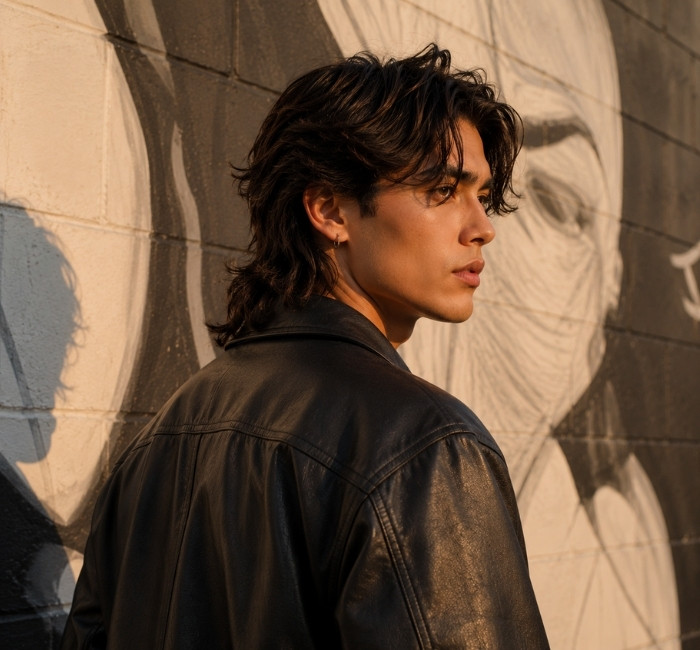
A middle-part mullet combines curtains at the front with extra length around the back. The sides may be tapered, burst-faded or kept softly layered.
This is a more expressive option and requires careful shaping. The transition between the curtain fringe and the longer back should feel deliberate rather than like two unrelated haircuts.
What to Ask Your Barber for a Middle Part

Do not simply tell your barber, “I want a middle part.” That explains how you plan to separate the hair but does not explain the actual cut.
Tell your barber:
“I want enough length at the front to part my hair in the middle, with face-framing layers that move away from my forehead. Keep the top textured so it does not fall flat. I want the sides blended with a low taper, but I do not want the top disconnected.”
You should also discuss the following details:
- Front length: Explain whether you want the fringe above your eyebrows, at eye level or near your cheekbones.
- Side length: Choose between scissor-cut sides, a taper or a fade.
- Layering: Ask for internal layers if your hair is thick or soft texture if your hair is fine.
- Parting position: Show where your hair naturally separates.
- Daily styling: Tell the barber whether you use a hairdryer and styling products.
- Maintenance: Ask how the cut will look after four to six weeks.
Bring photographs showing the front, sides and back of the desired haircut. Select references with a hair texture similar to yours. A haircut worn by someone with fine, wavy hair may not fall the same way on thick, completely straight hair.
Clear communication matters because different barbers may interpret names such as curtains, flow cut and two-block haircut differently. Professional haircut guidance also recommends choosing a barber or stylist who regularly works with your particular hair length and texture.
How to Style a Men’s Middle Part

The haircut creates the foundation, but the hairdryer creates much of the final shape. Applying more product will not compensate for roots that have been dried in the wrong direction.
Step 1: Start With Damp Hair
Your hair should be damp rather than dripping wet. Gently towel-dry it without aggressively rubbing the strands.
Find the natural centre by brushing the hair backwards and allowing it to separate. The part does not have to be mathematically perfect. Following the natural growth pattern usually gives a more comfortable and longer-lasting result.
Step 2: Apply a Lightweight Pre-Styler
Choose the product according to the problem you need to solve.
| Product | Best use |
| Sea salt spray | Adds grip and loose texture |
| Mousse | Creates lightweight volume |
| Styling cream | Controls dry, wavy or frizzy hair |
| Texture powder | Adds quick root lift to dry hair |
| Matte paste | Provides flexible definition |
| Pomade | Creates a smoother finish with shine |
Fine hair generally needs less product than thick hair. Applying too much cream, wax or pomade can make a centre part appear greasy and expose more of the scalp.
Step 3: Create Root Lift
Direct the hairdryer at the roots while lifting the front hair upwards with your fingers or a vented brush. Drying only the ends will not create enough structure.
Begin by drying the front slightly backwards. Then guide each half outward and away from the centre. This creates the curved curtain shape instead of allowing both sides to fall straight down.
Use a moderate temperature and keep the dryer moving. The American Academy of Dermatology’s heat-styling advice recommends reducing excessive heat exposure and allowing hair to dry partially before using heated styling tools.
Step 4: Shape Both Sides
Use your fingers for a natural finish or a round brush for a more controlled curve. If one side is weaker, spend more time directing that side against its usual growth pattern.
Do not repeatedly drag a fine comb through the hairstyle. This can remove volume and create a sharp, visible line through the scalp.
Step 5: Apply the Finishing Product
Rub a small amount of product between your palms until it is evenly distributed. Apply it through the mid-lengths and ends before touching the roots.
Pinch individual sections to create separation. Add more products only when necessary. A small amount can be increased, but removing excessive wax or pomade normally requires washing the hair again.
Styling a Middle Part for Different Hair Types
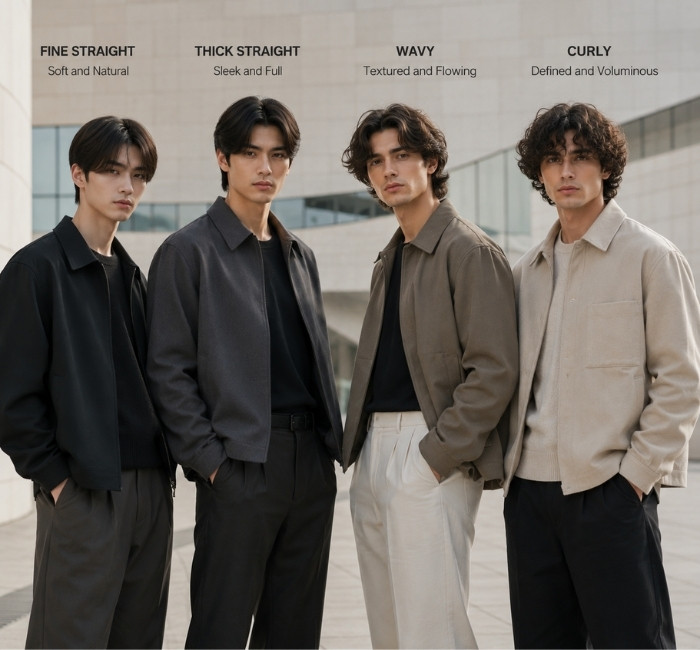
Fine or Thin Hair
Fine hair needs light products and strategic volume. Use volumising mousse or sea salt spray before blow-drying and add a small amount of texture powder after the hair is dry.
Avoid heavy oils, wet-look pomades and thick creams near the roots. A perfectly straight, wide parting may also expose the scalp, so use a slightly irregular or off-centre line.
Ask the barber to maintain density through the front. Excessive thinning can make fine hair look even weaker.
Thick Straight Hair
Thick straight hair often has enough volume but lacks flexibility. It may stick out at the sides or fall back into its original position after styling.
Ask for internal weight removal rather than very short layers. Apply a lightweight pre-styler, then use heat and airflow to redirect the roots. Finish with matte paste for flexible control.
A two-block or tapered middle part can help control excessive bulk around the sides.
Wavy Hair
Wavy hair usually forms natural curtains easily. The main goals are controlling frizz and preventing the shape from becoming too wide.
Apply styling cream to damp hair, create the part with your fingers and scrunch each side. Air-dry or use a diffuser at a low setting.
Do not brush the hair once the waves have dried because this can separate the pattern and create frizz.
Curly Hair
Curly hair should normally be styled while damp. Apply leave-in conditioner or curl cream through the lengths, then arrange the part using your fingers.
The American Academy of Dermatology’s healthy hair guidance recommends adapting washing and conditioning habits to hair texture, as curly and dry hair generally needs different care from straight, oily hair.
Avoid forcing a ruler-straight centre line. A soft separation that follows the curls can look fuller and more natural.
Coily Hair
A middle part on coily hair can create a strong, balanced silhouette. The haircut can be worn with defined coils, twists or a shaped longer top with tapered sides.
Moisture and careful detangling are important. Shape the part without pulling the hair tightly, and work with a barber experienced in coily textures.
Common Middle-Part Problems and How to Fix Them
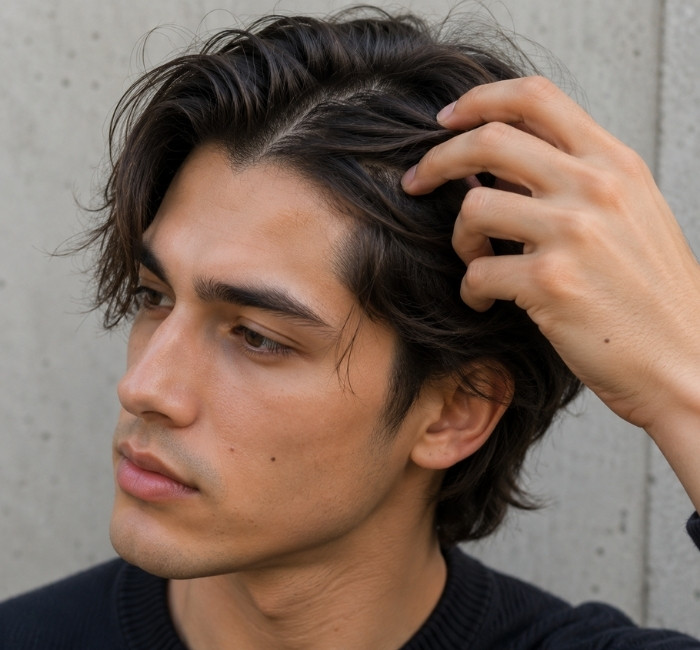
Why Does My Middle Part Look Flat?
Flatness is normally caused by heavy products, insufficient layering or drying the hair downwards.
Apply less product and focus the hairdryer on the roots. Lift the front upwards before directing it towards the sides. If the hair remains heavy, ask your barber whether internal layering would improve movement.
Why Is One Side Different From the Other?
Hair does not always grow symmetrically. A cowlick, stronger growth direction or different density can make one curtain curve correctly while the other falls flat.
Create the part while the hair is damp. Blow-dry the weaker side in the opposite direction first, then guide it back into place. This temporarily resets the root direction and can improve balance.
Why Does My Hair Fall Into My Eyes?
The front may be too long, too heavy or incorrectly dried. Ask for light face-framing layers rather than cutting the entire fringe much shorter.
During styling, lift the roots and direct the hair away from the face. A small amount of flexible paste can hold the curve without producing a stiff finish.
Why Does My Scalp Look Too Visible?
A wide, sharp part can expose the scalp, particularly on fine or thinning hair. Use your fingers instead of a fine-tooth comb to create a softer line.
You can also move the part slightly away from the exact centre. Texture powder may provide temporary root lift, but sudden or progressive thinning should be discussed with a dermatologist.
Why Does My Middle Part Look Greasy?
Heavy products, product buildup or applying conditioner directly to the roots can make the style appear oily.
Use smaller amounts of styling cream or pomade and apply them mainly through the mid-lengths. Wash according to how oily or dirty your scalp becomes rather than following the same schedule as someone with a different hair type.
Why Does the Part Keep Moving?
Hair naturally returns to its established growth direction. Creating a new part may require consistent styling for several weeks.
Part the hair while damp each morning and dry the roots into position. Over time, the hair may become easier to direct, although a strong cowlick can continue to influence the result.
Why Is My Hair Frizzy After Styling?
High heat, rough towel-drying, excessive brushing and unsuitable products can all increase frizz.
Pat the hair gently with a towel, use moderate heat and apply a light conditioner or styling cream. Men with waves or curls should avoid brushing after the hair has dried.
Maintenance and Hair-Care Routine

A longer middle part normally needs reshaping every six to eight weeks. Short versions with fades may require a trim every two to four weeks because the sides lose their clean structure more quickly.
At each appointment, ask the barber to preserve the front length while removing damaged ends and controlling excess weight. Cutting too much from the front can reset months of growth.
Wash the scalp according to oiliness, activity level and hair texture. Apply shampoo mainly to the scalp and allow the lather to run through the lengths while rinsing.
The conditioner should be focused where the hair feels dry, especially through the middle and ends.
Regularly remove product buildup. Texture powder, dry shampoo, wax and salt spray can accumulate on the scalp when used repeatedly. The American Academy of Dermatology notes that dry shampoo should not replace washing with shampoo and water.
On days when you do not need a polished shape, reduce heat and let the hair dry naturally. This can help minimize dryness and unnecessary heat exposure.
Frequently Asked Questions
Is the Middle Part Attractive on Men?
A middle part can be attractive when it suits the wearer’s hair density, face shape and personal style. The haircut should be customised instead of copied exactly from someone with different features.
Volume, healthy-looking texture and a well-shaped outline usually matter more than achieving a perfectly straight parting.
Is a Middle Part the Same as Curtains?
Not always. A middle part describes where the hair is divided, while curtains describe longer front sections that fall or curve around both sides of the face.
Most curtain hairstyles use a middle part, but short centre-part hairstyles may not have enough length to create curtains.
Can Men With Short Hair Get a Middle Part?
Yes, provided the hair at the front is long enough to separate and move towards both sides. Approximately two to three inches can create a short textured version.
Men whose hair is currently too short may prefer a French crop haircut during the growing stage because it keeps the fringe controlled while the top gains length.
How Long Does It Take to Train Hair Into a Middle Part?
Some hair begins holding the new direction within a few weeks of consistent damp styling and blow-drying. Hair with a strong side growth pattern or cowlick may take longer and may never form a perfectly even centre line.
Consistency matters more than excessive product. Reset the roots with water and airflow rather than adding more wax every morning.
Should a Middle Part Be Exactly in the Centre?
No. Facial features and hair growth are not always completely symmetrical. Moving the line slightly to one side can create a more balanced appearance and reduce visible scalp.
The best position is the one that follows your natural growth pattern while framing your face effectively.
What Product Is Best for a Men’s Middle Part?
Sea salt spray or mousse works well before blow-drying, while matte paste or styling cream provides flexible control afterwards. Texture powder can add lift to fine or flat roots.
Choose the product according to your hair type and desired finish rather than using the strongest available hold.
Final Thoughts
The men’s middle part works best when the haircut is designed around the person wearing it. Face shape matters, but hair density, texture, growth direction and daily styling habits are equally important.
Choose a variation that works with your natural hair instead of fighting it. Ask your barber for specific front length, layering and side treatment, and bring reference photographs from several angles. At home, focus on directing the roots with controlled airflow before applying a small amount of product.
Whether you choose classic curtains, a low-taper middle part, a Korean two-block style or a longer flow haircut, the goal is the same: balanced movement, natural volume and a shape that remains manageable after you leave the barbershop.



Leave a Reply